The physics of the heavy load
Estimating junk weight in Aurora requires a calculation of density per cubic yard rather than just visual volume. Construction debris like concrete weighs approximately 2,000 to 4,000 pounds per cubic yard, while household furniture and garage clutter typically average 250 to 300 pounds per cubic yard.
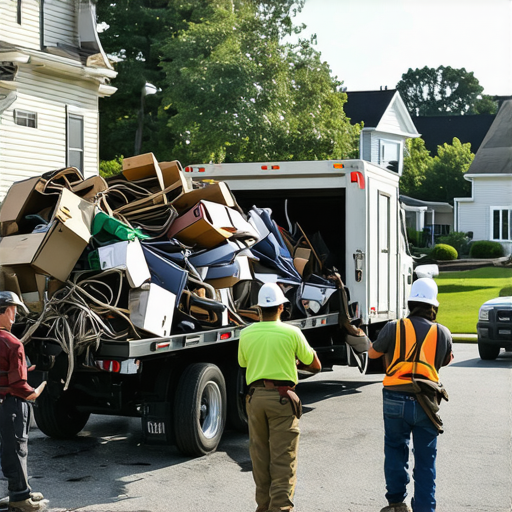
I have spent twenty five years watching trucks pull away from curbs. The smell of diesel and hydraulic fluid is the scent of a job done right. I look at a pile of debris and I do not see a mess. I see a logistical puzzle that needs to be solved before the truck cubes out. A business owner in Aurora once tried to save five hundred dollars by hiring a guy with a pickup truck from a social media ad. Two weeks later, the police called him because his company’s confidential files were found in a ditch near the Cherry Creek Reservoir. Your junk is your liability until it hits the scale at a licensed transfer station. That is why understanding weight is the difference between a clean site and a legal nightmare.
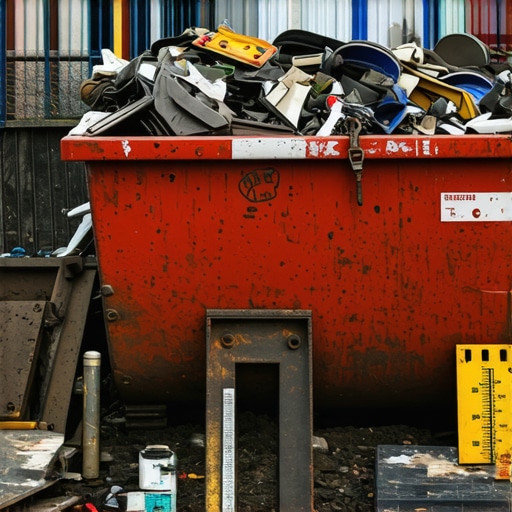
When you look at a twenty yard dumpster, you see space. I see weight limits. The hydraulic hoist on a standard roll off truck has a tipping point. If you fill a bin with heavy concrete or wet soil, you are not just paying for volume. You are gambling with the structural integrity of the truck’s lifting cables. A single cubic yard of dry dirt weighs about 2,200 pounds. A ten yard dumpster filled with dirt weighs 22,000 pounds. Most roll off trucks in Colorado are capped at a certain gross vehicle weight rating. If you exceed that, the driver cannot legally or safely transport the load. The tires will bulge. The frame will groan. The driver will walk away, leaving you with a bin that is too heavy to move and a daily rental fee that never stops ticking.
The ghost in the garage
Garage clean outs often involve hidden weight factors like moisture absorption in old paper and the high density of forgotten metal tools. A stack of newspapers that has sat in a damp Aurora basement for a decade will weigh forty percent more than dry paper due to the hygroscopic nature of cellulose fibers.
“Waste is merely a resource in the wrong place; professional removal is the science of putting it back where it belongs.” – Disposal Industry Maxim
We once cleared a house where the junk was a structural hazard. The floor joists were bowing under the weight of forty years of newspapers. These papers had absorbed ten years of basement humidity. It was not just paper anymore. It was a solid, wet mass of organic matter. When you estimate the weight of a garage clean out, you must account for these environmental factors. Household items have varying bulk densities. A wooden dresser might look heavy, but it is mostly air. A stack of old shingles is the opposite. It is thin, dense, and heavy. Shingles are packed with asphalt and stone granules. They are designed to withstand hail and wind. In a dumpster, they pack tight, leaving no air space. This is how you exceed your weight limit before the bin is even half full.
| Material Type | Weight per Cubic Yard (Lbs) | Compaction Ratio |
|---|---|---|
| Loose Household Junk | 250 to 400 | High |
| Wet Yard Waste | 600 to 900 | Medium |
| Drywall and Sheetrock | 400 to 600 | Low |
| Concrete and Brick | 2,000 to 3,500 | None |
| Mixed Construction | 800 to 1,200 | Medium |
Why your cheap hauler is a legal time bomb
Professional junk removal in Aurora is governed by the Resource Conservation and Recovery Act which mandates the safe handling of hazardous materials from inception to disposal. Unlicensed haulers often bypass these regulations to avoid high tipping fees at regional landfills, potentially leaving the original owner liable for environmental cleanup costs.
The price of a dumpster rental in Aurora is not arbitrary. It is a reflection of the tipping fees at places like the Denver Arapahoe Disposal Site. When a hauler offers a price that is lower than the local tipping fee, you must ask where that waste is going. If it ends up in a ravine, the Department of Public Health and Environment will track it back to you. I have seen rookies almost lose their eyebrows because a customer hid a half full propane tank inside a pile of yard waste. We do not just lift. We inspect. Every. Single. Item. The BTU potential of recovered wood waste is high, but it must be separated from treated lumber which contains arsenic and chromium. If you mix these, the entire load becomes contaminated. That increases the cost. That increases the risk.
The toxic secret of the lead acid battery
Hazardous waste requires specialized disposal protocols because materials like lead and sulfuric acid can leach into groundwater systems. In Aurora, items like tires, electronics, and chemical cleaners are prohibited from general landfill bins and must be transported to dedicated recycling or hazardous waste collection centers.
- Lithium ion batteries (The fire starter)
- Wet paint cans (The pavement ruiner)
- Propane tanks (The pressure cooker)
- Refrigerants in old fridges (The ozone killer)
- Automotive fluids (The groundwater poison)
The physics of disposal is also about the chemistry of the bin. If a lead acid battery is crushed at the bottom of a heavy load, the sulfuric acid eats through the steel floor of the dumpster. It then hits the Aurora pavement. If it rains, that lead enters the storm drain system. This is why we are strict. This is why we are detailed. A refrigerator removal is not just about moving a heavy box. It is about the recovery of chlorofluorocarbons. If those gases escape, you are violating federal law. The narrow streets in some Aurora neighborhoods mean a twenty yard dumpster is a permit nightmare. You need a live load truck. You need a strategist who knows the local ordinances.
The math of the fifteen yard bin
Calculating the volume of your junk is the first step toward a realistic weight estimate for any Aurora project. A fifteen yard dumpster typically holds the equivalent of four to five pickup truck loads, but the weight will vary drastically depending on whether the materials are loose or compacted.
While most people think recycling is always better, the carbon footprint of hauling low grade plastics five hundred miles often exceeds the impact of local waste to energy incineration. This is a contrarian reality in the waste management world. We focus on diversion rates. We want to keep the heavy stuff out of the landfill. Concrete can be crushed and reused for road base. Metal can be melted down. Furniture can often be diverted to local Aurora charities if it is not contaminated. But if you throw it all in a bin together, it becomes a contaminated mass. The Tetris of the load is the key. You put the heavy items on the bottom. You fill the gaps with smaller debris. You avoid wasted air space. This is how you maximize your investment. This is how you ensure the truck is balanced for the haul. The hoist will hum. The truck will move. The site will be clear. [IMAGE_PLACEHOLDER]
“Modern waste management is the final defense against environmental degradation in an era of mass consumption.” – SWANA Technical Report