The math of the empty box
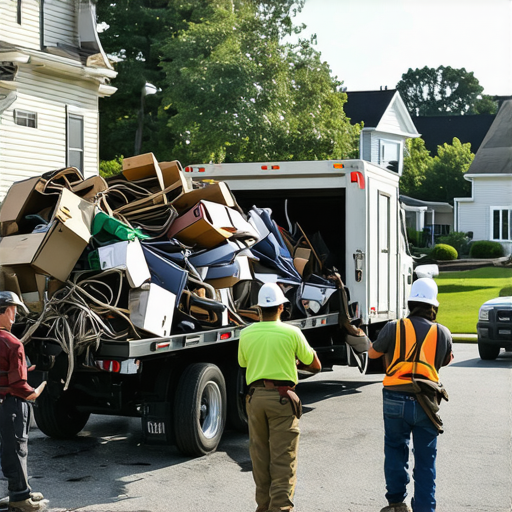
Dumpster Rentals Aurora requires a firm grasp of cubic yardage to avoid massive financial penalties at the scale. One cubic yard is a three-foot cube of space. A standard 10-yard dumpster holds approximately three to four pickup truck loads of debris. Accurate estimation is the only way to prevent overage fees during your Junk Removal Aurora project. I have spent twenty-five years watching homeowners pay for air because they did not understand the Tetris of a load. They toss chairs on top of tables and leave four-foot gaps of wasted space. The truck groans under the weight of the steel but the volume is mostly oxygen. That is a failure of logistics. Your goal is density. You want the maximum weight in the minimum volume without exceeding the legal road limits of Kane County. A business owner once tried to save five hundred dollars by hiring a guy with a pickup truck from a social media ad. Two weeks later, the police called him because his company confidential files were found in a ditch near the Fox River. Your junk is your liability until it hits the scale at a licensed transfer station. That is why professional disposal matters. We track the manifest. We know where the load lands. We understand the chemical leaching of lead-acid batteries and the structural load limits of residential stairs during a Furniture Removal job. When you hire a professional, you are buying the assurance that your waste will not haunt your legal record.
“Waste is merely a resource in the wrong place; professional removal is the science of putting it back where it belongs.” – Disposal Industry Maxim
The physics of the heavy load
Appliance removal involves more than just muscle because it requires the management of hazardous refrigerants and heavy metals. A standard refrigerator weighs between two hundred and four hundred pounds but occupies nearly two cubic yards of space. In the logistics world, we call this a high-volume low-density item. If you place it at the back of the dumpster, you ruin the weight distribution of the truck. This makes the haul dangerous on the I-88 or Route 34. You must place heavy appliances at the bottom, near the front of the container, to keep the center of gravity low. The metal in these units is a recovery asset. We do not just toss them into the landfill. We strip the compressors and recover the Freon because the EPA mandates strict handling for ozone-depleting substances. A rookie once punctured a cooling line in a garage, and the hiss of escaping gas is the sound of a ten-thousand-dollar fine. We do not take chances. We inspect every unit for residual food waste or hidden chemicals. The structural integrity of your driveway in Aurora is also a factor. A thirty-yard dumpster filled with wet drywall can weigh over ten tons. Without wooden planks placed under the steel rollers, the dumpster will crack your asphalt like an eggshell. This is the microscopic reality of waste management. We consider the PSI of your concrete before we drop the bin. We calculate the swing radius of the rear door. We check the overhead power lines for clearance. Every inch of the operation is a calculated risk that we mitigate with data.
The hidden cost of hoarded space
Hoarder Clean Out aurora projects are the most complex logistical puzzles in the industry because the material is often decayed and structurally unstable. You are not just moving boxes. You are managing a biohazardous environment where the air is thick with dust and mold spores. A Garage Clean outs job might take four hours, but a full hoarder house can take four days and six forty-yard dumpsters. We look for the bowing of floor joists. We check for the weight of forty years of newspapers that have absorbed ten years of basement humidity. This turns paper into a dense, clay-like substance that is nearly impossible to lift. The volume estimation for these projects is notoriously difficult. We use a three-to-one compaction ratio for soft goods like clothes and bedding. For hard goods like furniture, the ratio is one-to-one. You cannot compress a wooden dresser without a sledgehammer. While most people think recycling is always better, the carbon footprint of hauling low-grade plastics five hundred miles often exceeds the impact of local high-efficiency waste-to-energy incineration. We prioritize local Aurora transfer stations to keep the road miles low. We want the shortest path from the curb to the recovery center. This reduces the fuel surcharge and the wear on the hydraulic systems.
“The management of solid waste is a fundamental requirement for the health and safety of the community.” – Solid Waste Association of North America
Calculating your container needs
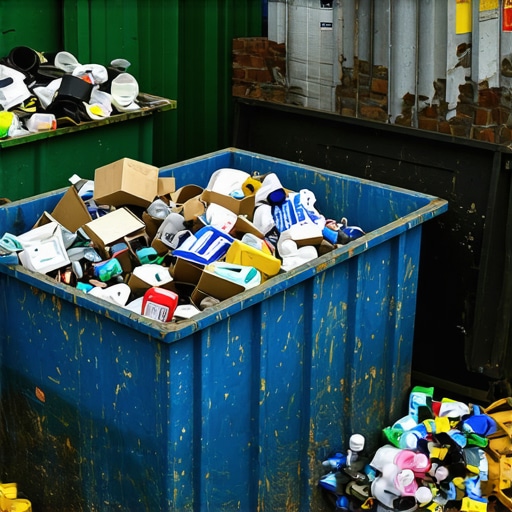
Dumpster Rentals Aurora sizing depends entirely on the material density and the total cubic feet of the debris. To find your volume, multiply the length, width, and height of your pile in feet and divide by twenty-seven. This gives you the cubic yardage. If you have twenty-seven boxes that are each one foot on all sides, you have one cubic yard. If you have an old sofa, that is roughly two cubic yards. A kitchen table is another yard. You must account for the voids between items. We recommend adding a twenty percent buffer to your estimate to account for the air gaps that occur during loading. [image placeholder]
| Dumpster Size | Cubic Yard Capacity | Equivalent Pickup Loads | Best Use Case |
|---|---|---|---|
| 10 Yard | 10 Yards | 3 to 4 Loads | Small bathroom remodel or heavy dirt |
| 20 Yard | 20 Yards | 6 to 8 Loads | Garage clean outs and roofing shingles |
| 30 Yard | 30 Yards | 9 to 12 Loads | Major home additions and furniture removal |
| 40 Yard | 40 Yards | 12 to 15 Loads | Commercial demolition and hoarder clean outs |
The prohibited items list
Junk Removal professionals are legally barred from transporting certain materials due to the Resource Conservation and Recovery Act. You cannot toss a half-full propane tank into a pile of yard waste. This creates an explosion risk at the transfer station when the mechanical compactor hits the tank. We have seen trucks catch fire on the street because someone hid pool chemicals in a black trash bag. We do not just lift, we inspect. We look for the telltale signs of hazardous waste. We check for the heavy weight of lead-acid batteries. We look for the oily sheen of old paint. If we find these items, we must stop the load. This is for the safety of our drivers and the workers at the landfill. The law is clear on what constitutes a hazardous material. Ignitability, corrosivity, reactivity, and toxicity are the four pillars of waste classification. If your item falls into these categories, it needs a special manifest.
- Lithium-ion batteries and lead-acid vehicle batteries.
- Wet paint, solvents, and chemical thinners.
- Propane tanks, oxygen cylinders, and pressurized vessels.
- Tires and mattresses without prior authorization.
- Asbestos-containing materials like old pipe insulation.
- Biohazardous waste or medical needles.
- Pesticides and herbicides from landscaping.
The final tally on Aurora disposal
Junk Removal Aurora services are the backbone of a clean city. When you choose a dumpster or a hauling crew, you are choosing a partner in environmental stewardship. We do not just dump. We sort. We pull the scrap metal. We separate the clean wood from the treated lumber. The treated wood contains arsenic and copper, which cannot be burned for energy. The clean wood goes to the mulcher. This is how we achieve a fifty percent diversion rate. We keep the material out of the ground and back in the supply chain. If you are planning a clean out near the Aurora downtown area, remember that narrow alleys and tight street parking require specific permits. We handle the logistics of the city requirements. We know which streets require a flagger for a drop-off. We understand the weight limits on the bridges. You focus on the space you are gaining. We focus on the debris we are removing. The floor will stop snapping under the weight. The air will get clearer. The data overflow of your physical life will finally be resolved. This is the science of waste. This is the logic of the load. We see a mess and we see a series of volumes to be managed. We see a challenge and we apply the math. Your space is too valuable to be a warehouse for broken things. Hire the experts who know the difference between a load and a hazard. Get the bin that fits the job. Do not pay for the air in the box. Pack it tight and watch the clutter disappear into the history of the landfill.