
The physics of heavy loads in Kane County
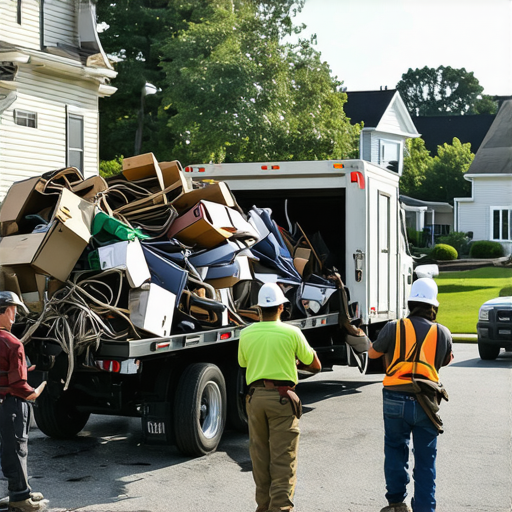
A business owner tried to save 500 dollars by hiring a guy with a pickup truck from a social media ad. Two weeks later, the police called him because his company’s confidential files were found in a ditch. Your junk is your liability until it hits the scale at the transfer station. This reality governs every decision I make when dropping a 20-yard roll-off container in Aurora. I smell like diesel and hydraulic fluid because I spend my life calculating the PSI of a steel bin against aging residential asphalt. If you place a container on a soft driveway during an Illinois summer, the sun softens the binder and those steel rollers will sink four inches into your property. I have seen it happen. I have seen homeowners cry over a 5000 dollar repair bill because they wanted the dumpster closer to the front door. Every placement is a calculation of weight distribution, clearance, and legal liability. Junk Removal Aurora is not just about tossing old chairs. It is a logistical operation where the staging area determines the success of the entire project.
The gravity of property placement
Selecting a dumpster location requires analyzing ground stability, proximity to the exit point, and structural load limits of the surface. Concrete pads are preferred over asphalt because they handle compression better without deforming. If you must use a driveway, 2/4 wood planks are mandatory to distribute the weight across a larger surface area to prevent cracking. The weight of a 20-yard dumpster empty is roughly 4000 pounds. When you fill it with Garage Clean outs debris or old Furniture Removal, you are looking at 10,000 to 15,000 pounds. That is a massive concentrated load. In Aurora, the ground fluctuates with humidity levels, meaning a spot that was solid in June might be a mud trap in April. I once watched a truck tilt dangerously because the outriggers sank into a hidden septic field. We do not just drop and go. We scout the terrain like we are moving heavy artillery. You need a 60 foot straight approach for the truck to drop the bin. If your street is narrow, the driver will spend twenty minutes trying to avoid the neighbor’s mailbox. Efficiency dies in tight spaces.
The vertical ceiling of successful disposal
Overhead obstructions like power lines, low-hanging oak limbs, and garage overhangs represent the primary physical hazards for roll-off delivery. A typical hoist system on a Mack truck reaches a height of 22 feet when the bed is fully inclined to slide the container off. If your driveway has a canopy of trees, those limbs will be shredded. I have seen rookie drivers snag communication lines because the customer insisted on a spot under a utility pole. You need clear sky. When we handle Appliance removal, the weight is dense. If the truck cannot get a clean angle, the container might slam down instead of sliding. This vibration can crack a home foundation if it is too close. I look for 14 feet of width and 22 feet of height. Anything less is a gamble I usually refuse to take. We think in three dimensions. The horizontal footprint is only half the battle. If the bin is for a Hoarder Clean Out aurora, the volume of material means people will be walking back and forth for days. The path must be clear of tripping hazards and structural obstacles.
“Waste is merely a resource in the wrong place; professional removal is the science of putting it back where it belongs.” – Disposal Industry Maxim
Where your property line meets the law
Aurora municipal codes strictly regulate where a temporary waste container can sit and for how long. If you cannot fit the bin on your private driveway, you enter the realm of right-of-way permits. Putting a dumpster on a public street in Aurora usually requires a permit from the city engineering department and high-visibility reflective tape or cones. You cannot block fire hydrants or park within 20 feet of a crosswalk. I have seen the city fine homeowners 250 dollars a day for unpermitted street placement. It is a logistical nightmare that eats your budget. If you are doing a Garage Clean outs project, keep the bin on your own concrete. Even then, check your HOA rules. Some associations in the far west suburbs have draconian rules about visible waste. They do not care if you are clearing out twenty years of history. They only care about the aesthetic of the cul-de-sac. We coordinate with the city frequently because we know which inspectors are looking for violations on any given Tuesday.
The heavy cost of mismatched containers
| Container Size | Weight Limit (Tons) | Ideal Use Case | Primary Risk Factor |
|---|---|---|---|
| 10 Yard | 2 Tons | Heavy debris like dirt or concrete | Exceeding weight limit rapidly |
| 20 Yard | 3 Tons | Garage Clean outs and Furniture Removal | Overfilling past the top rail |
| 30 Yard | 4 Tons | Hoarder Clean Out aurora or construction | Physical footprint too large for driveways |
While most people think recycling is always better, the carbon footprint of hauling low-grade plastics 500 miles often exceeds the impact of local, high-efficiency waste-to-energy incineration. This is why location matters. If I can place the bin so it can be loaded with maximum density, I reduce the number of trips to the transfer station. Every trip saved is less diesel burned. We call this cubing out. If you leave air pockets between old sofas and broken desks, you are paying to haul Aurora air. I hate wasted space. It is a logistical failure. I want the heavy items on the bottom and the flat items on the sides. This lowers the center of gravity for the truck. A top-heavy dumpster is a rollover risk on sharp turns. We take this seriously. My drivers have families. We do not haul unstable loads.
Strategic loading for material recovery
Effective loading requires placing heavy, dense materials at the bottom and distributing the weight evenly across the tandem axles. If you put all the heavy appliances at the front of the bin, the truck cannot lift it. The hoist will stall. If you put them all at the rear, the truck will lose steering traction as the front wheels lift off the pavement. It is simple lever physics. We teach customers to create a floor of flat materials first. This protects the container and makes the final weight more predictable. For Appliance removal, we need those items near the rear door so they can be pulled out separately at the recycling center. If they are buried under ten tons of drywall, they end up in the landfill. That is a waste of scrap metal and a violation of my personal ethics. I want every pound of copper and steel recovered. Waste management is a game of margins. If we recover the metal, your costs stay lower over the long term.
“Solid waste management is a multifaceted system that requires rigorous engineering and logistical precision to protect public health and the environment.” – SWANA Technical Manual
The prohibited list of legal liabilities
Professional haulers are legally barred from transporting hazardous materials that pose a risk to the landfill or the transport vehicle. If you hide a lithium battery in your trash, you are creating a potential chemical fire that can reach 2000 degrees inside the truck. I have seen a truck burn to the frame in fifteen minutes because of one laptop battery. We inspect every load. We are not just being difficult. We are following the Resource Conservation and Recovery Act. Your junk is your responsibility until the landfill accepts it. If they find hazmat in your load, they will charge a contamination fee that can reach 1000 dollars. It is not worth the risk. Use the municipal drop-off sites for your chemicals and paints. Keep your dumpster clean. It makes the process faster and cheaper for everyone involved.
- Lithium and Lead-Acid Batteries
- Propane Tanks and Pressurized Cylinders
- Wet Paint and Liquid Solvents
- Tires and Large Rubber Tracks
- Appliances with Freon (unless drained and tagged)
- Biohazardous or Medical Waste
- Asbestos-containing insulation
Final logistics of the Aurora pickup
The pickup process is a reversal of the delivery physics requiring a clear path and a stable load. The driver will arrive and check the fill line. If the debris is poking out the top, it is an illegal load. We cannot tarp it, and we cannot haul it. I have had to walk away from jobs and leave a dry-run fee because the customer thought the fill line was a suggestion. It is a law. High-speed wind on the interstate will turn a loose piece of plywood into a guillotine for the driver behind us. We do not play games with safety. If the container has sunk into the mud, we might need a tow truck to pull us out. This is why that initial location choice is the most important decision you make. You are not just renting a box. You are hiring a heavy-logistics partner. Treat the placement with the respect it deserves, and the project will be over before the neighbors even have time to complain about the noise. Skip the curbside cowboys. Hire the professionals who know the streets of Aurora and the physics of the load. Article Schema: {“@context”: “https://schema.org”, “@type”: “Article”, “headline”: “Dumpster Rentals Aurora: Choosing the Perfect Location”, “author”: {“@type”: “Person”, “name”: “Logistics Manager”}, “description”: “Expert guide on choosing the best location for dumpster rentals in Aurora, focusing on ground pressure, local permits, and logistical efficiency.”}