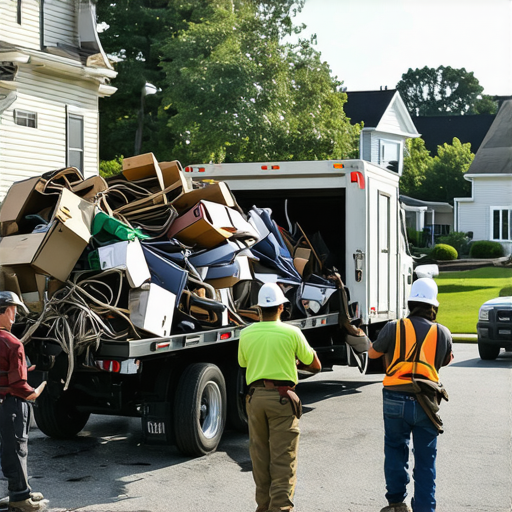

The illegal dumping trap and the liability of waste
Hiring an unlicensed junk removal service in Aurora exposes you to significant liability if your waste is dumped illegally in local forest preserves or ditches. You are legally responsible for your items until they reach a certified transfer station and are weighed on a calibrated scale with a receipt.
A business owner tried to save 500 dollars by hiring a guy with a pickup truck from a social media ad. Two weeks later, the police called him because his company confidential files were found in a ditch. Your junk is your liability until it hits the scale. This is the reality of the waste management industry. If you do not see a manifest or a tipping receipt, you are gambling with your legal reputation. In Aurora, the Fox River and surrounding wetlands are protected by strict environmental codes. When a curbside cowboy dumps a load of your old furniture and construction debris to avoid a 90 dollar per ton tipping fee, the paper trail leads back to your front door. Professional waste management is not just about moving objects from point A to point B. It is about the legal transfer of responsibility through a chain of custody. We track every cubic yard because the Illinois Environmental Protection Agency tracks us. You want a partner who understands the Resource Conservation and Recovery Act, not someone who just owns a set of ratchet straps and a dented tailgate.
The mathematics of cubic yard density
A cubic yard measures three feet by three feet by three feet. A standard 10-yard dumpster holds approximately 50 to 70 trash bags, while a 20-yard container fits the debris from a small kitchen remodel or a multi-room hoarder clean out aurora project.
Understanding density is the difference between a successful project and a secondary rental fee. A 10-yard dumpster has a footprint roughly the size of a small car. It is designed for high-density, low-volume materials. If you are stripping a roof in Aurora, the weight of those shingles will hit the four-ton limit long before the shingles reach the top of the rail. Each square of asphalt shingles weighs roughly 240 pounds. Do the math. A 20-square roof adds 4,800 pounds of deadweight to the truck. This affects the hydraulic pressure required to pull the roll-off onto the rails. If the load is too heavy, the hoist will bypass, and the truck will stay stuck in your driveway. We calculate the specific gravity of every load. Dry household junk has a low density. You can pack a 30-yard dumpster with old couches and mattresses and still stay under the weight limit. But fill that same container with wet fall leaves or soil, and you have created a 20-ton anchor that no legal road vehicle can transport through Kane County streets.
“Waste is merely a resource in the wrong place; professional removal is the science of putting it back where it belongs.” – Disposal Industry Maxim
The seasonal surge in Aurora waste streams
Fall in Aurora creates a specific waste profile combining yard debris, garage clean outs, and preparatory clearing for winter snow. Booking the right dumpster size involves calculating the bulk density of organic matter versus heavy household goods like furniture removal or old appliances to avoid overweight surcharges.
As the temperature drops, the waste stream changes. Organic matter begins to decompose, increasing the moisture content and the weight of your load. A pile of dry brush in September is light. The same pile in late October, after a heavy Illinois rain, is a water-logged mess that will double your disposal costs at the transfer station. Garage clean outs become popular as residents try to fit vehicles inside before the first blizzard. This often leads to the discovery of long-forgotten chemicals and old paint cans. You cannot simply toss these into a dumpster. The chemistry of a landfill is a delicate balance. One gallon of spilled paint can contaminate tons of otherwise recyclable material. We see people try to hide lead-acid batteries under a layer of old carpet. This is a recipe for a landfill fire. Those batteries contain sulfuric acid and lead. If the compactor at the transfer station punctures that casing, the resulting chemical reaction can shut down an entire facility for a day, costing thousands in lost productivity and emergency response fees.
The structural reality of furniture removal
Furniture removal requires assessing joint integrity and weight distribution before hauling. Particle board furniture from big-box retailers lacks structural density and often collapses during transport, while solid oak pieces require specialized dollies and multiple technicians to navigate Aurora basement stairs safely without damaging property.
Modern furniture is often held together by cam locks and hope. It is not designed to be moved twice. When we perform a furniture removal in Aurora, we assess the structural load-bearing capacity of every piece. An old sleeper sofa is a logistical nightmare. The steel frame inside adds 150 pounds of off-center weight. If you do not secure the mechanism, it can spring open during a turn, shifting the center of gravity in the truck. This is why we use the tetris method. We place heavy, flat items like headboards against the walls of the dumpster. We then layer the bulky, soft items in the center. This prevents the load from shifting during transport. Air space is the enemy of profit. If we see gaps between the items, we are failing the logistics test. We crush, we stack, and we optimize. A 10-yard dumpster should look like a solid block of material when it leaves your property. This ensures you get the maximum value for your rental fee and prevents debris from flying out on the highway.
| Project Type | Recommended Size | Weight Limit (Tons) | Common Contents |
|---|---|---|---|
| Small Bathroom Remodel | 10 Yard | 2 Tons | Tile, drywall, vanity, toilet |
| Garage Clean Out | 15 Yard | 2-3 Tons | Boxes, old tools, small furniture |
| Hoarder Clean Out Aurora | 30 Yard | 4-5 Tons | Massive volume, textiles, paper |
| Roofing (20 Squares) | 10 Yard | 4 Tons | Asphalt shingles, underlayment |
Navigating the Aurora hoarder clean out
A hoarder clean out aurora project demands a strategic approach to biohazards and structural loads. Long-term accumulation of paper and textiles creates a fire-load intensity that requires staged removal, professional-grade respirators, and 40-yard dumpsters to handle the massive volume of compacted debris safely.
I once cleared a house where the junk was not just stuff. It was a structural hazard. We found the floor joists were bowing under the weight of 40 years of newspapers that had absorbed ten years of basement humidity. This is the extreme end of junk removal. You are not just moving boxes. You are managing a hazardous environment. Paper is heavy. A stack of National Geographic magazines three feet high weighs more than a concrete block. When you multiply that by a whole house, you are looking at 30 or 40 tons of material. We have to stage these jobs. We start with the egress points to ensure the crew can exit quickly in an emergency. We use 40-yard containers for these jobs because the volume is the primary challenge. However, we have to be careful not to load them with too much dense material. If a 40-yarder is filled with soaked paper, it will exceed the 10-ton legal limit for most roll-off trucks in Aurora. We monitor the leaf springs on the truck as we load. If they go flat, we stop. Safety is non-negotiable.
“Landfills are not bottomless pits; they are engineered cells with finite capacity and strict regulatory oversight.” – SWANA Technical Manual
Items your hauler cannot legally touch
Federal and Illinois state laws prohibit placing hazardous materials like lead-acid batteries, wet paint, propane tanks, or tires into standard roll-off dumpsters. These items require specialized processing at household hazardous waste facilities to prevent soil contamination and landfill fires that endanger local Aurora neighborhoods.
The legal framework for waste is rigid. If we find a propane tank in your dumpster, we cannot pick it up. It is an explosive hazard. The same applies to tires. Tires do not stay buried in a landfill. They trap methane gas and float to the surface, eventually tearing the landfill liner. This allows leachate, a toxic soup of garbage juice, to seep into the groundwater. We take environmental protection seriously. In Aurora, you have access to specific drop-off points for these items. Do not try to bury them in the middle of a junk pile. We train our drivers to spot the signs of hidden hazmat. A stained box or a chemical smell is enough to trigger a load rejection. This is for your safety and ours.
- Refrigerants and Freon-based appliances
- Industrial solvents and thinners
- Asbestos-containing materials
- Biohazardous medical waste
- Aerosol cans that are not completely empty
- Electronic waste like old CRT televisions
Managing appliance removal in a circular economy
Appliance removal involves recovering refrigerants like Freon and stripping valuable metals like copper and aluminum. In Aurora, modern scrap processing ensures that 95 percent of a refrigerator or washing machine is diverted from landfills, feeding the raw materials back into the manufacturing supply chain.
When we pull an old fridge from an Aurora basement, we are looking at a resource, not a piece of trash. The steel shell is infinitely recyclable. The copper coils in the compressor are high-value scrap. But first, we have to address the environmental hazard. Older units contain CFCs or HCFCs that destroy the ozone layer. We use specialized recovery equipment to vacuum these gases into sealed cylinders. Only then can the unit be crushed for metal recovery. This is the science of junk removal aurora residents often overlook. It is not just heavy lifting. It is an industrial process. We track the market price of ferrous and non-ferrous metals to offset our operational costs, which is why appliance removal often has a different pricing structure than general household junk. A dishwasher is mostly plastic and low-grade steel, while an old cast-iron radiator is a heavy-duty asset for the scrap yard. We treat your waste with the respect a raw material deserves.
The hidden cost of air space
Air space in a dumpster represents a logistical failure that increases costs for both the hauler and the customer. Maximizing the fill rate through strategic packing and material breakdown ensures that every trip to the Aurora transfer station is as efficient as possible.
If you toss a whole table into a dumpster, you are paying to transport a lot of Aurora air. Take the legs off. Smash the top. Our crews are trained in the art of compaction. We use the weight of the truck and the force of our own labor to break down items until they occupy their true volume. This is why professional junk removal is often more cost-effective than renting a dumpster yourself. A homeowner might fill a 20-yard dumpster in two hours by just throwing things over the side. A professional crew will fit that same amount of material into a 10-yard space by being smart about how they stack. We look at the geometry of every item. A round barrel creates gaps in the corners. We fill those gaps with smaller debris or loose textiles. This level of detail is what separates the veterans from the amateurs. We are not just hauling junk. We are managing the cubic capacity of a mobile asset. Every minute that truck is on the road, it is burning diesel and incurring labor costs. We make every cubic inch count. The goal is to reach the maximum legal weight at exactly the same time the container reaches the top rail. That is a perfect load.
The physics of the roll-off truck
The operation of a roll-off truck in residential Aurora neighborhoods requires precise calculations of overhead clearance and ground pressure. A loaded 20-yard dumpster can exert enough force to crack aged asphalt or damage underground utilities if not placed on protective wood blocking.
A roll-off truck is a masterpiece of hydraulic engineering. The hoist uses twin cylinders to lift thousands of pounds at steep angles. But that power comes with risks. When we drop a dumpster on your driveway, we are placing several tons of steel on a very small surface area. If we do not use 2×6 planks to distribute that load, the steel wheels will bite right into your pavement. We also have to watch for overhead obstructions. Those power lines and low-hanging tree branches in older Aurora neighborhoods are magnets for the top of a dumpster during the dump or pick-up cycle. We need at least 22 feet of vertical clearance. We also have to consider the swing of the tailgate. If you park the dumpster too close to your garage door, you will not be able to open the back to walk your heavy items inside. This is why we ask about your site layout before we arrive. We are thinking about the turn radius, the slope of the driveway, and the integrity of the concrete. We do not want to leave your property looking worse than we found it. We want the only sign of our presence to be the absence of your junk.
{“@context”:”https://schema.org”,”@type”:”Article”,”headline”:”Dumpster Rentals Aurora: Booking the Right Size for Fall”,”author”:{“@type”:”Person”,”name”:”Veteran Waste Management Strategist”},”description”:”Professional guide to booking the right dumpster size in Aurora, focusing on weight limits, legal liabilities, and seasonal waste management.”,”articleSection”:”Waste Management and Junk Removal”}