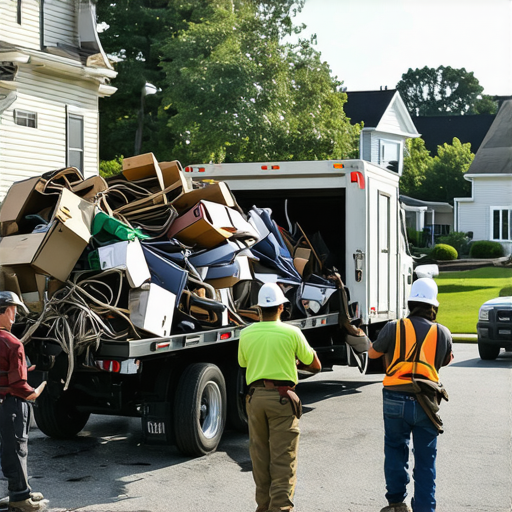

I view every waste management project in Aurora as a complex puzzle of hydraulic pressure and volume density. My lungs carry the faint scent of diesel exhaust and hydraulic fluid from a life spent managing the loading docks and transfer stations. To the uninitiated, a 20-yard dumpster is just a steel box. To me, it is a mathematical vessel where every cubic inch of air space is a financial leak. Efficiency is not an option. It is the only way to survive the rising tipping fees at the local landfills. Most homeowners do not see the logistics. They do not calculate the shear strength of their asphalt driveway or the overhead clearance required for a roll-off hoist to fully extend without snagging a utility line. I see it all. I see the failures before they happen.
A business owner in the Fox Valley area once tried to save five hundred dollars by hiring a guy with a beat-up pickup truck from a social media advertisement. This was the classic illegal dumping trap. Two weeks later, the Aurora police department called him because his company confidential files and three desks were found in a drainage ditch near the outskirts of the city. Your junk is your legal liability until it hits the scale at a licensed transfer station and you have the manifest in your hand. This is the gritty reality of the industry. There are no shortcuts in waste. There are only documented paths and expensive mistakes.
The physics of a perfect bin placement
Dumpster Rentals Aurora requires a precise understanding of load-bearing surfaces, truck turning radii, and municipal permit regulations. A standard 20-yard roll-off container measures twenty-two feet in length and requires at least sixty feet of straight-line clearance for a successful drop. Junk Removal Aurora projects often fail because the client places the bin on soft soil or unreinforced concrete, leading to structural cracks once the bin reaches its maximum tonnage.
The mechanics of the drop are unforgiving. When the hoist lift is engaged, the weight of the steel box and its contents shifts entirely to the rear rollers. In the heat of an Aurora summer, the asphalt softens. Without wooden dunnage or protective plywood sheeting, those rollers will sink three inches into your driveway. I have seen driveways ruined in seconds because a rookie driver didn’t check the ground density. We calculate the PSI (pounds per square inch) before the wheels even touch the curb. If the slope is greater than five percent, the bin might slide during the loading process, creating a runaway hazard that no insurance policy wants to touch.
The geometry of a garage clean out
Garage Clean outs involve volumetric Tetris where mixed municipal solid waste must be categorized by density and material type to avoid overage fees. Most Aurora residents underestimate the weight of secondary storage items like old paint cans, tires, and scrap metal which carry heavy surcharge penalties at Kane County transfer stations.
When you start a garage project, the heaviest items must go at the bottom. This lowers the center of gravity for the truck. Old workbenches, concrete blocks, and heavy tools provide the base layer. We then fill the gaps with soft goods. This is how you achieve the 100 percent load factor. If you leave air pockets, you are paying to transport the atmosphere. I despise air pockets. They are the enemy of a profitable haul. A properly packed 15-yard bin can hold more than a poorly packed 30-yard bin if you understand the physics of compression. You must break down every box. You must dismantle every shelf. If it can be flat, it must be flat.
“Waste is merely a resource in the wrong place; professional removal is the science of putting it back where it belongs.” – Disposal Industry Maxim
The heavy cost of keeping everything
Hoarder Clean Out aurora operations require specialized logistics including PPE protocols, hazardous material identification, and structural load monitoring. These projects often involve biohazardous waste or compressed paper stacks that can weigh thousands of pounds, potentially compromising the floor joists of older Aurora residential properties.
I once cleared a house where the junk wasn’t just stuff. It was a structural hazard. The floor joists were bowing under the weight of forty years of newspapers that had absorbed ten years of basement humidity. The paper had become a solid mass of cellulose, weighing nearly forty pounds per cubic foot. This is not just cleaning. This is a salvage operation. We had to shore up the basement with jacks before we could even start the removal. You don’t just walk into a hoarding situation with a shovel. You walk in with a moisture meter and a structural engineer’s mindset. The sheer volume of dust and mold spores released during a deep clean can overwhelm a standard HVAC system in minutes. We use industrial air scrubbers to maintain negative pressure so the contamination doesn’t spread.
| Material Type | Average Density (lbs/cu yd) | Disposal Strategy |
|---|---|---|
| Construction Debris | 400-600 | Roll-off Bin |
| Household Junk | 150-250 | Cubic Yard Pricing |
| Green Waste | 300-450 | Composting Facility |
| Heavy Fill (Dirt/Brick) | 2000-3000 | Dedicated Low-Boy Bin |
The chemical reality of appliance disposal
Appliance removal in the Fox Valley region is strictly regulated by EPA Clean Air Act mandates regarding refrigerant recovery and PCB management. Professional Junk Removal services must verify that refrigerators, freezers, and air conditioners have been drained of freon by a certified technician before they enter the scrap metal stream.
Every time a rookie throws a fridge into a bin without checking the compressor, I feel the legal weight of the potential fines. If that unit leaks refrigerant, the EPA can levy fines that exceed the profit of the entire month. We look for the service tags. We check the coils. Old washing machines often contain heavy concrete counterweights that people forget to account for. If you are loading five machines into a truck, you have just added half a ton of dead weight that does not show up in the visual volume. That weight eats into your fuel economy and your tipping budget. We also watch for old microwaves with high-voltage capacitors. These are not toys. They are electrical hazards that can hold a charge for weeks after being unplugged.
The logistics of a furniture purge
Furniture Removal projects in Aurora focus on material recovery and dimensional weight reduction to minimize landfill impact. Modern particle board furniture has low BTU value and high volume-to-weight ratios, making it a logistical challenge for truck capacity optimization compared to solid wood vintage pieces.
I have a deep disdain for modern flat-pack furniture. It is mostly glue and sawdust. When it breaks, it takes up massive amounts of space because it cannot be easily stacked. Solid oak tables are different. They have structural integrity. We can stack four deep without a collapse. When we handle a furniture removal, we are looking for ways to bypass the landfill entirely. There is a specific contrarian data point here. While most people think recycling is always better, the carbon footprint of hauling low-grade plastics and treated woods five hundred miles often exceeds the impact of local, high-efficiency waste-to-energy incineration. Sometimes, the most ethical thing to do with a broken, chemical-treated sofa is to send it to a local facility that can turn that waste into steam power for the city.
“The proper management of solid waste is a fundamental requirement for the protection of public health and the environment.” – Solid Waste Association of North America (SWANA)
- Lithium-ion batteries: Extreme fire hazard in trucks.
- Propane tanks: Explosive risk at the transfer station.
- Wet chemicals: Paints, oils, and pesticides.
- Biohazardous materials: Medical waste and sharps.
- Tires: Require specialized recycling permits.
- Fluorescent tubes: Contain mercury vapor.
The financial logic of the rental agreement
Dumpster Rentals Aurora pricing models generally fall into flat-rate haul fees or weight-plus-tonnage agreements. Understanding the Aurora tipping fee schedule is vital for homeowners who want to avoid hidden costs associated with heavy debris such as roofing shingles or landscape waste.
If you are doing a roof, you need to know that one square of three-tab shingles weighs about 240 pounds. If your roof is thirty squares, you are looking at 7,200 pounds just in shingles. That is three and a half tons. Most 15-yard bins only include two tons in the base price. You will be hit with an overage fee before the truck even leaves your curb. This is where the math saves you. I tell people to go bigger on the bin size but stay under the weight limit. The cost of a 20-yard bin is often only fifty dollars more than a 15-yard bin, but the overage fees for being overweight on a small bin can be hundreds. You have to play the numbers. You have to respect the scale. The scale never lies. It is the final judge of your logistical competence.