Why your street becomes a liability zone
Dumpster rentals in Aurora require precise placement to avoid traffic hazards and permit violations. Busy streets like New York Street or Eola Road demand reflective markers, strict weight limits, and city-issued permits. Without these, you risk hefty fines and civil liability for any accidents involving your rented container.
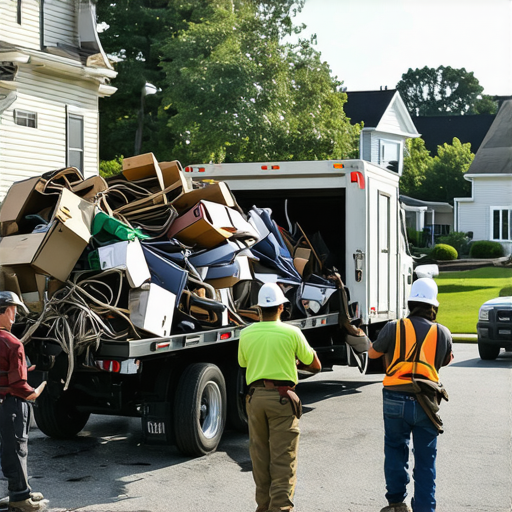
A business owner tried to save 500 dollars by hiring a guy with a pickup truck from a social media ad. Two weeks later, the police called him because his company’s confidential files were found in a ditch. Your junk is your liability until it hits the scale. This reality hits home when you realize that waste management is not just about moving trash. It is a strict logistical operation governed by mass, volume, and civil law. When you drop a 15-yard steel box on a public thoroughfare in Aurora, you are altering the local traffic patterns. You are introducing a multi-ton obstruction that requires specific safety protocols to protect your neighbors and your wallet. I have seen 20-yard containers sink into soft asphalt during an Aurora heatwave because the operator forgot to use protective wooden planks. The repair bill for the street was triple the cost of the dumpster rental itself.
Securing permits for public right-of-way placement
Aurora city ordinances dictate that any dumpster placed on a public street or sidewalk must have a valid right-of-way permit. You must apply through the city’s building or engineering department, paying the required fee and providing proof of insurance. This ensures the city tracks potential obstructions for emergency vehicles and snowplows.
The logistics of permit acquisition involve more than just paperwork. You must understand the specific zoning of your street. Is it a primary arterial or a residential side street? The city engineers look at sightlines. If your dumpster blocks the view of a stop sign or a driveway, they will deny the permit. In Aurora, the narrow corridors of the older neighborhoods near the Fox River present unique challenges. A roll-off truck needs at least 60 feet of linear space to safely drop a container. If you do not have that clearance, you are looking at a live-load situation where the truck stays on-site while you fill it. This costs more in labor but saves you from a 250 dollar daily fine for unpermitted street blockage. We calculate the turn radius of a Mack truck with a 22-foot bed to ensure we do not clip the neighbor’s parked car or the overhead utility lines. The physics of the hoist system are unforgiving. A cable snap during a street drop can send a steel container sliding 30 feet into traffic. Maintenance of the winch and the hydraulic cylinders is the only thing standing between a successful drop and a catastrophic failure.
“Waste is merely a resource in the wrong place; professional removal is the science of putting it back where it belongs.” – Disposal Industry Maxim
The physics of heavy-load visibility and marking
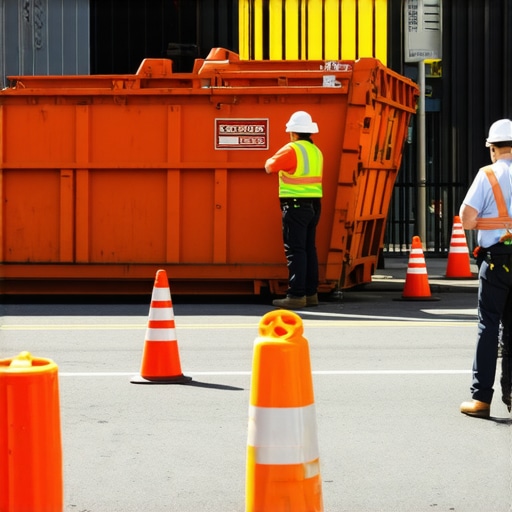
Visibility is the primary safety factor for street-side dumpster placement in high-traffic areas. You must use Type II barricades with flashing lights or high-visibility reflective tape on all four corners of the container. This prevents nighttime collisions from distracted drivers who may not see the dark steel box.
| Container Size | Max Weight Limit (Tons) | Ideal Aurora Project Use |
|---|---|---|
| 10 Cubic Yards | 2 Tons | Heavy debris like dirt, concrete, or sod |
| 15 Cubic Yards | 2.5 Tons | Small kitchen or bathroom remodels |
| 20 Cubic Yards | 3 Tons | Full garage clean outs or roofing jobs |
| 30 Cubic Yards | 4 Tons | Major estate clean outs or hoarding situations |
Consider the refraction of light on a rainy Aurora evening. A black or dark green dumpster vanishes against the wet pavement. This is why we insist on safety cones at least 20 feet behind and in front of the unit. The cubic-yard density of your load also matters for safety. If you are doing an appliance removal and you stack old refrigerators above the rim, you are creating a wind-resistance hazard. A 50-mile-per-hour gust can catch a loose refrigerator door and swing it into a passing vehicle. We follow the principle of cubing out the load. This means placing the heaviest items at the bottom and the lightest in the middle, ensuring nothing exceeds the height of the container walls. When we perform a garage clean out, we look for items like old tires or lead-acid batteries. These cannot be tossed into the general waste stream. The lead-acid batteries contain sulfuric acid which can leak and corrode the floor of the dumpster, eventually dripping onto the Aurora city streets. This constitutes a hazardous material spill, triggering a response from the fire department and environmental regulators. The cleanup costs for a single battery leak can exceed 5,000 dollars.
Load management to prevent debris flight
Properly loading a dumpster prevents material from flying out during transport or while sitting on a busy street. Use a heavy-duty tarp to cover the top of the container every night. Ensure all light materials like cardboard or plastic film are weighted down by heavier items like furniture or lumber.
- Tires (without rims)
- Lead-acid and Lithium batteries
- Liquid paints and solvents
- Propane tanks and pressurized cylinders
- Asbestos-containing materials
- Medical waste or sharps
- Refrigerants like Freon
The science of compaction is often misunderstood. People think they can just throw things in. A professional waste manager knows that air space is wasted money. When doing a furniture removal in Aurora, we dismantle the pieces first. A sofa takes up four cubic yards of space, but if you break it down, it only occupies one. This prevents the dumpster from overflowing. An overflowing dumpster is a legal time bomb. If a driver sees debris over the top rail, he will refuse the pick-up. You will be hit with a dry-run fee, which in the Aurora market ranges from 150 to 250 dollars. Furthermore, the wind shear on a busy street like Galena Boulevard can lift loose shingles right out of a container. While most people think recycling is always better, the carbon footprint of hauling low-grade plastics 500 miles often exceeds the impact of local, high-efficiency waste-to-energy incineration. We aim for high diversion rates by separating metals and clean wood at the source. This reduces the weight at the landfill scale and keeps your tipping fees manageable.
“Landfill capacity is a finite municipal resource; its management is a matter of public safety and environmental integrity.” – SWANA Technical Bulletin
Pedestrian protection and site security
Protecting pedestrians from sharp edges and tripping hazards is your legal responsibility when renting a dumpster. Keep the area around the container door clear of nails, glass, and wood scraps. Secure the door latch with a heavy-duty padlock to prevent unauthorized dumping or children playing inside.
Hoarder clean out Aurora projects are especially sensitive regarding site security. These jobs often involve massive amounts of loose debris that can spill into the sidewalk. We use temporary fencing around the dumpster to create a buffer zone. This prevents the public from coming into contact with potentially biohazardous materials often found in extreme hoarding cases. The structural load limits of residential stairs during a piano removal or heavy furniture removal must be checked. If we are moving a 600-pound upright piano out of a historic Aurora home, we calculate the psi on the porch steps. We use steel plates or thick plywood to distribute the weight. The same logic applies to the dumpster on the street. We use outrigger pads for the truck to prevent the hydraulic stabilizers from punching through the asphalt. The logistics of a hoarder clean out also require air quality monitoring. Dust and mold spores can become airborne as we disturb decades of settled material. We use industrial HEPA scrubbers to keep the site safe for our crew and the neighborhood. This is the difference between a professional service and a random guy with a truck. We manage the risk, the physics, and the local Aurora regulations to ensure the waste is moved without a single incident. Your junk is a logistical puzzle. We solve it with steel, hydraulics, and a deep understanding of the Resource Conservation and Recovery Act. Every pound of waste we pull out of a garage or basement is tracked and disposed of according to strict environmental manifests.