The legal liability of your unwanted waste
A business owner tried to save €500 by hiring a guy with a pickup truck from a social media ad. Two weeks later, the police called him because his company’s confidential files were found in a ditch. Your junk is your liability until it hits the scale. This is the reality of waste management in Aurora. People think they are just throwing things away, but away is a specific geographic location with legal consequences. When you hire a cut-rate hauler, you are gambling with your professional reputation. The law does not care if you did not know the guy was going to dump your old office chairs in a ravine. The paperwork trails back to you. I have seen companies shut down because of hazardous waste violations hidden in general construction debris. Every load requires a manifest. Every pound requires a destination. If you do not have a paper trail, you do not have a clean conscience. Waste management is not about moving objects from point A to point B. It is about the transfer of legal responsibility through proper documentation and environmental compliance. When we talk about Dumpster Rentals Aurora, we are talking about a regulated system of logistical movements designed to prevent environmental degradation.
The bureaucracy of the Aurora public right of way
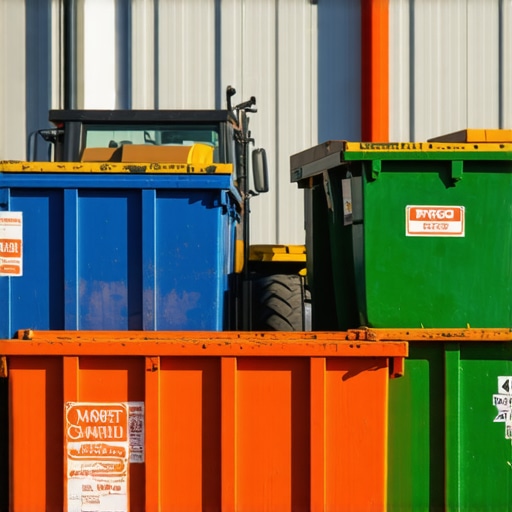
Dumpster Rentals Aurora permits are mandatory for any bin placed on public streets, sidewalks, or parkways within city limits. The City of Aurora Public Works Department requires a Right of Way permit that often carries a daily fee and specific insurance requirements to protect municipal infrastructure from heavy load damage. You cannot simply drop a twenty yard roll-off on the street because you ran out of driveway space. The pavement will crack under the weight of a fully loaded bin, especially if the outriggers are not properly padded. Aurora inspectors look for the permit number taped to the bin or the adjacent property. If they do not see it, the fines start at three figures and climb every hour the obstruction remains. Placing a dumpster on your private driveway usually avoids the permit fee, but you must ensure the truck has enough clearance. Most roll-off trucks need sixty feet of linear space to drop a bin. If you have low-hanging power lines or branches, the driver will refuse the drop. This is not because he is being difficult. It is because a snapped utility line is a five thousand dollar mistake that kills the profit margin of the entire week. You need to measure twice and order once.
“Waste is merely a resource in the wrong place; professional removal is the science of putting it back where it belongs.” – Disposal Industry Maxim
The physics of cubing out a truck
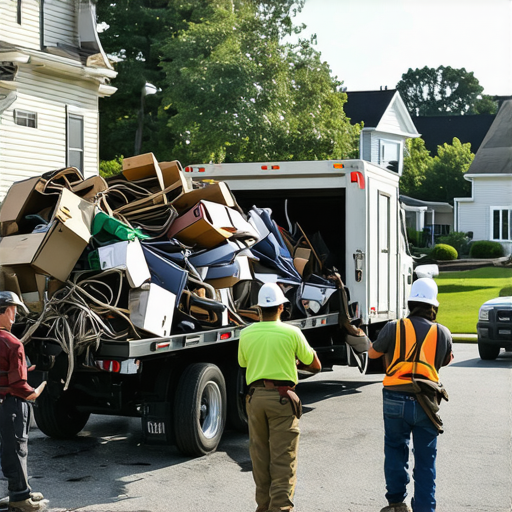
Logistical Tetris determines the profitability of a junk removal job, where every square inch of air space in the truck represents lost revenue and wasted fuel. Loading a truck for a Hoarder Clean Out Aurora project requires a deep understanding of material density and structural integrity. If you throw furniture in haphazardly, you leave pockets of air. Air does not weigh anything, but it takes up space. In this industry, space is money. We break down every table. We remove the legs from every desk. We stack mattresses vertically to act as walls for smaller, loose debris. The goal is to reach the weight limit of the truck at the exact moment the volume is full. This is called cubing out. If you hit your weight limit but the truck is only half full, you are hauling heavy materials like concrete or dirt. If the truck is overflowing but you are under weight, you are hauling fluff like insulation or empty boxes. Both scenarios are inefficient. A master loader knows how to mix heavy and light materials to balance the chassis. This protects the transmission and the hydraulic lift system. When the floor of a hoarder house starts bowing under forty years of damp newspapers, the physics of removal changes. You are no longer just hauling; you are performing a structural intervention. Each stack of paper is a brick. Ten thousand bricks can collapse a floor joist if you shift the weight too quickly.
The chemical ghost in the garage
Appliance removal in Aurora involves the strict management of refrigerants and heavy metals governed by the Resource Conservation and Recovery Act. Discarded refrigerators contain CFCs or HFCs that must be recovered by a certified technician before the steel shell can be recycled for scrap value. You cannot just toss a fridge into a landfill. The environmental impact of leaking coolant is catastrophic for the local ozone layer. Then you have the capacitors. Older units have PCBs. If those leak into the soil of an Aurora backyard, that property value nose-dives. Garage clean outs often reveal old lead-acid car batteries and buckets of used motor oil. These are not junk. These are hazardous materials. If a battery cracks in the back of a truck, the acid eats through the steel bed in minutes. It creates a fire hazard that can ignite a load of dry cardboard. We inspect every container. We smell for chemicals. We look for the tell-tale sheen of oil on the bottom of a pile. This is why professional Junk Removal Aurora costs more than a guy with a trailer. You are paying for the hazard mitigation and the legal disposal of toxins that would otherwise poison the local water table.
| Bin Size | Max Weight (Tons) | Ideal Project Type | Average Permit Requirement |
|---|---|---|---|
| 10 Yard | 2.0 | Small Bathroom Remodel | Driveway Only (Rarely Street) |
| 20 Yard | 3.5 | Garage Clean outs Aurora | Public Way Permit Likely |
| 30 Yard | 5.0 | Hoarder Clean Out Aurora | Mandatory Traffic Control Plan |
| 40 Yard | 6.0 | Commercial Demolition | Major Encroachment Permit |
The heavy cost of keeping everything
Furniture removal is the process of extracting bulky, low-value items that consume prime residential real estate while harboring allergens and pests. Modern particle-board furniture has zero resale value and high disposal costs due to the glues and resins used in manufacturing. I hate modern furniture. It is designed to be disposable. It breaks during the move. It cannot be donated because it is structural mush. When we perform Furniture Removal, we are often just hauling sawdust and formaldehyde to the incinerator. People hold onto these items thinking they have value. They don’t. The cost of the space they occupy is higher than the replacement cost of the item. A standard couch takes up thirty square feet. In Aurora, that square footage is worth money. If that couch is covered in cat hair and cigarette smoke, it is a biological hazard. We have to wrap it in plastic just to get it through the hallway so we don’t contaminate the rest of the air. The physics of moving a sleeper sofa up a flight of narrow stairs is a lesson in leverage and spinal health. One wrong move and the frame snaps, or worse, the loader’s back snaps. We use straps. We use dollies. We use experience.
Items your hauler cannot legally touch
- Lead-acid batteries and automotive fluids
- Propane tanks and pressurized cylinders
- Asbestos-containing materials (popcorn ceilings, old shingles)
- Biohazardous waste or medical needles
- Industrial solvents and concentrated pesticides
- Fluorescent light ballasts containing PCBs
“The mismanagement of solid waste is a direct threat to the health of our communities and the longevity of our natural resources.” – SWANA Environmental Policy
The carbon footprint of the local tip
Recycling is not always the most environmentally friendly option when the carbon emissions of transport exceed the recovery value of the material. In Aurora, high-efficiency waste-to-energy incineration is often a better alternative for low-grade plastics and contaminated wood. Many people think that putting everything in a blue bin is the answer. It is a lie. If a pizza box has grease on it, it is trash. If a plastic bottle has the wrong resin code, it is trash. Shipping that trash to a sorting facility three hundred miles away just to have them throw it in a landfill is a waste of diesel. Local disposal at a certified transfer station like the one off Route 31 ensures the material is handled according to Illinois EPA standards. We focus on metal recovery because steel and aluminum have a high circular value. We focus on clean wood recovery because it can be ground into mulch. The rest is about volume reduction. The less space we take up in the landfill, the longer that landfill stays open. When a landfill fills up, we have to truck waste further away, which increases the cost for every resident in Aurora. Efficiency is the only way to keep the city clean without breaking the bank. The science of waste is the science of survival in an urban environment.