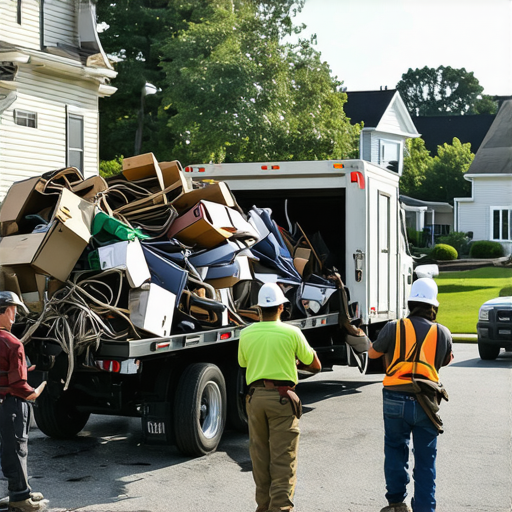

The structural anatomy of a hoarded home
Hoarder clean out Aurora services require an understanding of structural load limits and the physics of compression. When a home in the Aurora area transitions from a living space to a storage unit for excessive materials, the architectural integrity of the dwelling changes. The smell of diesel and hydraulic fluid hangs in the air when our trucks pull up. I once cleared a house where the junk was not just stuff. It was a structural hazard. We found the floor joists were bowing under the weight of 40 years of newspapers that had absorbed ten years of basement humidity. This is the reality of extreme hoarding. The cellulose in the paper acts like a sponge. A single stack of wet newspapers three feet high can exert a pressure of over 100 pounds per square foot. In a standard Aurora residential build, floor loads are rated for 40 pounds per square foot for live loads. When you exceed this, you are not just cleaning a room. You are performing a delicate structural extraction. The logistics of a hoarder clean out aurora project involve calculating the total tonnage before the first box is moved. We look for signs of foundation stress. We look for cracks in the drywall that indicate the house is literally moaning under the weight of the hoard. Professional intervention is about safety first. Logistics second. Disposal third.
“Waste is merely a resource in the wrong place; professional removal is the science of putting it back where it belongs.” – Disposal Industry Maxim
The mechanical science of appliance extraction
Appliance removal requires specialized knowledge of pressurized gases and heavy metal logistics to avoid environmental contamination. Every refrigerator or air conditioner in an Aurora garage is a potential environmental fine waiting to happen. The EPA regulates the handling of refrigerants under Section 608 of the Clean Air Act. You cannot just toss a fridge into a 15-yard dumpster rental Aurora bin. The compressor must be drained by a certified technician. The copper lines contain Freon or newer R-600a isobutane. If you snap those lines, you release ozone-depleting substances or flammable gases into the atmosphere. Then there is the physical weight. A vintage 1970s refrigerator weighs approximately 250 to 300 pounds. The center of gravity is high. Moving this down a flight of stairs in an Aurora basement requires a motorized stair-climbing dolly or a two-man team with shoulder dollies. We focus on the physics of the lever. We protect the hardwood floors with 1/8 inch Masonite sheets. We do not use cardboard. Cardboard compresses. Masonite distributes the load. This is the difference between a amateur haul and a professional logistics operation. Every appliance removal is a study in controlled mass transit.
| Material Type | Density (lbs per Cubic Yard) | Disposal Difficulty |
|---|---|---|
| Loose Household Junk | 250 – 300 | Low |
| Compacted Paper | 1,000 – 1,500 | High |
| Construction Debris | 2,000 – 2,400 | Medium |
| Appliance (Average) | 150 (Volumetric) | High (Hazmat) |
The tactical reality of Aurora junk removal
Junk removal Aurora crews must master the art of the load to maximize truck capacity and minimize tipping fees. Every cubic inch of air in the back of a junk truck is lost profit. We call it cubing out. If you throw items in haphazardly, you leave gaps. We treat the truck bed like a Tetris board. Heavy items like sofas and dressers go on the bottom to create a flat deck. This is called the floor load. Then we stack lighter boxes and bags on top. This prevents the load from shifting during transit on the I-225 or E-470. A shift in the load can change the center of gravity of the truck, making it dangerous to turn. The Aurora transfer stations charge by the ton or by the yard. If we bring a truck that is half-full of air, we are wasting fuel and time. We use 15-yard and 20-yard containers. A 15-yard dumpster typically has a weight limit of 2 to 3 tons. If you fill it with concrete from a garage clean out, you will exceed that limit in the first 12 inches of depth. Concrete weighs about 4,000 pounds per cubic yard. You do the math. You cannot fill a large dumpster with heavy debris. The truck wont be able to lift it. The hydraulic system will bypass. This is why professional junk removal Aurora services are superior to DIY rentals. We know the limits of the steel and the oil.
The legal burden of hazardous waste
Hazardous waste disposal in Aurora follows strict RCRA guidelines to prevent groundwater contamination and landfill fires. Your junk is your liability until it hits the scale. Many homeowners try to hide lead-acid batteries or old paint cans in the middle of a pile of furniture removal. This is a recipe for a disaster. When the packer blade of a trash truck crushes a lithium-ion battery, it creates a thermal runaway event. The fire is nearly impossible to extinguish with standard water-based systems. We inspect every load. Every single item. We look for the universal waste symbols. We look for flammable liquids. In Aurora, the household hazardous waste programs are specific. You cannot mix motor oil with latex paint. You cannot mix pesticides with cleaning chemicals. The chemical reactions can produce toxic chlorine gas or mustard gas equivalents in the back of the truck. We provide a barrier between your house and the landfill. We ensure that every piece of e-waste, from old CRT monitors to plasma TVs, goes to a certified R2 recycler. The lead glass in a CRT monitor is a significant toxic threat if broken in a standard landfill. We manage the manifest. We manage the risk.
“The Resource Conservation and Recovery Act (RCRA) gives EPA the authority to control hazardous waste from the cradle-to-grave.” – Environmental Protection Agency
- Leaking lead-acid car batteries
- Propane tanks and pressurized cylinders
- Biohazardous materials and medical sharps
- Ammunition and explosive powders
- Industrial solvents and concentrated acids
The financial math of dumpster rentals
Dumpster rentals Aurora pricing depends on volume, weight, and the duration of the project. Many people see a low price for a dumpster and jump on it. They don’t read the fine print about overage fees. In Aurora, the tipping fees at the Denver Arapahoe Disposal Site are based on weight. If you rent a 20-yard bin for a garage clean out, you might get a 2-ton limit. A single garage clean out can easily produce 4 tons of waste if there is old lumber, shingles, or magazines involved. At $60 to $90 per ton in overage fees, that cheap dumpster just doubled in price. Then there is the permit issue. If you place a dumpster on a public street in Aurora, you need a right-of-way permit. If you put it on your driveway, you risk cracking the asphalt or concrete. A fully loaded dumpster can weigh 10 tons. The small steel wheels of the container exert thousands of pounds of pressure on a small surface area. We use wood blocking to protect the surface. We calculate the turn radius for the roll-off truck. If your driveway has a steep grade, the truck might not be able to drop the bin safely. These are the logistical variables that the curbside cowboys ignore. We don’t.
The ecological debt of furniture disposal
Furniture removal in the modern era is a battle against low-quality materials and massive landfill volume. Most modern furniture is made of particle board and urea-formaldehyde resins. It has no structural value. It cannot be easily donated. It is essentially compressed sawdust and glue. When we perform furniture removal in Aurora, we look for real wood. Oak, maple, and walnut pieces are diverted to local charities or wood recyclers. The rest goes to the shredder. The volume of a single king-sized mattress is nearly two cubic yards. It cannot be compacted easily. The springs tangle in the landfill equipment. This is why many landfills charge a surcharge for mattresses. We focus on dismantling when possible. We strip the textiles. We pull the metal frames. We reduce the footprint. The goal is to move the most mass with the least environmental impact. It is a game of density. It is a game of logistics. It is the work we do every day in the streets of Aurora.