The smell of diesel and hydraulic fluid is the only honest way to start a morning in Aurora. My hands stay stained with the gray residue of oxidized aluminum and the persistent grit of industrial dust. After twenty-five years in the waste management trenches, I can tell you that a warehouse is never just empty. It is a puzzle of cubic density and liability. Most business owners look at a pile of discarded pallets and broken office chairs and see a weekend of work. I see a logistical failure. I see wasted air space that will eat your profit margins if you do not pack that 15-yard truck with the precision of a watchmaker. This is the reality of junk removal in Aurora. It is a science of volume, weight, and the cold hard math of tipping fees at the local transfer station.
A business owner once tried to save five hundred dollars by hiring a guy with a pickup truck from a social media ad. Two weeks later, the police called him because his company confidential files and three hazardous lead-acid batteries were found in a ditch near the Cherry Creek spillway. Your junk is your liability until it hits the scale and you have a stamped manifest in your hand. That amateur hauler did not just dump the trash. He dumped the legal responsibility for environmental remediation onto the business owner. In this industry, cheap is the most expensive mistake you can make. If you do not see a DOT number on the side of the truck, you are not hiring a professional. You are hiring a potential lawsuit.
The hidden geometry of the warehouse floor
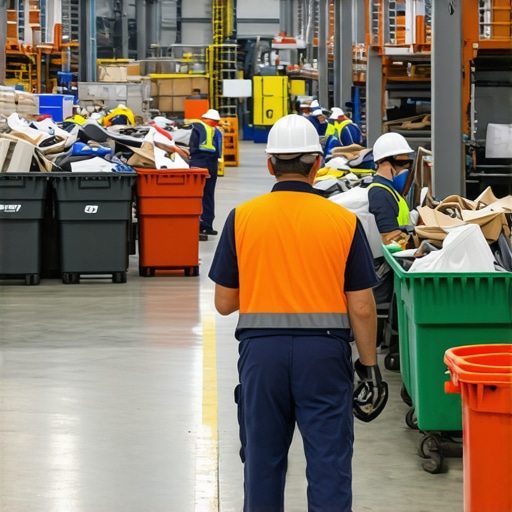
Warehouse clearing in Aurora requires a systematic approach to cubic yard density and material segregation to minimize tipping fees and maximize truck space. Professional junk removal teams prioritize palletized stacking and the breakdown of oversized furniture to eliminate empty air pockets. Efficiency is measured by the ratio of weight to volume during the load out phase. Every square inch of the cargo bed must be occupied by solid matter. When we talk about commercial junk disposal, we are talking about the physics of the fill. If you leave a gap between a discarded server rack and a stack of office partitions, you are paying to haul Aurora air. Air does not cost money to dump, but it costs a fortune to transport.
I have seen warehouses where the floor joists were actually beginning to deflect because of the sheer weight of abandoned inventory. This is especially true in older industrial sectors where decades of paper records have absorbed the high humidity of Illinois or Colorado summers. Paper is a sponge. A stack of dry files might weigh two hundred pounds. Add five years of basement moisture and that same stack becomes a four hundred pound slab of organic rot. When we handle hoarder clean out aurora projects in commercial spaces, we have to calculate the structural load before we even bring in the heavy dollies. If the floor snaps, the recovery cost dwarfs the removal fee.
The heavy cost of keeping everything
“Waste is merely a resource in the wrong place; professional removal is the science of putting it back where it belongs.” – Disposal Industry Maxim
Commercial property managers often underestimate the speed at which a space can become an environmental hazard. A single leaking capacitor in an old industrial freezer or a cracked CRT monitor can contaminate a whole floor’s worth of otherwise recyclable scrap. In Aurora, the regulations regarding e-waste are rigid for a reason. You cannot simply toss a motherboard into a general debris dumpster. The heavy metals like cadmium and hexavalent chromium are persistent. They do not just go away. They leach. This is why appliance removal and furniture removal must be treated as separate logistical streams. We segregate at the source. It is the only way to maintain a high diversion rate and keep the landfills from reaching capacity prematurely.
When we manage dumpster rentals Aurora logistics, we often see customers overfilling bins. There is a reason for the maximum fill line. It is not a suggestion. It is a safety limit based on the hydraulic lifting capacity of the roll-off truck and the legal weight limits of the axles. A 20-yard dumpster filled with concrete or roofing shingles will exceed legal road weights long before it is physically full. You have to understand the density of your waste. Concrete weighs approximately 4,000 pounds per cubic yard. Drywall is significantly lighter but takes up massive volume. Mixing the two is a rookie mistake that leads to heavy surcharges at the scale house.
A breakdown of disposal economics
| Material Category | Average Density (lbs/cu yd) | Disposal Priority | Aurora Recovery Potential |
|---|---|---|---|
| Mixed Office Furniture | 250 – 350 | Medium | Moderate (Metal Recovery) |
| Industrial Pallets (Wood) | 150 – 200 | High | High (Mulching/Fuel) |
| Electronic Waste (E-Waste) | 400 – 600 | Critical | Mandatory Recycling |
| Construction Debris (C&D) | 800 – 1,200 | Low | Low (Landfill Cover) |
While most people think recycling is always better, the carbon footprint of hauling low-grade plastics five hundred miles often exceeds the impact of local high-efficiency waste-to-energy incineration. In the waste management world, we have to look at the total life cycle of the material. If I spend forty gallons of diesel to move three tons of low-value plastic to a specialized facility across state lines, have I actually helped the environment. The answer is usually no. True sustainability in Aurora warehouse clearing is about finding the nearest high-value recovery point for metals and wood while disposing of contaminated materials locally and safely.
Items your hauler cannot legally touch
- Lead-acid batteries from forklifts or vehicles.
- Propane tanks or pressurized gas cylinders.
- Industrial solvents and flammable liquid chemicals.
- Asbestos-containing insulation or floor tiles.
- Biohazardous materials or medical waste.
- Unsealed fluorescent tubes containing mercury vapor.
“The Resource Conservation and Recovery Act (RCRA) creates the framework for the proper management of hazardous and non-hazardous solid waste.” – Environmental Protection Agency Standards
If you find these items during a garage clean out or a warehouse purge, they require a specialized hazmat manifest. A standard junk removal company that tosses a car battery into a truck full of dry cardboard is asking for a magnesium fire. I have seen trucks burn to the frame on the I-88 because someone hid a pool chemical jug inside a bag of household trash. We don’t just lift. We inspect. Every single item is checked for structural integrity and chemical stability before it enters our trucks. The risk to the driver and the facility is too high for anything less than total vigilance.
The logistics of the load out
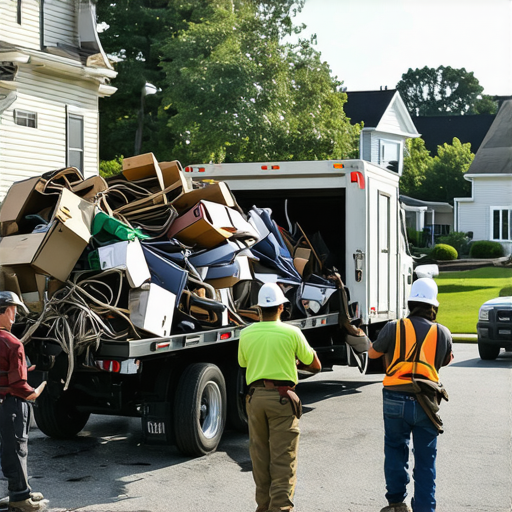
In Aurora, the narrow alleys behind some of the older commercial buildings mean we cannot always drop a 40-yard bin. We often have to utilize live-load trucks. This means our crew stays on site, the truck remains running, and we fill it in under an hour to avoid blocking traffic. This requires a level of choreography that most people do not associate with trash. We stage the items by weight. The heaviest items, like old machinery or appliance removal units, go at the bottom and the front of the bed to maintain proper axle weight distribution. The lighter items, like furniture removal remnants, are used to fill the gaps. We call this cubing out the load. If you can see the floor of the truck at any point during the process, you are losing money.
Hoarder clean out aurora scenarios are particularly difficult because of the psychological weight of the items. In a commercial setting, this often manifests as twenty years of useless parts that might be needed someday. That someday never comes. The parts just collect dust and provide a nesting ground for rodents. The cost of the square footage being used to store that junk is usually higher than the value of the junk itself. In Aurora, commercial real estate is too valuable to be used as a private museum for broken equipment. Clearing that space out is not just about cleaning. It is about reclaiming capital. Every square foot we clear is a square foot that can be used for productive inventory or new operations.