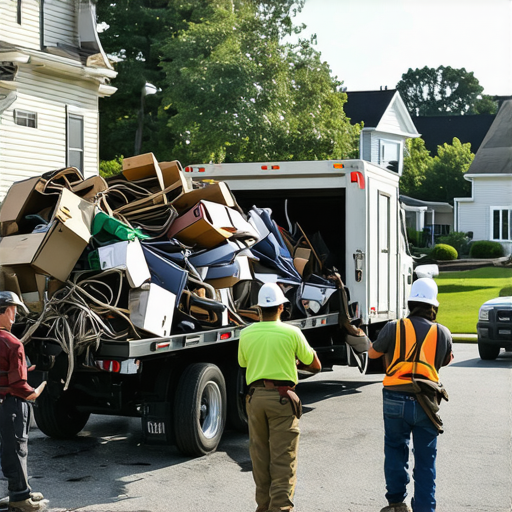
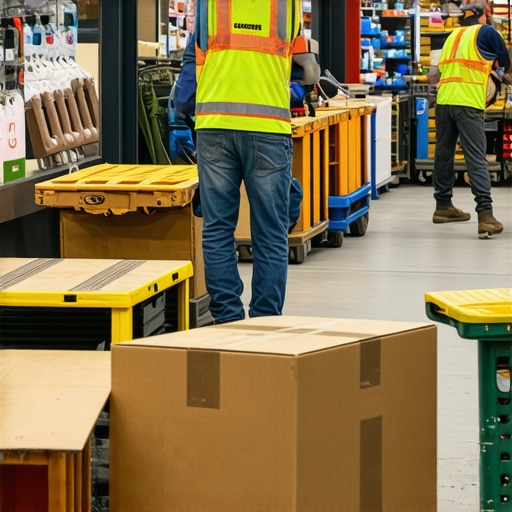
I smell diesel and hydraulic fluid before I even step out of my truck. That scent is the perfume of a long day ahead in Aurora, Illinois. For twenty-five years, I have lived by the law of the load. I look at a pile of retail fixtures and I do not see wood or metal. I see cubic yards. I see density. I see the tetris of a 15-yard bed that needs to be cubed out perfectly to ensure the client is not paying to haul air. Most people think junk removal is just about muscle. They are wrong. It is about logistics, physics, and the legal chain of custody. If you do not understand the tipping fees at the local transfer station or the weight limits of a tandem-axle truck, you are just a guy with a pickup and a bad back. I despise the curbside cowboys who undercut professional rates only to dump their load in a Kane County ditch. Your junk is your liability until it hits the certified scale. That is the first lesson of the haul.
Why your cheap hauler is a legal time bomb
Commercial Junk Disposal in Aurora requires a strict adherence to waste manifests and liability transfers to protect business owners from legal recourse. A business owner tried to save 500 dollars by hiring a guy with a pickup truck from a social media ad. Two weeks later, the police called him because his company confidential files and branded fixtures were found in a ditch near the Fox River. Your junk is your liability until it hits the scale. If the person you hire does not have a commercial carrier permit or proof of disposal at a legitimate site like the Orchard Hills Landfill, you are the one the EPA comes looking for. I have seen companies fined thousands because they prioritized a low quote over a legal paper trail. Retailers in Aurora must understand that once a fixture leaves the store, it is a piece of documented waste. Professional Junk Removal Aurora services provide the necessary peace of mind by ensuring that every pound of particle board and every ounce of scrap metal is accounted for in a legal manifest.
“Waste is merely a resource in the wrong place; professional removal is the science of putting it back where it belongs.” – Disposal Industry Maxim
The geometry of commercial debris
Retail Fixture Removal involves high-density materials like gondola shelving, tempered glass, and heavy-duty cash wraps that require specific dismantling techniques to maximize truck space. When I look at a dismantled retail display, I am calculating the displacement of air. Metal gondola uprights are the easiest because they stack flat. Particle board slatwall is the enemy. It is heavy, it is bulky, and it shatters into thousands of non-recyclable splinters if you do not handle it with a pry bar and a sledge. A standard 15-yard dump truck has a specific footprint. If you toss things in haphazardly, you cube out the truck while it is only half full. That is a waste of fuel and a waste of the customer money. We use the tetris method. We place the heavy, flat items on the bottom to create a floor. We then verticalize the uprights. We fill the gaps with smaller debris. This is not just cleaning. This is high-stakes spatial engineering. Every inch of wasted space in that truck is an environmental cost and a financial leak. You want the truck to be at eighty percent of its weight capacity when it hits the scale at the transfer station on Route 31. That is how you run a profitable and ethical operation.
Items your hauler cannot legally touch
Appliance removal and retail liquidation often reveal hazardous materials that fall under strict RCRA guidelines and cannot be mixed with general commercial waste. People often get angry when I refuse to take certain items. They do not realize that I am saving them from a federal violation. If I put a lead-acid battery or a leaking capacitor from an old refrigeration unit into my truck, I am risking a massive fire and a toxic spill. In Aurora, the local transfer stations have radiation detectors and chemical sniffers. If my load triggers those, the truck is impounded. The customer is then on the hook for a hazmat cleanup that costs ten times what the original junk removal would have. You must be honest with your hauler. If you have old cleaning chemicals under the sink or mercury switches in your thermostats, those require a separate manifest. We are professionals, not magicians. We follow the law because the law keeps the Fox Valley groundwater clean. Below is a breakdown of what a standard commercial junk truck can and cannot carry based on local and federal regulations.
| Material Type | Typical Density (Lbs/CuYd) | Legal Disposal Status |
|---|---|---|
| Steel Gondola Racks | 350 | Recyclable Scrap |
| Particle Board Slatwall | 650 | Landfill Only |
| Tempered Glass Panes | 200 | Special Handling |
| Lithium Ion Batteries | High | Prohibited / Hazmat |
| Commercial Carpet Tile | 400 | Landfill / Potential Fuel |
- Wet oil-based paint and thinners.
- Propane tanks and pressurized cylinders.
- Asbestos-containing floor tiles or pipe wrap.
- Fluorescent ballasts containing PCBs.
- Industrial solvents and degreasers.
The heavy burden of hoarder clean outs
Hoarder Clean Out aurora operations require a unique blend of structural engineering knowledge and biohazard awareness to ensure the safety of the removal crew. I once cleared a house where the junk was not just stuff. It was a structural hazard. We found the floor joists were bowing under the weight of 40 years of newspapers that had absorbed ten years of basement humidity. When you have three tons of wet paper in a residential room, you are dealing with a dead load that the house was never designed to hold. Removing that weight too quickly can actually cause the structure to shift. We have to do it in stages. We start by removing the perimeter items to assess the floor. We use moisture meters. We wear respirators. A lot of people think hoarding is just about being messy. It is actually about the physical degradation of a property. In Aurora, the humidity from the river valley makes these situations worse. The paper turns to mulch. The mulch grows mold. The mold eats the drywall. By the time we get the call for Garage Clean outs in these scenarios, we are often looking at a demolition project rather than a simple haul. We treat every item as a potential biohazard. We do not just toss things. We inspect for pests, rot, and hazardous materials hidden in the stacks.
Aurora transfer station reality check
Dumpster Rentals Aurora users must understand that the local tipping fees are dictated by the type of debris and the current market rate for recycled commodities. Many people rent a 20-yard dumpster for a retail renovation and then get shocked by the overage fees. They do not realize that concrete and brick weigh significantly more than wood and plastic. If you fill a 20-yard bin with broken sidewalk, that dumpster will be over the legal road limit before it is even a quarter full. In Aurora, the local ordinances are very specific about load covering and weight limits. If a truck is leaking debris on Orchard Road, the fines are heavy. When we do a Furniture Removal project, we have to consider the BTU potential of the wood. Some of the waste from our projects ends up at waste-to-energy plants. This is often better than a landfill. While most people think recycling is always better, the carbon footprint of hauling low-grade plastics 500 miles often exceeds the impact of local, high-efficiency waste-to-energy incineration. We try to keep things local. We use the transfer stations that prioritize material recovery. We want to see the steel go to the scrap yard and the clean wood go to the mulcher. The rest, unfortunately, goes to the hole. That is the reality of our current consumption cycle.
“Subtitle D of the Resource Conservation and Recovery Act establishes a framework for the management of non-hazardous solid waste.” – Environmental Protection Agency Policy
The physics of furniture removal
Furniture Removal in a commercial setting often involves heavy laminate desks and solid metal filing cabinets that can weigh hundreds of pounds and require specialized dollies. I have seen rookies blow out their backs because they thought they could manhandle a 400-pound oak executive desk down a narrow flight of stairs in a downtown Aurora office. You have to use the tools. You use the ramps. You use the shoulder dollies. You understand the center of gravity. When we remove heavy items, we are protecting the building as much as our bodies. We do not want to gouge the door frames or crack the floor tiles. Commercial furniture is built to stay put. It is often bolted together or built into the wall. Dismantling it requires a full set of impact drivers and hex keys. We do not just smash things. Smashing creates more volume. More volume means more truck loads. More truck loads mean more money out of the client pocket. We disassemble everything to the smallest possible footprint. This allows us to cube out the truck and provide the most efficient service possible. Whether it is a single sofa or a hundred cubicles, the physics remain the same. Control the weight, minimize the volume, and secure the load. This is how we keep the streets of Aurora clean and our clients out of legal trouble. Waste management is not a game. It is the infrastructure that keeps our city running. Every time we pull a loaded truck away from a job site, we are completing a vital link in the environmental chain.