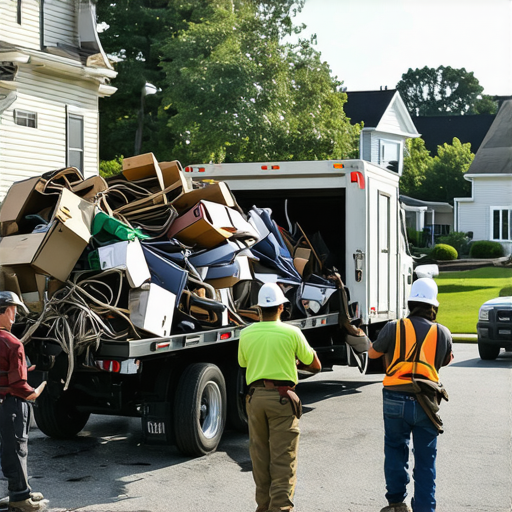

The smell of diesel exhaust and hydraulic fluid is the scent of a workspace being reclaimed. As a logistics manager with 25 years in the waste industry, I view an office transition not as a move, but as a high-stakes calculation of density and mass. Every cubic yard of air left in a truck is a profit leak. Every uninspected box is a potential legal liability for the business owner. Aurora office managers often underestimate the sheer weight of a decade of accumulated cubicle walls and legacy paper files. A business owner tried to save 500 dollars by hiring a guy with a pickup truck from a social media ad. Two weeks later, the police called him because his company confidential files were found in a ditch. Your junk is your liability until it hits the scale at the transfer station. We do not just haul. We mitigate risk.
The tactical reality of Aurora office transitions
Commercial junk disposal in Aurora requires a synchronized approach to office transition support, furniture removal, and e-waste recycling. Professional teams utilize 15-yard dumpsters and high-capacity box trucks to manage partition walls, server racks, and obsolete electronics while adhering to Aurora municipal waste codes and tipping fee regulations. Success depends on load density and material diversion rates. When we pull up to a site in Aurora, the first thing we look for is the exit path. Is the freight elevator serviced. Are the load limits of the floor capable of handling a pallet jack loaded with 800 pounds of lead-acid batteries from an old UPS system. This is not about lifting. This is about the physics of weight distribution. Particle board furniture is essentially compressed sawdust and glue. It has a high volume but low structural integrity. It shatters under pressure. Solid oak executive desks from the 1980s are a different beast. They require four-man teams and specialized dollies to prevent floor damage. We calculate the turn radius of every corner to ensure we do not leave a trail of drywall dust and gouged paint behind us.
“Waste is merely a resource in the wrong place; professional removal is the science of putting it back where it belongs.” – Disposal Industry Maxim
The geometry of the 15-yard dump truck
Cubic yardage is the primary metric for Aurora junk removal pricing, but weight-based fees apply to heavy debris like concrete or dense filing cabinets. Efficient loading techniques involve cubing out the truck, which means filling every gap with smaller items like office chairs or waste baskets to maximize the haul-to-trip ratio and reduce carbon footprints. I have seen rookies leave three feet of air at the top of a truck. That is a crime in my eyes. You pack the heavy stuff low. You break down the cubicle panels. You nest the chairs. You turn every void into a space for a smaller item. If you are paying for the volume, you should use the volume. We look at a pile of desks and see a jigsaw puzzle. We see 400 pounds of metal frame that can be diverted to a scrap yard and 600 pounds of wood waste that might head to a waste-to-energy facility. The BTU potential of dry office wood is significant, and keeping it out of the Denver Regional Landfill is a priority for any company with an ESG mandate.
| Material Type | Disposal Method | Decomposition Time |
|---|---|---|
| Office Paper | Pulping/Recycling | 2 to 6 weeks |
| Steel Desks | Scrap Metal Recovery | 50 years (if not recycled) |
| Plastic Chairs | Polymers Shredding | 450 to 1000 years |
| Laminated Wood | Landfill/Incineration | 10 to 30 years |
Managing the hidden toxicity of modern cubicles
Hazardous waste identification is a core component of Aurora commercial cleanouts, specifically regarding lithium batteries, fluorescent ballasts, and refrigerants found in breakroom appliances. Federal laws like the Resource Conservation and Recovery Act (RCRA) mandate that businesses track their hazardous material disposal from cradle to grave, making professional hauling a legal necessity rather than a luxury. Do not let a casual laborer toss a printer into a general waste bin. The toner cartridges contain fine powders that are respiratory irritants. The glass in the scanners contains lead. The circuit boards contain mercury and cadmium. If these leach into the local Aurora water table, the EPA does not look for the guy with the truck. They look for the name on the building. We provide a manifest. We provide a chain of custody. We ensure that when the load leaves your loading dock, it is headed for a certified processing facility.
“The mismanagement of solid waste is a global challenge that requires localized technical expertise and strict adherence to environmental protocols.” – Solid Waste Association of North America (SWANA)
- Mercury-containing thermostats and switches
- Lead-acid batteries from backup power supplies
- Propane tanks from outdoor grilling areas
- Unlabeled chemical cleaners or solvents
- Biohazardous materials or medical sharps
- Tires and automotive fluids
Aurora specific disposal laws and tipping fees
In Aurora, the transfer station logistics are dictated by local tipping fees and zoning ordinances that prohibit commercial dumpsters from blocking public right-of-ways without a temporary use permit. Utilizing Aurora junk removal services ensures compliance with Bulky Item Collection rules and the City of Aurora Solid Waste Division guidelines, preventing code enforcement fines during an office relocation. The Aurora Transfer Station has specific hours. If you miss the gate by five minutes, you are sitting on a loaded truck all night. That costs money in labor. We know the routes. We know which days the scales are backed up. We know how to navigate the narrow alleys behind the commercial strips on Havana Street or near the Aurora City Center. We also understand that a commercial lease often requires a broom-clean finish. We do not just take the big stuff. We sweep the dust. We remove the staples from the floor. We leave the space ready for the next tenant because that is how you protect a security deposit.
The heavy cost of keeping everything
Hoarder clean outs in a commercial context often involve legacy records and obsolete hardware that create fire hazards and structural floor loading issues. Identifying high-density storage areas during an Aurora garage clean out or office transition allows for phased removal, ensuring that appliance removal and furniture disposal do not exceed the weight limits of freight elevators or loading docks. I once cleared a site where the paper files were stacked so high the floor joists were bowing. Paper is heavy. When it absorbs humidity over a decade in a poorly ventilated storage room, it becomes a solid block of cellulose. It requires chainsaws sometimes. It requires sweat. It requires an understanding that junk removal is not a service industry. It is a logistics industry. We are moving mass through a funnel. The smaller the funnel, the more precision we need. Stop looking at your old office furniture as a memory. Look at it as a 40-ton obstacle between you and your next business milestone. Get it out. Get it done right. Protect your brand from the ditch.