
Commercial Junk Disposal Strategies for Aurora Office Renovations
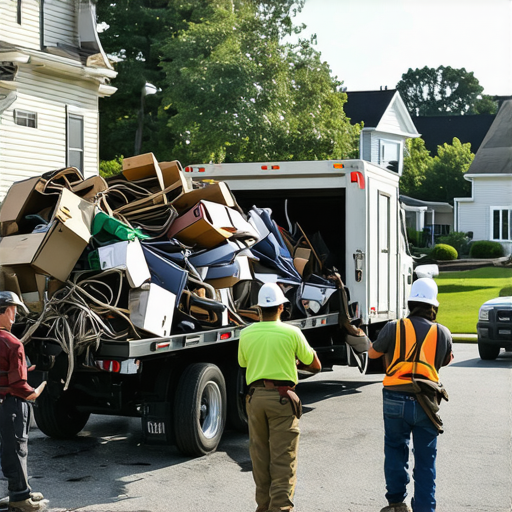
The smell of diesel and hydraulic fluid is the only way to start a Tuesday morning in Kane County. I stand on the asphalt of an Aurora office park, watching a crew struggle with a 15-yard truck that is half-full but effectively useless because they did not account for the protruding legs of executive desks. This is a logistical failure. My job is to ensure that your office cleanout does not become a legal or financial liability. A business owner once tried to save 500 dollars by hiring a guy with a pickup truck from a social media ad for an office move-out. Two weeks later, the police called him because his company confidential files and three broken monitors were found in a ditch near the Fox River. Your junk is your liability until it hits the scale at the transfer station and you have a receipt in hand. Professional disposal is not about lifting; it is about the chain of custody and the science of volumetric density. Every cubic inch of air in that truck is money leaking out of your pocket. We do not just haul. We audit. We inspect. We clear. The floor snapped under the weight of an old fireproof filing cabinet. That is what happens when you ignore load-bearing limits. We don’t make those mistakes.
The high cost of hidden weight
Commercial Junk Disposal in Aurora requires a precise understanding of tipping fees, volumetric weight, and Illinois EPA compliance. When dealing with office renovations, the primary challenge is the density of materials like particle board desks, which weigh significantly more than residential furniture, requiring heavy-duty hauling equipment and certified disposal routes. Tipping fees at local Aurora transfer stations are calculated by the ton, but your hauler charges you by the yard. If your hauler does not know how to break down furniture to minimize volume while maximizing weight distribution, you are paying for the transport of Illinois air. Particle board is a particularly nasty offender. It is essentially sawdust held together by urea-formaldehyde resins. You cannot simply burn it, and many recycling centers will not touch it because the glue fouls the machinery. It is a dead-end material that belongs in a lined landfill, and the cost to put it there is rising every year. I have seen rookies try to lift a 72-inch mahogany veneer desk without a dolly, only to realize the internal frame is made of high-density fiberboard that shears under its own weight. We use mechanical advantage because gravity never takes a day off. The physics of the load dictate the profit of the job.
| Material Type | Density (lbs/cu yd) | Disposal Priority | Aurora Recovery Rate |
|---|---|---|---|
| Office Furniture (Mixed) | 250-400 | Landfill/Donation | 35% |
| E-Waste (Computers/Monitors) | 450-600 | Specialized Recycling | 98% |
| Construction Debris (Drywall) | 1200-1600 | Landfill | 10% |
| Metal Filing Cabinets | 800-1100 | Scrap Metal | 100% |
“Waste is merely a resource in the wrong place; professional removal is the science of putting it back where it belongs.” – Disposal Industry Maxim
Aurora regulations and the Kane County squeeze
Junk Removal Aurora operations must adhere to the Kane County Solid Waste Management Plan, which mandates specific recycling protocols for electronics and hazardous waste diversion. Businesses must ensure their commercial debris is taken to permitted transfer stations like the Waste Management facility on Orchard Road to avoid municipal fines and environmental non-compliance penalties. The local authorities are aggressive about illegal dumping because the Fox River ecosystem is sensitive. If your “cheap” hauler dumps a load of old cubicle walls in a forest preserve, the tracking numbers on those assets will lead investigators right back to your front door. You are responsible for the waste until it is processed. This is why we provide a manifest. While most people think recycling is always better, the carbon footprint of hauling low-grade plastics 500 miles often exceeds the impact of local, high-efficiency waste-to-energy incineration. In some cases, the most responsible thing to do with non-recyclable office waste is to send it to a local landfill that captures methane for power generation. It is about the net lifecycle impact, not just the warm feeling of putting something in a blue bin. We track the BTU potential of recovered wood waste. We know where the metal goes. We understand the chemistry of the landfill liners in Northern Illinois.
The ghost in the cubicle
Office Renovation Cleanups involve the systematic removal of modular workstations, commercial carpeting, and suspended ceiling tiles which often contain synthetic fibers and adhesives. Successful Junk Removal in these environments requires a phased extraction plan to maintain building egress safety and elevator weight capacity, ensuring that commercial furniture removal does not damage the primary structure. Cubicle partitions are the ghosts of the modern office. They are heavy, awkward, and filled with fiberglass insulation and aluminum tracks. If you do not have the right hex keys and impact drivers, you will spend three days doing a one-day job. We strip them down to the frame. The aluminum goes to the scrap yard to offset your costs. The fabric panels go to the landfill. The internal wiring is stripped for copper. This is the Tetris of the waste industry. I have seen managers try to handle a Hoarder Clean Out aurora situation in a warehouse using only a 10-yard dumpster. They filled it in twenty minutes with uncompressed cardboard. They wasted 400 dollars on a haul that should have cost 50. Use your head. Compress the load. Break the boxes. Stack the chairs. We don’t leave gaps. We don’t leave air. We leave a clean floor and a valid receipt. Empty space in a truck is a sin. We pack until the springs groan.
Mandatory Exclusion List
- Wet Paint and Solvent-based Thinners
- Lead-Acid Batteries from Backup Power Systems
- Unused Propane or Pressurized Oxygen Tanks
- Asbestos-containing Floor Tiles or Pipe Insulation
- Fluorescent Light Ballasts containing PCBs
- Industrial Chemicals or Biohazardous Materials
“Proper waste management is the silent backbone of urban civilization; without it, the city stops breathing.” – Solid Waste Association of North America (SWANA) Guidelines
The heavy cost of keeping everything
Appliance removal and Furniture Removal in a commercial setting often trigger Resource Conservation and Recovery Act (RCRA) requirements if the items contain mercury switches or refrigerants. Professional Junk Removal Aurora services must verify that all refrigeration units are evacuated by EPA-certified technicians before the metal can be scrapped, preventing the release of ozone-depleting substances into the atmosphere. Many office managers suffer from a version of corporate hoarding. They keep old servers because “they might be useful” or “there is data on them.” Those servers are just taking up expensive real estate. We offer secure destruction. We take the hardware to a shredder. The data is gone. The space is back. The liability is neutralized. When you calculate the cost per square foot of your Aurora office, that pile of broken chairs in the corner is costing you 200 dollars a month in rent. Throwing it away is an investment. Keeping it is a loss. We provide the Dumpster Rentals Aurora businesses need when they want to do the labor themselves, but we recommend full service for anything involving stairs or elevators. A 20-yard dumpster is a permit nightmare in some parts of downtown Aurora. We know where the narrow streets are. We know which alleys can handle a roll-off truck. We know the municipal code better than the city planners. We do the job. We clear the site. We move to the next load. The truck is calling. The scales are waiting. The cycle continues.
This post highlights some crucial points that resonate with me, especially the emphasis on proper disposal and the hidden costs that come with DIY junk removal. I’ve seen firsthand how underestimating the weight and volume of office furniture can lead to unexpected expenses, not to mention the legal risks involved. The bit about particle board and formaldehyde adhesives caught my attention because many office cleanouts end up with these materials improperly handled. From my experience working in office renovations, a phased approach to dismantling workflows, with proper packing and recycling, really makes a difference—not just in costs but also in avoiding disruption.
One thing I’ve noticed is how often businesses overlook the importance of a detailed removal plan for ceiling tiles and loose materials, which can be hazardous if not managed correctly. How do others here approach safety and compliance during such detailed phases of office cleanup? Do you incorporate specific checklists or safety protocols that help streamline the process and prevent costly mistakes? I’d love to hear strategies that have worked well.