The high price of a cheap pickup truck
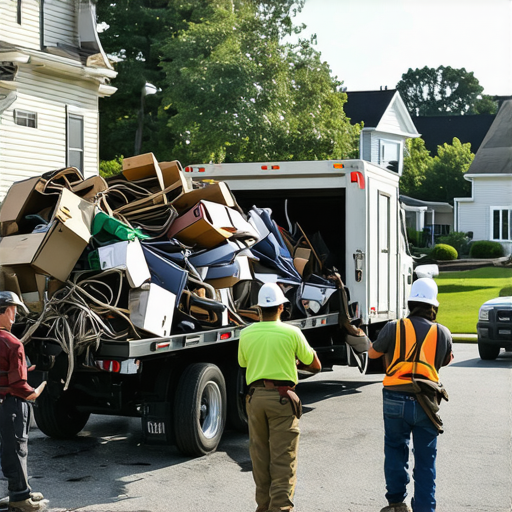
Commercial junk removal involves the systematic extraction and legal disposal of business assets that no longer serve a functional purpose. In Aurora, this process requires strict adherence to Illinois environmental statutes and municipal waste codes. A business owner tried to save 500 dollars by hiring a guy with a pickup truck from a social media ad. Two weeks later, the police called him because his company’s confidential files were found in a ditch. Your junk is your liability until it hits the scale at a certified transfer station. This is the reality of waste management. When you hire an unvetted hauler, you are gambling with your brand reputation. If that haulers truck leaks oil on your commercial lot or if they toss a lead acid battery into a standard dumpster, the fines come back to the point of origin. Professional junk removal Aurora services prioritize a chain of custody. We document the removal of multi-function printers and old server racks to ensure that the electronic waste is diverted from landfills. This is not just about clearing floor space. It is about mitigating the long term risk of environmental non-compliance. The logistics of a commercial clean out are vastly different from a residential garage clean out. We are talking about high density materials. A single lateral filing cabinet can weigh 200 pounds when empty. Multiply that by forty units and you have a logistics puzzle that requires heavy duty equipment and a crew that understands structural load limits.
The cubic reality of office cubicles
Office furniture removal demands a high level of logistical precision because partition walls and desks are designed for stability, not easy extraction. The physics of furniture removal in a commercial setting often involves the complete teardown of modular systems. Most modern office partitions are held together by complex cam locks and tension rods. If you try to move these units whole, you risk damaging doorways and elevators. We look at a floor plan and see cubic volume. A standard 15 yard truck can be filled in minutes if the furniture is not broken down. We call this cubing out the truck with air. To maximize efficiency, every desk must be flat packed. This increases the density of the load and reduces the number of trips to the transfer station. In Aurora, tipping fees are calculated by weight, but your hauling cost is often tied to volume. If your hauler does not know how to pack a truck like a Tetris master, you are paying for the air between the chair legs. This is why professional junk removal is a science. We use industrial grade hex keys and impact drivers to reduce a 60 square foot cubicle into a stack of panels less than six inches thick. This density allows us to fit an entire department into a single load, saving the client thousands in fuel surcharges and labor hours.
“Waste is merely a resource in the wrong place; professional removal is the science of putting it back where it belongs.” – Disposal Industry Maxim
Why your old server room is a legal liability
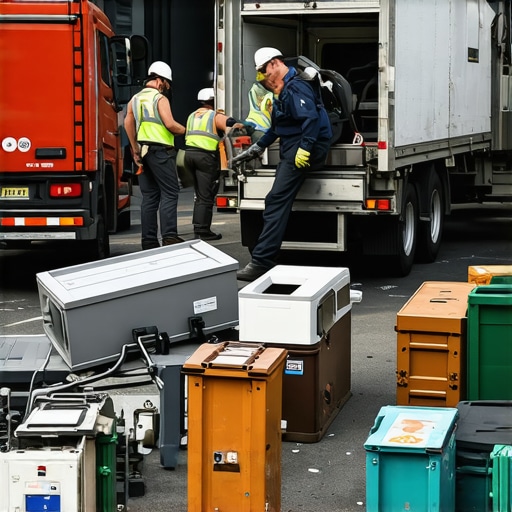
Electronic waste or e-waste consists of discarded electrical devices that contain toxic heavy metals and hazardous chemicals. Under the Illinois Electronic Products Recycling and Reuse Act, businesses in Aurora are prohibited from disposing of computers, monitors, and printers in general trash. These items contain lead, mercury, and cadmium. When these metals leach into the groundwater, the environmental impact is devastating. A server room decommissioning is a high stakes operation. We are not just lifting boxes. We are managing hazardous materials. Every server unit contains circuit boards with gold, silver, and copper. However, they also contain brominated flame retardants. If these units are crushed in a standard garbage truck, those chemicals are released into the air. We provide a manifest that proves these items were taken to a certified R2 or e-Stewards recycler. This paper trail is your shield during an EPA audit. Furthermore, appliance removal in an office setting often includes old breakroom refrigerators. These units contain refrigerants like R-134a or older CFCs. Venting these gases into the atmosphere is a federal offense. We use recovery machines to safely extract the gas before the metal frame is recycled. This level of detail is what separates a professional crew from a casual laborer with a trailer.
The physics of the fifteen yard dumpster rental
Dumpster rentals Aurora businesses utilize must be sized according to the material density to avoid overweight penalties and safety hazards. A 15 yard dumpster has a weight limit that is easily exceeded if you are loading heavy materials like concrete or old oak desks. If you overfill a dumpster, the hydraulic lift on the truck might fail, or worse, the load becomes unstable during transport. We calculate the PSI of the asphalt before placing a bin. In Aurora, the summer heat can soften the pavement. Without wooden planks placed under the steel rollers, a heavy dumpster will sink into your parking lot, causing thousands in damage. This is the logistical zooming we apply to every job. We analyze the debris stream. Is it mostly light office chairs or heavy paper archives? Paper is incredibly dense. A standard banker box of files weighs about 30 pounds. If you have 100 boxes, that is 3,000 pounds of dead weight in a very small footprint. If that weight is not centered over the axles of the trailer, the vehicle will fish tail on the Interstate. We manage the center of gravity. We put the heavy files at the bottom and the light office partitions on top. This ensures a safe haul and maximum volume utilization.
| Material Type | Average Weight (lbs/cu yd) | Disposal Difficulty | Primary Recovery Method |
|---|---|---|---|
| Office Cubicles | 250 | High | Metal Scrap/Wood Chip |
| Desktop Computers | 800 | Extreme | E-Waste Smelting |
| Paper Archives | 1200 | Medium | Pulping/Recycling |
| Industrial Carpeting | 400 | High | Waste-to-Energy |
| Breakroom Appliances | 600 | Medium | Steel Recovery |
Breaking down the Aurora transfer station logic
Local waste disposal in the Aurora region is governed by the proximity to major transfer stations and the specific tipping rates of the Orchard Hills Landfill. Every mile matters when you are operating a fleet of heavy trucks. If we have to sit in traffic on Route 59, the labor cost climbs. We schedule our pickups to avoid the morning rush, ensuring that we hit the scales when the lines are shortest. In Aurora, we have to be mindful of the different rules for Kane and DuPage counties. Some facilities will not accept landscape waste mixed with commercial debris. If a crew is sloppy and tosses a bag of grass clippings from a garage clean out into a load of office furniture, the entire load can be rejected at the gate. This results in a double tipping fee and wasted fuel. We also manage the hoarder clean out aurora scenarios where a commercial basement has been used as a dumping ground for decades. These jobs often require personal protective equipment (PPE) because of the accumulation of rodent droppings and mold. The biological load is as much of a concern as the physical load. We treat every item as a potential biohazard until it is cleared. This rigorous approach ensures that our crew stays safe and your property is left in a sanitized state.
The heavy cost of office decommissioning
Decommissioning a commercial space requires a comprehensive plan that accounts for every item from the ceiling tiles to the floor bolts. When a business moves, the lease often requires the space to be returned in broom clean condition. This means removing every stray wire and every anchored shelf. We use industrial grinders to cut off floor bolts that held down heavy shelving units. If you leave these bolts protruding, they are a trip hazard and a liability. We also handle appliance removal for large scale commercial kitchens or breakrooms. These jobs often involve heavy lifting in tight spaces. We use stair climbing dollies and specialized ramps to ensure that we do not gouge the floors. The floor is often the most expensive part of a commercial lease exit. If a junk removal crew drags a heavy filing cabinet across the hardwood or tile, you lose your security deposit. We use floor protection sheets on every job. This is the difference between a cheap service and a professional waste management strategy. We respect the property as much as we respect the schedule.
“Modern waste management is the final frontier of urban logistics; efficiency here defines the sustainability of our cities.” – SWANA Technical Report
Items Your Hauler Cannot Legally Touch
- Lead-acid batteries: Found in backup power supplies (UPS), these are highly corrosive and must be handled by specialized recyclers.
- Industrial solvents and thinners: Often left in maintenance closets, these are flammable hazards that require hazmat manifests.
- Unlabeled pressurized cylinders: Fire extinguishers or oxygen tanks can become projectiles if the valve is sheared off in a compactor.
- Biohazardous materials: Any waste contaminated with blood or bodily fluids requires specialized medical waste disposal.
- Loose friable asbestos: Commonly found in older office ceiling tiles or pipe insulation, this requires a licensed abatement team.
- Mercury-containing thermostats: These small devices can contaminate an entire truckload of debris if broken.
The science of appliance removal and chemical recovery
Removing commercial appliances involves the careful management of integrated circuits and chemical coolants that are regulated by the Clean Air Act. When we perform appliance removal in Aurora, we are looking for more than just scrap metal. We are looking for environmental compliance. Most commercial refrigerators use high pressure refrigerants. Our technicians are trained to identify the type of gas used. We do not simply cut lines. We use a vacuum recovery system to pull the gas into a certified cylinder. This gas is then sent to a reclamation facility where it is cleaned and reused. The steel casing of the appliance is then sent to a local metal shredder like the ones found in the industrial corridors of Aurora. This process turns a potential environmental pollutant into raw material for new manufacturing. The same logic applies to commercial microwave ovens and vending machines. These units contain capacitors that can hold a lethal electrical charge long after the unit is unplugged. We discharge these units before transport to ensure the safety of our loaders. Every step in our process is designed to minimize risk and maximize the diversion rate. We aim for a ninety percent diversion rate on every commercial job, meaning only ten percent of the volume actually ends up in a landfill. This is how we combat the throwaway culture and provide value to our Aurora clients.