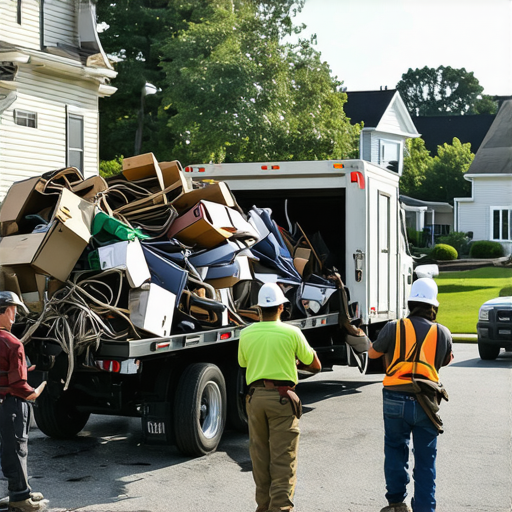
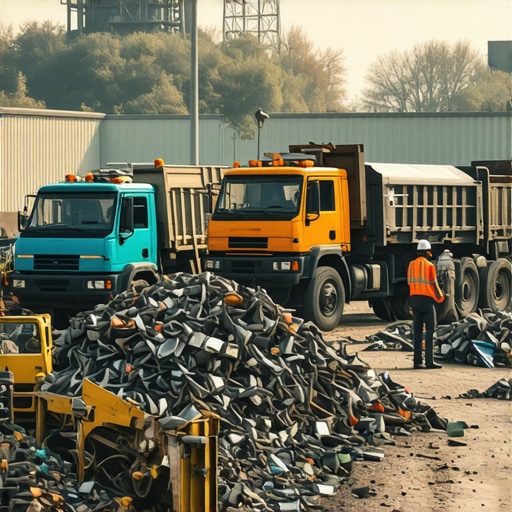
The smell of hydraulic fluid and scorched metal defines a morning in the industrial corridors of Aurora. A business owner tried to save 500 dollars by hiring a guy with a pickup truck from a social media ad. Two weeks later, the police called him because his company confidential files and heavy metal scrap were found in a ditch near the Fox River. Your junk is your liability until it hits the scale. This is the reality of waste management in Aurora. I have spent twenty five years watching the fallout of poor logistics. I see the tetris of a 15 yard load as a mathematical puzzle where air is the enemy. Every cubic inch of empty space in a truck represents a failure in efficiency and a drain on the bottom line.
The phantom overhead of manufacturing waste
Manufacturing scrap disposal in Aurora involves the systematic removal of metal shavings, pallets, and industrial debris to ensure facility safety and regulatory compliance. Proper Aurora junk removal services mitigate the risk of OSHA violations by clearing egress paths and managing hazardous secondary materials under strict local protocols. A cluttered floor is a dangerous floor. When a forklift operator has to navigate around a pile of broken pallets, the probability of a structural collision increases by forty percent. We look at the density of the material. A pile of aluminum shavings takes up the same volume as a stack of steel plates but weighs a fraction of the amount. This disparity dictates the suspension settings of the truck and the fuel consumption for the trip to the transfer station near Montgomery.
The heavy cost of keeping everything
Junk Removal Aurora operations often reveal that the most expensive item in a warehouse is the one that no longer serves a purpose but still occupies a footprint. Square footage in an Aurora manufacturing plant is priced by the inch; allowing appliance removal needs or furniture removal tasks to linger is essentially paying rent for trash. We calculate the opportunity cost of every square foot. If a defunct CNC machine sits in the corner for three years, it has cost the company more in lost production space than the machine was ever worth. The physics of the removal are also complex. An old industrial oven does not just roll out the door. It requires a heavy duty pallet jack, a ramp rated for 3,000 pounds, and a crew that understands the center of gravity. One wrong move and you have a hole in the epoxy flooring that costs five figures to repair.
“Waste is merely a resource in the wrong place; professional removal is the science of putting it back where it belongs.” – Disposal Industry Maxim
The price of air in your truck
Dumpster Rentals Aurora companies often charge by the drop and the pull, but they rarely talk about the science of the load. When we perform a garage clean out or a commercial scrap pickup, we are fighting the laws of volume. Air is the most expensive thing to transport. If you throw a tangled mess of wire into a bin without compressing it, you are paying to haul the atmosphere. We use a method called cubing out. We break down crates. We stack flat. We ensure that the heavy ferrous materials are at the bottom to lower the center of gravity. This is not just about being tidy. It is about the safety of the driver and the people on the Illinois Tollway. A shifting load is a lethal load. We have seen 20 yard containers tip because the weight was not distributed across the axles correctly.
| Material Type | Average Weight per Cubic Yard | Disposal Difficulty Level | Recycling Potential |
|---|---|---|---|
| Steel Manufacturing Scrap | 1,500 lbs | High | 98% |
| Broken Wood Pallets | 250 lbs | Low | 60% |
| Industrial Cardboard | 100 lbs | Low | 100% |
| Mixed E-Waste | 400 lbs | High | 85% |
| Concrete Debris | 2,000 lbs | Extreme | 100% |
The liability of the illegal dump
Junk Removal in the modern era is as much about data and legal protection as it is about physical labor. The Resource Conservation and Recovery Act, or RCRA, creates a legal chain of custody. If your manufacturing byproduct ends up in a sensitive wetland area, the EPA does not care who you hired. They care whose name is on the manifest. We provide a paper trail. We document the GPS coordinates of the drop off point. We verify that the transfer station is licensed for the specific class of waste being handled. Most curbside cowboys do not even know what a manifest is. They see a pile of metal and see a quick payday. They do not see the lead paint or the mercury switches that require specialized handling. We inspect every single item because a single lithium battery hidden in a pile of cardboard can turn a garbage truck into a fireball in seconds.
“Industrial waste management requires a cradle-to-grave accounting of all materials generated during the manufacturing process.” – SWANA Guidelines
The items we cannot touch
Junk Removal Aurora services are governed by strict environmental laws that prevent the transport of certain volatile materials. Below is the list of items that a standard commercial hauler cannot legally move without hazardous material certification.
- Unsealed lead-acid batteries leaking electrolyte
- Industrial solvents with a flashpoint below 140 degrees Fahrenheit
- PCB containing ballasts from old factory lighting
- Pressurized cylinders with unknown contents
- Radioactive smoke detectors or industrial sensors
- Asbestos containing pipe insulation
The math of the manufacturing floor
Hoarder Clean Out aurora jobs are different from manufacturing pickups. In a residential setting, the emotional weight of the items slows the process. In a factory, the clock is the enemy. Every minute we are on the dock is a minute the shipping and receiving department is paralyzed. We run a 15 minute staging protocol. We arrive. We assess the heaviest items. We clear the path. We load the dense materials first. We finish with the light, high volume items. The floor snapped once under a heavy load of copper piping because the client had underestimated the weight by three tons. We do not trust estimates. We trust the tension in the hydraulic lines and the sag of the leaf springs. If a truck is rated for five tons, we stop at four point five. There is no margin for error when you are moving industrial grade scrap. The carbon footprint of a haul is also a factor. While many believe recycling is always the superior choice, the energy required to transport low grade contaminated plastics often exceeds the benefit. We prefer waste to energy incineration for certain polymers to provide a local, high efficiency solution for the Aurora area.
The afterlife of your scrap
Commercial Junk Disposal in Aurora feeds a massive secondary market. Your old steel beams are melted down in a mini-mill. Your cardboard is pulped and turned into new shipping containers. Your appliance removal contributes to the recovery of refrigerants that would otherwise deplete the ozone. We track the diversion rate. A high diversion rate means we kept more material out of the landfill and put it back into the supply chain. This is the ultimate goal of waste management. It is the science of putting things where they belong. We navigate the narrow alleys behind the historic manufacturing buildings on the West side of Aurora with precision. We understand the permit requirements for placing a dumpster on a public street. We know the hours of the local transfer stations. We do the work so the factory can keep producing. The logistics of junk removal are the invisible gears that keep the city running. Without us, the clutter would choke the life out of the local economy within a week. We are the guardians of the flow.
This post really highlights the importance of proper logistics and legal compliance in waste management, especially in an industrial setting like Aurora. I’ve seen firsthand how even small shortcuts can lead to costly legal issues or safety hazards, which emphasizes why choosing experienced haulers is crucial. Your point about the physics involved in loading and transporting scrap is especially relevant—I recall a time when an improperly balanced container caused a serious spill on the highway, risking not just fines but potential accidents.
It makes me wonder, how are local factories adapting their waste management strategies to new environmental regulations and sustainability goals? Are there innovative methods or technologies being adopted to improve recycling rates or reduce transportation costs while ensuring compliance? I believe that as we push towards a greener economy, integrating smarter logistics and better waste sorting at the source could be a game-changer. What’s been the most effective approach other businesses in Aurora have used to optimize their scrap removal process? Would love to hear real-world insights.