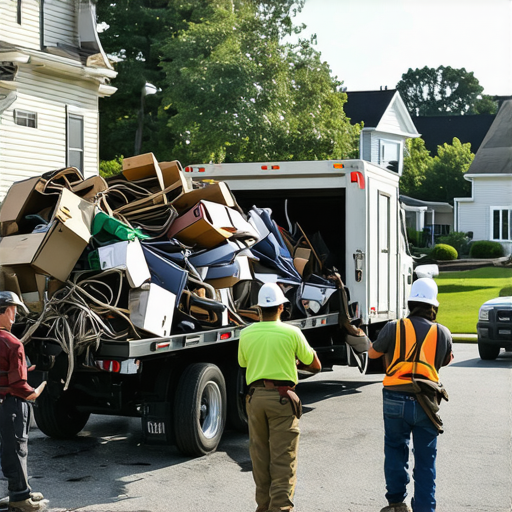

The liability of the low bid
Commercial junk disposal in Aurora requires a strict chain of custody to protect your business from legal repercussions. Hiring unlicensed haulers often results in illegal dumping at the Cherry Creek State Park outskirts. Professional removal ensures all inventory, fixtures, and debris reach the Denver Arapahoe Disposal Site legally.
A business owner tried to save 500 dollars by hiring a guy with a pickup truck from a social media ad. Two weeks later, the police called him because his company’s confidential files were found in a ditch. Your junk is your liability until it hits the scale. This is the reality of the waste industry. You think you are paying for labor. You are actually paying for the transfer of liability. When that truck pulls away from your loading dock in Aurora, you better have a receipt from a registered transfer station. Without it, you are one rogue driver away from an EPA violation that costs ten times the original quote. I have seen retail managers lose their jobs over a pile of old signage dumped in a vacant lot. The city tracks these things. Aurora code enforcement does not play games with commercial waste. They look for branded materials. They find the source. They issue the fine. It is a simple, brutal cycle for the unprepared.
“Waste is merely a resource in the wrong place; professional removal is the science of putting it back where it belongs.” – Disposal Industry Maxim
The physics of the loading dock
Retail cleanup logistics depend on the volumetric density of store fixtures and the weight limits of the hydraulic lifts used. Efficient loading requires breaking down gondola shelving and stacking tempered glass safely. Improperly balanced loads in a fifteen yard truck cause dangerous axle stress during transport across Aurora.
The air in a retail backroom smells like old cardboard and floor wax. It is heavy. It is stagnant. When you start pulling out the old displays, you realize how much space ‘nothing’ takes up. A standard retail rack is 90 percent air. If you toss it into a truck whole, you are paying to haul Aurora air. We call this ‘cubing out’ the truck before we ‘scale out’ on weight. My teams use reciprocating saws with carbide tipped blades. We cut the steel. We flatten the wire racks. We turn a mountain into a molehill. Every cubic inch of that truck bed costs money in fuel and tipping fees. If you see your hauler throwing items in loosely, they are robbing you. They want to come back for a second load. A veteran loader knows the Tetris. They know that the heavy particle board goes on the bottom to lower the center of gravity. They know that the glass must be taped and vertical. This is not just hauling. This is high stakes engineering with a deadline.
Hidden hazards in the stockroom
Hazardous waste identification is mandatory for Aurora retail cleanouts to prevent fires and chemical leaks during transport. Items like lithium ion batteries from scanners and mercury containing fluorescent bulbs require specialized disposal protocols. Mixing these with general junk creates an immediate environmental risk and violates RCRA regulations.
I watched a rookie almost lose his eyebrows because a customer hid a half-full propane tank inside a pile of harmless yard waste. We do not just lift. We inspect. Every. Single. Item. In a retail environment, the hazards are subtle. It is the old lead-acid battery in the backup power supply. It is the cleaning chemicals leaking in the corner. If a lithium battery gets crushed in the compactor, the whole truck goes up in flames. It happens faster than you can grab an extinguisher. The heat is intense. The fumes are toxic. We categorize everything before it touches the truck. We separate the e-waste. We isolate the chemicals. This is the difference between a clean site and a hazmat scene. Most retail managers do not realize that their old exit signs might contain tritium. They do not know that their old CRT monitors have four pounds of lead in the glass. We know. We have to know.
| Material Category | Decomposition Time | Aurora Disposal Rule | Recovery Potential |
| :— | :— | :— | :— |
| Untreated Wood | 1-3 Years | General Waste | High (Mulch) |
| Tempered Glass | 1 Million Years | Specialized Bin | Low (Cullet) |
| Laminated MDF | 50+ Years | Landfill Only | Zero (Toxic Glues) |
| Corrugated Cardboard | 2 Months | Mandatory Recycle | 100% (Pulp) |
The heavy cost of keeping everything
Hoarder clean out Aurora services for retail spaces focus on reclaiming high value square footage for inventory or sales. Accumulating broken fixtures and outdated point of sale systems creates a fire hazard and reduces operational efficiency. Rapid removal restores the flow of commerce and lowers insurance premiums for commercial properties.
While most people think recycling is always better, the carbon footprint of hauling low-grade plastics 500 miles often exceeds the impact of local, high-efficiency waste-to-energy incineration. This is a hard truth. Sometimes, the most ‘green’ thing you can do is dispose of contaminated materials properly rather than trying to recycle the unrecyclable. In Aurora, we have access to decent recovery centers, but they have standards. If your cardboard is soaked in hydraulic fluid from a leaky forklift, it is trash. Do not let a consultant tell you otherwise. We look at the BTU potential of the waste. We look at the logistical reality. We do not lie to our clients about where the junk goes. If it is going to the DADS landfill, we tell you. Transparency is the only way to operate in this industry.
The math behind the haul
Pricing for Aurora junk removal is calculated by the volume occupied in the truck and the labor required for extraction. Large scale retail projects benefit from bulk rates compared to single item furniture removal. Understanding the tipping fee structure at local Aurora transfer stations allows for more accurate budgeting during liquidations.
The floor snapped. That is the sound of a three hundred pound floor safe being dragged across old tile. You have to account for the weight. A truck might have the volume for ten safes, but it will only have the weight capacity for two. This is where the amateurs fail. They overfill. They get pulled over by the Aurora PD or state troopers for an overweight load. Then your junk is sitting on the side of the road in a seized vehicle. We calculate the density. We know that a cubic yard of loose construction debris weighs about 300 pounds, while a cubic yard of wet carpet can hit 800. We do the math before we lift the first box. It is about protecting the equipment and the schedule. If we break an axle, your store does not get cleaned. We maintain our fleet like a Swiss watch because down time is dead money.
- Lithium ion batteries and power tool packs
- Fluorescent tubes and ballasts containing PCBs
- Paint, solvents, and industrial adhesives
- Propane tanks and pressurized cylinders
- Tires and oversized rubber tracks
“The Resource Conservation and Recovery Act (RCRA) gives the EPA the authority to control hazardous waste from the ‘cradle-to-grave.’ This includes the generation, transportation, treatment, storage, and disposal of hazardous waste.” – Environmental Protection Agency Policy
The ghost in the garage
Garage clean outs Aurora retail managers often oversee involve clearing out secondary storage units filled with obsolete equipment. These spaces frequently harbor pests and mold which require protective gear for safe removal. Clearing these areas prevents structural damage and prepares the property for new lease agreements.
In the narrow alleys near Aurora’s older retail districts, a 20 yard dumpster is a permit nightmare. You need a live load truck. This means the truck stays, the crew loads, and the truck leaves immediately. No blocking traffic. No city fines. No neighbors complaining about an eyesore. We navigate these tight spaces with precision. We know which streets require a permit and which ones do not. We know the municipal bulk pickup schedule, which usually ignores commercial properties anyway. You cannot rely on the city for this. You need a private partner who understands the local geography. We are the ones who know where the low bridges are and where the tight turns will trap a trailer. We are the ones who get the job done when the space is tight and the clock is ticking.