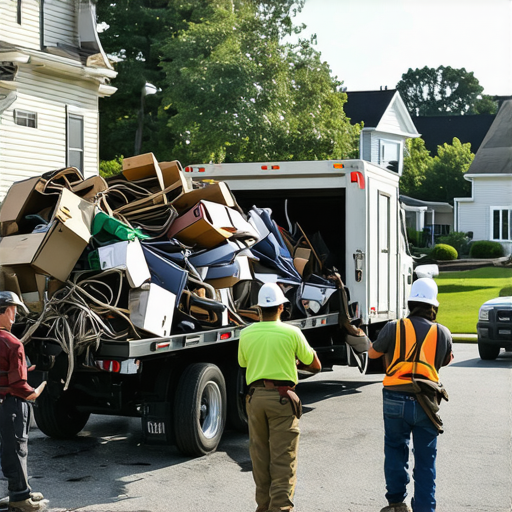
A business owner once tried to save five hundred dollars by hiring a guy with a pickup truck from a social media ad. Two weeks later, the police called him because his company confidential files and a mountain of old office chairs were found in a ditch near a local creek. Your junk is your liability until it hits the scale at a licensed transfer station. I have seen this play out dozens of times in Aurora. The temptation to cut corners on commercial disposal often leads to thousands in fines and environmental remediation costs. Professional junk removal is not just about muscle. It is about the chain of custody and the precise math of logistical efficiency. We treat every load like a tactical operation. I smell diesel and hydraulic fluid every morning. I see a construction site and I do not see trash. I see weight distribution and cubic yard density. If you do not respect the physics of the load, the load will eventually break you. We operate with the understanding that every minute spent on site is a hit to the contractor bottom line. Efficiency is the only way to survive in this industry.
The shadow economy of Aurora waste management
Commercial junk disposal in Aurora requires a deep understanding of local tipping fees, permit requirements for dumpster rentals, and the logistical challenges of construction site cleanup. Managing heavy loads like concrete, rebar, and drywall demands specialized equipment and strict adherence to environmental safety protocols. The waste stream in a city like Aurora is a complex system of private haulers and municipal oversight. When we talk about junk removal Aurora, we are talking about moving tons of material through narrow access points. You have to know the local ordinances by heart. You have to know which transfer stations are hitting their daily limits by noon. This is not a game for amateurs. Every piece of debris has a destination. Some goes to the landfill. Some goes to material recovery facilities. The best outcome is always diversion. We aim for high diversion rates to keep costs down for the client. Tipping fees are rising. The only way to combat that is through better sorting on the job site. If you mix your clean wood with your gypsum, you just turned a cheap load into a high-cost hazardous mess.
“Waste is merely a resource in the wrong place; professional removal is the science of putting it back where it belongs.” – Disposal Industry Maxim
The heavy cost of keeping everything
Hoarder clean out Aurora projects often reveal the structural limits of residential and commercial properties. Excess weight from accumulated paper and organic material can cause floor joists to bow or snap over time. Professional removal teams must assess the structural integrity of the building before beginning any high-volume extraction. I once cleared a house where the newspapers had absorbed ten years of basement humidity. The weight was immense. The floor was literally sagging two inches in the center. We had to shore up the beams before we could even start moving the piles. This is why furniture removal and appliance removal are not just about lifting. It is about knowing the weight capacity of the path to the door. We calculate the PSI exerted by our dollies on old hardwood floors. We protect the surfaces. We move with intent. A refrigerator is not just an appliance. It is a sixty pound compressor filled with refrigerant that requires specific recovery under federal law. You do not just toss that in a dumpster. You treat it with the respect that a pressurized chemical container deserves.
The geometry of a loaded dumpster
Dumpster rentals Aurora contractors rely on depend on the principle of cubing out. This means filling the container to its maximum volume without exceeding the legal weight limit for the transport vehicle. Proper loading requires placing flat materials on the bottom and heavy debris in the center. If you throw everything in haphazardly, you leave air pockets. Air pockets are wasted money. I hate seeing air in my trucks. We stack the drywall. We break down the boxes. We nest the chairs. It is like Tetris but with higher stakes. If a load is unbalanced, the truck can tip during the offloading process at the landfill. The hydraulic systems on a roll-off truck are under thousands of pounds of pressure. One wrong move and a hose bursts. Now you have hydraulic fluid leaking onto a client driveway. That is a hazmat situation. We avoid that through training and focus. We look at the load density. Concrete weighs roughly four thousand pounds per cubic yard. A twenty yard dumpster full of concrete would weigh eighty thousand pounds. That is double the legal limit for a standard tri-axle truck. You cannot just fill the bin. You have to know the math.
| Material Type | Weight per Cubic Yard (lbs) | Disposal Method |
|---|---|---|
| Clean Concrete | 3,500 – 4,000 | Recycling / Aggregate |
| Mixed Construction Debris | 400 – 600 | Landfill |
| Drywall (Gypsum) | 500 – 700 | Specialized Recovery |
| Scrap Metal | Variable | Scrap Yard |
| Yard Waste | 300 – 500 | Composting Facility |
Items your hauler cannot legally touch
Federal and state laws prohibit junk removal services from transporting specific hazardous materials without specialized licensing and manifests. These items require separate handling to prevent environmental contamination and protect the safety of the disposal crew and the public at large. The Resource Conservation and Recovery Act governs how we handle potential hazards. If we find a lead-acid battery hidden in a pile of old furniture, we stop. Those batteries leak sulfuric acid. They are a fire hazard. The same goes for propane tanks and old paint cans. While most people think recycling is always better, the carbon footprint of hauling low-grade plastics five hundred miles often exceeds the impact of local high-efficiency waste-to-energy incineration. This is a hard truth many do not want to hear. Sometimes the most ecological choice is the local one, even if it ends in a furnace instead of a recycling bin. We provide the data so our clients can make informed decisions. We keep a checklist of what stays and what goes.
- Unlabeled chemical drums or containers
- Propane tanks and pressurized cylinders
- Asbestos-containing materials (ACM)
- Lead-based paint and thinners
- Large quantities of lithium-ion batteries
- Biohazardous or medical waste
“Proper management of solid waste is the first line of defense in protecting local groundwater and soil quality from industrial leaching.” – Solid Waste Association of North America
The physics of commercial construction site cleanup
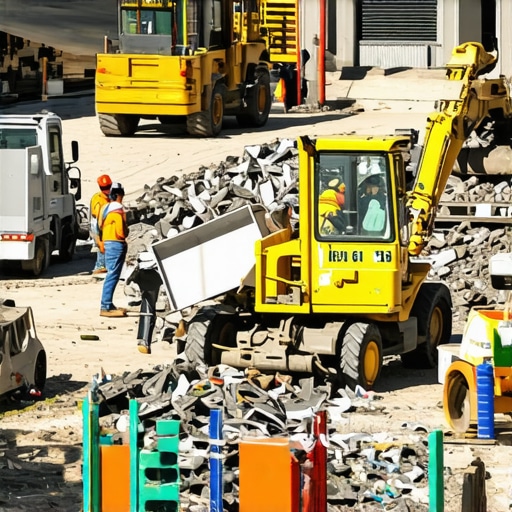
Aurora construction site cleanup involves more than just picking up scrap wood. It requires the systematic removal of hazardous dust, the recovery of valuable metals, and the management of site runoff. A clean site is a safe site that complies with Occupational Safety and Health Administration standards. When a building comes down or goes up, the debris field is a map of the project. We manage that map. We pull the rebar for the scrap yard. We separate the clean wood for mulch or biomass. The BTU potential of recovered wood waste is a significant energy resource. We do not want that rotting in a hole. We want it working. We use high-capacity magnets to sweep the site for nails. A single flat tire on a piece of heavy equipment can cost a contractor thousands in downtime. We prevent that. We are the silent partners of the construction industry. We handle the aftermath so the builders can build. The smell of sawdust and fresh earth is the reward for a job well done. We clear the way for the next phase of the city growth.
This post really hits home about the importance of proper waste management logistics in Aurora. I’ve seen firsthand how cutting corners, like hiring unlicensed haulers or attempting DIY disposal, can lead to costly fines and environmental damage. The detailed breakdown of the physics involved in loading dumpsters and the emphasis on weight distribution got me thinking—how often do contractors overlook these details in the rush to complete projects? Personally, I’ve found that investing in professional services not only saves money long-term but also keeps everyone safe. Especially with hazardous items, proper handling is non-negotiable. It made me curious—what strategies do other industry players use to ensure compliance without slowing down workflow? I’d love to hear some effective techniques or real-world tips from those with extensive experience in Aurora’s unique waste landscape. Keeping track of tipping fees and maintaining high diversion rates seem critical, but balancing that with project deadlines is definitely a challenge.
Your post sheds a lot of light on the complexities of waste management in Aurora. I agree that understanding local regulations and the physical aspects of load capacity are crucial for a smooth operation. In my experience overseeing construction projects in Aurora, I’ve seen how proper sorting on-site can drastically reduce tipping fees and avoid hazardous mix-ups. For example, separating drywall from wood not only simplifies disposal but also minimizes environmental impact. I wonder how contractors in Aurora can implement better staff training or use technology to enhance load accuracy and compliance? Also, with rising tipping fees, are there emerging strategies for innovative waste diversion or reuse that companies are adopting? It seems that a proactive approach could help keep projects on schedule and within budget while adhering to environmental protocols. Would love to hear about any new techniques or tools that have worked well for others in this field.