The ghost in the loading dock
Commercial warehouse cleanups in Aurora require precise logistical coordination of 20-yard roll-off dumpsters and specialized heavy-lift teams to mitigate liability. Commercial disposal involves rigorous manifest tracking to comply with local ordinances. Success depends on cubic-yard density and the separation of hazardous materials before the first pallet moves.
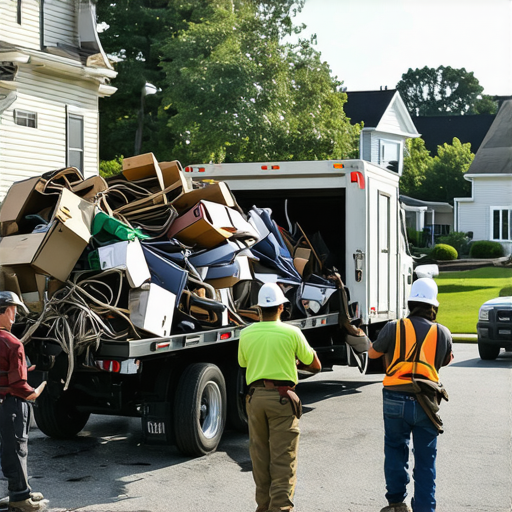
I smell diesel and hydraulic fluid. It is 5 AM in Aurora, Colorado. The air is thin. My trucks are idling, their engines humming a low-frequency vibration that I feel in my boots. To most, a warehouse full of abandoned inventory is a mess. To me, it is a mathematical puzzle of volume, weight, and transit time. I have spent 25 years watching the tetris of the load. I despise wasted air space in a truck. If I see a 15-yard dumpster filled with air because some rookie didn’t break down the pallets, I see profit evaporating. I remember a business owner who tried to save 500 dollars. He hired a guy with a rusted pickup truck from a social media ad. Two weeks later, the police called him. His company confidential files were found in a ditch near Cherry Creek. Your junk is your liability until it hits the scale and the manifest is signed. Trucks do not lie. Scales do not lie.
The heavy cost of keeping everything
Warehouse space in the Aurora industrial corridor is becoming too expensive to house obsolete inventory or broken machinery. Efficient Junk Removal Aurora operations focus on maximizing floor square footage by removing non-essential assets. The transition to 2026 logistics involves faster turnover of commercial waste to maintain lean operations and reduce fire hazards.
Every square foot of your warehouse has a dollar value. When you allow broken office chairs and 1990s era server racks to sit in a corner, you are paying rent on ghosts. My team approaches a Hoarder Clean Out aurora project with the same surgical precision as a hazmat site. We calculate the load limit of the floor. We look at the joists. I once saw a mezzanine buckle because a manager thought he could stack two tons of old catalogs in a space meant for air filters. The structural load limits of residential or commercial stairs must be respected during a piano removal or a heavy safe extraction. We use physics. We use leverage. We do not use luck. The legal requirements of the Resource Conservation and Recovery Act or RCRA govern how we handle what we find. If there is a chemical leak from a forgotten forklift battery, the project shifts from simple hauling to a specialized recovery operation. We inspect every single item.
“Waste is merely a resource in the wrong place; professional removal is the science of putting it back where it belongs.” – Disposal Industry Maxim
Why your cheap hauler is a legal time bomb
Hiring unverified haulers for Commercial Junk Disposal Aurora leads to environmental non-compliance and potential legal fines. Professional waste management firms provide tipping receipts and disposal manifests to prove materials reached a licensed transfer station. Legal disposal protects the business from secondary liability and ensures that hazardous components are handled safely.
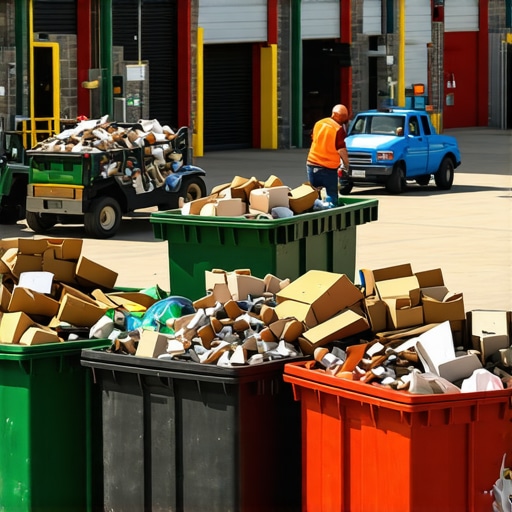
The curbside cowboys are everywhere. They underbid the professionals because they ignore the tipping fees. In Aurora, the cost to tip at the Denver Regional Landfill is a fixed reality. If a quote seems too low, that junk is going to an illegal dump site. You are responsible for that material. I have seen the consequences. I have seen the fines. When we perform a Garage Clean outs service, we see the hidden dangers. People hide lithium batteries in general trash. That is a fire hazard. One battery crushed in the back of a packer truck can start a chemical fire that costs thousands to extinguish. We don’t just lift. We categorize. We sort by material type. Wood waste has a high BTU potential for waste-to-energy plants. Low-grade plastics are often better off in high-efficiency incineration than being hauled 500 miles to a recycling center that won’t take them. The carbon footprint of the haul matters as much as the destination. We focus on high-efficiency routing through the I-225 corridor to minimize fuel burn.
The physics of cubing out a truck
Optimizing truck capacity through cubic-yard density analysis reduces the number of trips required for large-scale removals. Understanding the weight-to-volume ratio is essential for managing tipping fees and fuel consumption during industrial cleanouts. Proper loading techniques ensure that the maximum amount of waste is transported in the fewest possible cycles.
| Office Furniture | 250 – 300 | Material Recovery Facility |
| Drywall Debris | 400 – 500 | Construction Landfill |
| Concrete and Brick | 3,000 – 4,000 | Crushing and Aggregate Recycling |
| Mixed Household Junk | 150 – 250 | Compaction and Landfill |
We call it cubing out. A 15-yard truck has a specific volume. If you load it with light, bulky items like empty crates, you hit the volume limit before the weight limit. This is inefficient. We break down furniture. We dismantle shelving. Every Furniture Removal job is an exercise in space optimization. When dealing with Appliance removal, the logic changes. We are looking for CFCs and heavy metals. The legal manifest requires us to track where those refrigerators go. You cannot simply throw a fridge in a hole. The chemicals will leach. The lead-acid batteries will bleed into the groundwater. We use specialized dollies to protect the warehouse floor. We use ramps that can handle 1,500 pounds without bowing. The logistics manager in me hates a single wasted movement. We move once. We load once. We dump once.
“The goal of modern waste management is to achieve the highest possible diversion rate while maintaining strict compliance with environmental safety standards.” – Solid Waste Association of North America
Aurora waste disposal prohibited items list
Certain materials are legally classified as hazardous and cannot be mixed with standard commercial or residential waste. Proper identification of these items prevents environmental contamination and protects hauling equipment from chemical damage. Businesses must contract with specialized hazmat teams for the disposal of regulated toxic substances.
- Lead-acid batteries and lithium-ion cells
- Wet paint and chemical solvents
- Pressurized gas tanks or propane cylinders
- Asbestos-containing insulation or tiles
- Medical waste and biohazardous materials
- Industrial oils and hydraulic fluids
- Fluorescent light tubes containing mercury
The floor snapped. That was the sound of a rookie trying to move an old industrial lathe without a proper skid. You have to understand the ground you stand on. In Aurora, the soil can shift. Warehouse floors can crack under the weight of a Dumpster Rentals Aurora unit if it is placed poorly. We use wood blocking. We protect the asphalt. We are not just movers. We are logistics experts. We understand the municipal bulky-item pickup schedules and we know when the transfer stations are at peak capacity. We avoid the rush. We save the client time. We save the client money. This is the reality of waste management in 2026. It is not about throwing things away. It is about the science of disposal. It is about the integrity of the process. Your warehouse is a data set. The junk is the overflow. We are the system update that clears the cache.