
Commercial Junk Disposal Aurora: 2026 Tax Deduction Tips
The smell of diesel at five in the morning is the scent of efficiency. My boots hit the asphalt at a warehouse near I-225, and I see it immediately. A mountain of logistics failures. Failed office chairs, CRT monitors from the late nineties, and wooden pallets that have rotted into a fungal mess. This is not just junk. It is a liability sitting on a balance sheet. A business owner tried to save 500 dollars by hiring a guy with a pickup truck from a social media ad. Two weeks later, the police called him because his company’s confidential files and old hard drives were found in a ditch near the Cherry Creek spillway. Your junk is your liability until it hits the scale. If you do not have a manifest, you do not have a defense. In the waste management world, we call this the chain of custody. When you ignore it, you invite the EPA to audit your soul. Commercial junk disposal in Aurora is about more than lifting heavy objects. It is about the precise calculation of cubic density and the legal protection of your enterprise through smart tax positioning. For the 2026 tax year, every pound you haul away can be a strategic move for your bottom line. We do not just clear rooms. We clear debts.
The financial logic of a clean warehouse
Commercial junk disposal in Aurora for 2026 qualifies as a fully deductible business expense under IRS Section 179 and standard operating cost rules. Businesses can write off the full cost of debris removal, furniture liquidation, and site remediation to lower their taxable income significantly while maintaining regulatory compliance. The tax code rewards the organized. When you clear out a commercial space, you are not just paying for labor. You are investing in professional remediation. The cost of Junk Removal Aurora services is categorized as an ordinary and necessary business expense. This includes the labor for Garage Clean outs or the specialized equipment for Appliance removal. If you are preparing for a Hoarder Clean Out aurora project in a commercial rental property, the entire invoice serves as a shield against your taxable revenue. You must document the square footage reclaimed. Every cubic yard of air space we recover for you is space where you can store profitable inventory rather than depreciating trash.
“Waste is merely a resource in the wrong place; professional removal is the science of putting it back where it belongs.” – Disposal Industry Maxim
The physics of the load and the truck
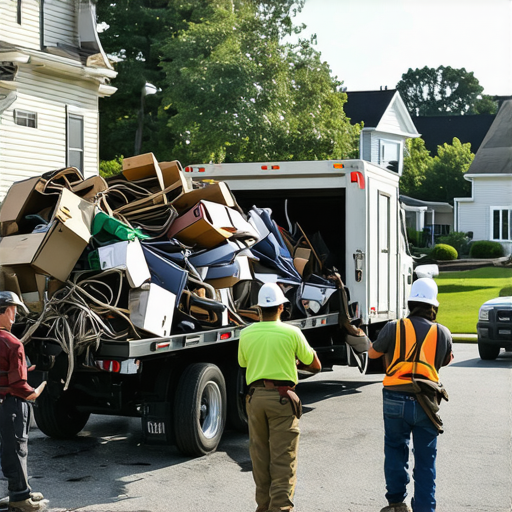
Maximizing truck capacity requires an understanding of the Tetris effect where the objective is to eliminate air gaps between discarded items. A standard 15-yard dump truck measures 12 feet in length and 8 feet in width with a 4.5-foot side height, providing 405 cubic feet of volume. We look at a pile of furniture and see a puzzle. When we perform Furniture Removal, we break down the items to increase density. A standing desk takes up 30 cubic feet of air. A dismantled desk takes up 4 cubic feet of solid wood. We charge by volume, so the density of the pack determines your value. If we are doing Dumpster Rentals Aurora, the customer often loses 40 percent of the container to empty air. Our crews pack the truck until the hydraulic fluid reaches 180 degrees. We compress. We stack. We eliminate the voids. This is why professional Junk Removal is often cheaper than a DIY dumpster. You pay for the space you use, not the space you waste.
Aurora municipal waste codes and your bottom line
Waste disposal in Aurora is governed by specific municipal ordinances that mandate the separation of hazardous materials and electronic waste from the general stream. The city utilizes the Aurora Transfer Station and the Denver Regional Landfill, both of which have strict tipping fee schedules based on weight and material classification. You cannot simply throw a lead-acid battery into a general trash bin. The chemistry of degradation is unforgiving. A single leaking battery can contaminate a 10-ton load of cardboard. If that happens at the tipping floor, the fines are astronomical. We track the current tipping fees at local facilities like the Tower Road sites. We know that clean metal has a recovery value that can sometimes offset the labor cost. We know that old appliances contain refrigerants like R-22 or R-134a that require certified recovery. Failure to comply with the Resource Conservation and Recovery Act is a federal offense that no local tax deduction will cover. [IMAGE_PLACEHOLDER]
The hidden chemistry of appliance degradation
Appliance removal involves the management of heavy metals, polychlorinated biphenyls in older capacitors, and various chemical refrigerants that pose environmental risks. Modern disposal requires a technician to drain these fluids and certify the carcass as clean before it can be processed for scrap metal recovery. When we haul a commercial freezer from an Aurora restaurant, we are not just moving a box. We are moving a pressurized system. If a rookie punctures a line, the gas hits the atmosphere, and the fines hit your mailbox. We verify the integrity of every unit. We look for the telltale signs of oil leaks around the compressor. We ensure that the 2026 tax benefits of your equipment upgrade are not negated by environmental litigation. The BTU potential of recovered steel is high, but the cost of negligence is higher.
Disposal Metrics and Volumetric Costs
| Material Category | Cubic Yard Density | Disposal Priority | 2026 Tax Treatment |
|---|---|---|---|
| Office Furniture | Low (unless dismantled) | High (Space Recovery) | Operational Expense |
| Electronic Waste | High (Weight) | Critical (Legal) | Specialized Recycling Fee |
| Construction Debris | Very High | Moderate | Site Improvement |
| Appliances | Medium | Legal Compliance | Capital Asset Retirement |
Prohibited items and the liability gate
A professional hauler cannot legally transport certain materials without specific hazmat licensing and manifesting. Understanding these boundaries prevents onsite delays and potential legal exposure for the business owner during a large scale clean out or relocation project. We see it all the time. A customer hides five gallons of old motor oil at the bottom of a bin. They think they are being clever. They are actually risking a truck fire. When hydraulic rams compress a load, anything liquid becomes a projectile. We inspect every pile. We do not just take your word for it. Our reputation is built on the fact that we do not bring prohibited items to the transfer station.
- Lead-acid batteries and lithium-ion packs
- Wet paint, solvents, and industrial thinners
- Compressed gas cylinders of any size
- Friable asbestos materials from old renovations
- Biohazardous waste or medical sharps
- Radioactive smoke detectors from large complexes
The heavy cost of keeping everything
Hoarder Clean Out aurora projects for commercial clients often reveal structural damage caused by excessive floor loading that exceeds the original architectural specifications. Excess weight of 50 pounds per square foot can lead to joist deflection and permanent masonry cracking in older Aurora buildings. I once cleared a commercial unit where the floor was literally bowing. The owner had stacked paper files from floor to ceiling. Over twenty years, that paper absorbed the humidity of the Colorado summers and the dampness of the winters. It became a solid block of cellulose that weighed more than a concrete slab. The floor snapped while we were halfway through the job. This is the physical reality of junk. It is not just an eyesore. It is a structural threat. By utilizing the 2026 tax deductions for debris removal, you are essentially getting the government to help pay for the structural preservation of your real estate.
“Modern waste management is the first line of defense against urban decay and industrial obsolescence.” – Solid Waste Association of North America (SWANA)
The contrarian truth about local recycling
While most people think recycling is always better, the carbon footprint of hauling low-grade plastics 500 miles often exceeds the impact of local, high-efficiency waste-to-energy incineration. We focus on local diversion. We look for the shortest route from your loading dock to the processing center. In Aurora, we utilize the specific infrastructure that exists within the 80010 to 80019 zip codes. We do not ship your problems across the country. We solve them here. This local focus ensures that your business supports the regional economy while maximizing your environmental social governance scores. Your 2026 tax filing will reflect a business that is lean, compliant, and ready for the next decade of growth.
This post highlights some really important points about the strategic aspects of junk removal, especially in how it ties into tax deductions and legal compliance. I’ve seen firsthand how many business owners overlook the significance of proper disposal, which can lead to hefty fines or even environmental violations that aren’t always obvious at first glance. The idea of maximizing cubic density to cut costs and boost space recovery is a clever approach; it reminds me of how careful packing can make a significant difference in overall costs. I’m curious, has anyone used these techniques in a particularly challenging cleanup project? Also, I wonder how much of an impact proper documentation and manifests have on the overall legal protection and tax advantages. It seems like a simple step that could save a lot of trouble down the line.