The liability of the low-cost haul
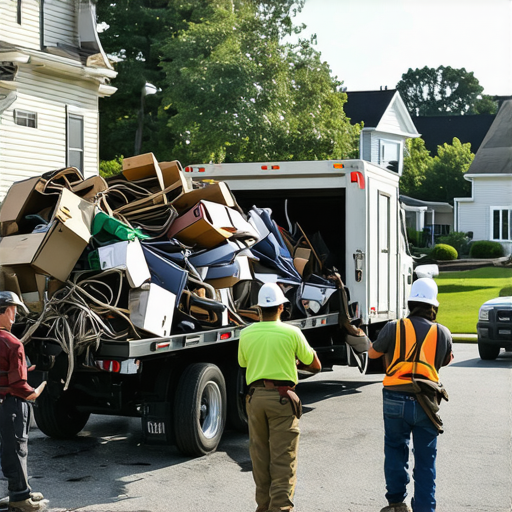
A business owner tried to save €500 by hiring a guy with a pickup truck from a social media ad. Two weeks later, the police called him because his company’s confidential files were found in a ditch. Your junk is your liability until it hits the scale at a certified Aurora transfer station. My boots have spent twenty five years on the scales of landfills across Colorado. I smell like diesel, hydraulic fluid, and the stale metallic tang of a full 20-yard roll-off. I have seen the tetris of a perfectly loaded truck and the disaster of a loose load that shifts on I-225. When the city moves toward the 2026 recycling changes, the margin for error disappears. Professional Junk Removal Aurora services are not just about muscle. They are about navigating the complex web of the Resource Conservation and Recovery Act and the specific local ordinances that govern our high-plains environment. If your hauler cannot produce a weight ticket from a licensed facility, you are essentially paying for illegal dumping insurance. The 2026 mandates will increase the fines for improper disposal by four hundred percent. We don’t just lift. We inspect every single item for hazardous potential. I once saw a rookie lose his eyebrows because a client hid a propane tank inside a pile of dry brush. That kind of negligence ends today. The physics of waste management requires a deep understanding of volume vs weight. A truck that is ‘full’ of old insulation is vastly different from a truck ‘full’ of concrete debris from a bathroom renovation. We calculate the density to ensure we do not exceed the gross vehicle weight rating of our rigs. This is the science of the haul.
The ghost in the garage
Garage Clean outs in Aurora require a systematic approach to material separation to comply with the new 2026 zero-waste mandates. These rules require that all ferrous metals, untreated wood, and corrugated cardboard be separated from general municipal solid waste before reaching the transfer station to avoid heavy contamination surcharges. A typical garage is a graveyard of abandoned hobbies and chemical hazards. We approach these spaces as logistical puzzles. The concrete floor of an Aurora garage often hides decades of oil leaks and salt damage from winter runoff. When we arrive for a clean out, we start by establishing a staging area. We categorize items by their end-of-life destination. It is not just about throwing things in a bin. We look for the ‘high-value’ recyclables that can offset the tipping fees. Aluminum siding, copper piping, and even old steel shelving units are staged for metal recovery. The 2026 Mission focuses on diversion. Every cubic yard we keep out of the Denver Regional Landfill is a win for the local tax base. We use a high-roof box truck for these jobs because the vertical space allows us to stack lightweight items like plastic bins and empty boxes while keeping the heavy equipment low for center-of-gravity stability. The air in a closed garage is often thick with dust and particulates. We utilize industrial grade filtration and personal protective equipment to ensure that the removal process does not compromise the air quality of the main residence. This is a surgical operation, not a smash and grab.
“Waste is merely a resource in the wrong place; professional removal is the science of putting it back where it belongs.” – Disposal Industry Maxim
Chemical ghosts in the kitchen
Appliance removal involves the mitigation of hazardous refrigerants like R-22 or R-134a and the recovery of heavy metals from compressors and motors. Under the 2026 Aurora recycling mission, all appliances must be certified as evacuated of ozone-depleting substances by a licensed technician before they can enter the scrap metal stream. Most homeowners see an old fridge as a heavy box. I see a pressurized system of chemicals and high-grade copper. When we pull a refrigerator from a kitchen, we use floor protection rated for four hundred pounds per square inch to prevent tile cracking. The physics of moving a dual-compressor unit requires a specialized heavy-duty dolly with pneumatic tires to distribute the load. The back-end logistics of appliance disposal are even more complex. We transport these units to specialized recovery centers that strip the polyurethane foam insulation, which is a major contributor to landfill volume. The motors are harvested for their copper windings. The sheet metal shell is shredded and melted down. The 2026 rules also target ‘white goods’ like washers and dryers. These machines contain high concentrations of lead in their circuit boards and heavy steel in their drums. We ensure that these materials do not end up in the general waste stream where they could leach into the groundwater. The cost of disposal is rising because the labor required to demanufacture these items is significant. However, the environmental cost of ignoring these steps is far higher. We provide the documentation needed to prove your old appliances were handled according to EPA Section 608 regulations.
The heavy cost of keeping everything
Hoarder Clean Out aurora projects are high-stakes logistical operations that require biohazard awareness and structural load assessments to ensure the safety of the crew and the property. These situations are physical data overflows where the sheer weight of accumulated materials can exceed the structural design limits of residential flooring systems, often leading to bowed joists. We have seen houses where the compression of paper waste has reached the density of solid wood. This is a fire hazard and a structural liability. The 2026 Aurora mission places a specific emphasis on the safe disposal of large-scale residential accumulations. We don’t just walk in with shovels. We assess the ‘pack’ to see if there is trapped moisture or mold growth. Often, the bottom layer of a hoard has turned into a compost pile due to basement dampness. This material cannot be thrown into a standard dumpster. It requires specialized handling. We use 40-yard roll-off containers for these jobs, but we have to be careful not to ‘over-weight’ them. A 40-yard bin full of wet paper can easily exceed the legal road weight for a tri-axle truck. We balance the load by mixing high-density items with light-weight debris. Our crews are trained in the psychology of the clean out, but our primary focus is the technical execution. We look for the ‘hidden’ hazards like leaking household cleaners or forgotten lithium batteries. These items are the primary cause of landfill fires. By separating them at the source, we protect the facility and the environment. This is a grueling, multi-day process that transforms a liability into a habitable space once again.
| Material Type | Decomposition Time (Landfill) | 2026 Aurora Diversion Goal |
|---|---|---|
| Corrugated Cardboard | 2 months | 95% Recovery |
| Untreated Wood | 13 years | 80% Recovery |
| High-Density Plastics | 450 years | 60% Recovery |
| Aluminum Cans | 200 years | 100% Recovery |
| Glass Bottles | 1 million years | 90% Recovery |
The physics of the fifteen yard bin
Dumpster Rentals Aurora services are governed by the laws of volumetric density and the legal weight limits of the Colorado Department of Transportation. A 15-yard dumpster is not just a box; it is a weight-restricted vessel that must be loaded with a specific ‘heavy-on-the-bottom’ strategy to prevent tipping or axle failure during transport. Most people think more space is better, but in the world of Junk Removal, a large bin is often a trap. If you fill a 30-yard bin with concrete, no truck in Aurora can legally lift it. We guide our clients toward the right size for their specific debris type. For roofing projects, we suggest a 10-yard bin because of the extreme weight of asphalt shingles. For a general house clean out, a 20-yard bin provides the best balance of volume and weight capacity. The 2026 Aurora Mission will introduce ‘smart bins’ that can detect the weight of the load in real-time, helping to prevent the environmental impact of overloaded trucks. Every time a truck has to make a second trip because a load was poorly distributed, the carbon footprint of the project doubles. We teach our clients the ‘tetris’ method. Break down every box. Lay flat items on the bottom. Fill the voids with loose debris. This maximizes the cubic-yard efficiency. If you leave air pockets in your dumpster, you are paying to haul Aurora air to the landfill. That is a waste of money and fuel. We monitor the ‘tipping fees’ at local stations like the Aurora Transfer Station to ensure our clients get the most cost-effective disposal route. The logistics of the haul are where the money is saved or lost.
- Lead-Acid Batteries: Illegal to place in any dumpster. Must be taken to a core recycling center.
- Liquid Paints: Must be solidified with sawdust or cat litter before disposal, or taken to a hazmat facility.
- Tires: Prohibited in landfills. These require specialized shredding and repurposing.
- Fluorescent Tubes: Contain mercury vapor. These must be handled as universal waste.
- Medical Waste: Sharps and bio-matter require a manifest and specialized incineration.
“The most expensive way to dispose of waste is to ignore the rules; the fines will always exceed the tipping fees.” – SWANA Safety Guidelines
The future of furniture recovery
Furniture Removal in the 2026 era will focus on material circularity, meaning that we no longer look at a sofa as a single item, but as a collection of fabric, foam, wood, and steel. Modern furniture is often made of ‘fast’ materials like particle board and low-density foam, which break down quickly but offer little structural value for reuse. When we perform Junk Removal Aurora for household items, we first evaluate the piece for the ‘secondary market.’ If it can be donated, we divert it. If it is broken beyond repair, we deconstruct it. The wood frames of older furniture are often high-quality oak or maple, which can be chipped for mulch or biomass fuel. The steel springs are sent to the scrap yard. The challenge is the foam. Polyurethane foam is a petroleum product that takes up massive space in landfills. The 2026 mandates are pushing for new technologies that can recycle these foams into carpet padding. Our crews are trained to identify these materials on-site. We don’t just toss a couch into the back of a crusher. We load it strategically to ensure it doesn’t get contaminated by other waste, preserving its potential for recycling. The physics of moving a sleeper sofa up a narrow basement staircase in an older Aurora neighborhood requires more than just strength. It requires an understanding of fulcrums and leverage. We use padded straps and floor runners to protect the architecture of the home. Every piece removed is a step toward a zero-waste future. We are the guardians of the stream, making sure that what can be saved, is saved, and what must go, goes to the right place. The diesel in our tanks and the grease on our hands are the costs of a cleaner city. We take that trade every single day. The 2026 Mission is not just a set of rules. It is a blueprint for a more efficient, less wasteful Aurora. We are ready to haul it into reality.