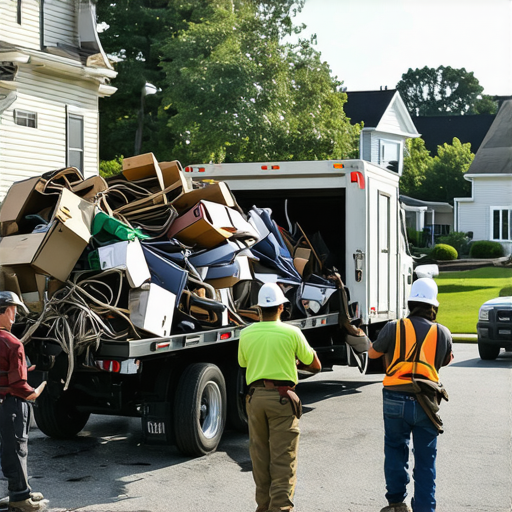
A business owner tried to save 500 dollars by hiring a guy with a pickup truck from a social media ad. Two weeks later, the police called him because his company’s confidential files were found in a ditch. Your junk is your liability until it hits the scale. This reality remains the most dangerous trap for school administrators in Aurora who are tasked with facility maintenance. Waste management is not a simple task of lifting and shifting. It is a complex logistical dance involving environmental regulations, weight distributions, and the cold reality of tipping fees at regional transfer stations. When you manage a school, you are not just throwing away trash. You are disposing of assets that carry your institution’s name and legal responsibility. This guide breaks down the science of heavy load logistics and the environmental ethics of large scale junk removal in Aurora.
The legal burden of school waste
School waste management in Aurora requires strict adherence to Illinois EPA protocols to avoid massive fines and environmental contamination. Proper disposal starts with segregating hazardous materials like e-waste and chemicals from general municipal solid waste. Administrators must understand that once a dumpster leaves the school grounds, the liability does not automatically vanish. If that waste is found in a protected wetland or a roadside ditch, the paper trail leads directly back to the source. Professional junk removal aurora services provide the necessary manifests to prove that every pound of material reached a licensed facility. This is especially vital for sensitive items like furniture removal and appliance removal where refrigerants or heavy metals are involved. In Aurora, the proximity to the Fox River means our drainage basins are sensitive to illegal dumping. We do not tolerate shortcuts. We focus on high diversion rates to ensure that as much material as possible is diverted from the landfill and sent to specialized recovery centers.
“Waste is merely a resource in the wrong place; professional removal is the science of putting it back where it belongs.” – Disposal Industry Maxim
The physics of a high school clean out
A standard high school contains thousands of cubic yards of potential waste. The logistics of clearing out a single wing require a deep understanding of load density. We look at a pile of desks and see a Tetris puzzle. If you stack fifty student desks into a twenty yard dumpster without dismantling them, you create nearly forty percent wasted air space. This is a logistical failure. We calculate the volumetric weight of every load. Metal frames are separated from laminate tops. This allows us to maximize the weight per cubic yard. The goal is to hit the axle weight limit of the truck without exceeding the volume capacity. This is the difference between making three trips and making five trips. Every extra trip increases the carbon footprint of the project. We use heavy duty dollies and specialized ramps to ensure that the structural integrity of the school floors is not compromised during the move. A piano removal from an auditorium involves different physics than a garage clean out. We must consider the center of gravity and the load bearing capacity of the stage. This is the level of detail required for a professional aurora junk removal operation.
Hazardous traps in the science wing
School basements and science labs are often the site of hazardous accumulation. Old chemicals, mercury thermometers, and lead-acid batteries from emergency lighting systems represent a significant fire and health risk. You cannot simply throw these into a dumpster rental aurora unit. Doing so is a violation of the Resource Conservation and Recovery Act. We have seen cases where a single leaking battery caused a chemical fire inside a garbage truck. Our team performs a preliminary sweep of every site. We look for the telltale signs of hazardous materials. This includes checking for PCB ballasts in old fluorescent lighting fixtures. These must be handled with gloves and placed in specialized containment drums. We do not just haul. We audit. Every item is cross referenced with the list of prohibited materials at the transfer station. If we find suspicious containers, we halt the load until a hazmat specialist can verify the contents. This protects the school and the environment from the consequences of a hazardous spill.
Items your hauler cannot legally touch
There are specific materials that are restricted by both municipal ordinances in Aurora and state laws. Understanding these restrictions is the first step in a successful clean out. The following table illustrates the disposal requirements for common institutional waste items found in schools.
| Material Type | Disposal Method | Primary Concern |
|---|---|---|
| Lithium Batteries | Specialized Recycling | Thermal Runaway Fire Risk |
| Old Paint Cans | Hazardous Waste Facility | Soil and Water Leaching |
| CRT Monitors | E-Waste Recovery | Lead and Phosphor Contamination |
| Tires | Tire Processing Plant | Vector Breeding and Fire Hazard |
| Biohazard Material | Medical Waste Incineration | Pathogen Transmission |
Furthermore, administrators should refer to this checklist before scheduling a hoarder clean out aurora or a general facility purge. Preparing these items correctly can save thousands of dollars in rejected load fees at the landfill.
- Ensure all refrigerants have been drained from cafeteria coolers by a certified technician.
- Remove all batteries from handheld electronics and emergency devices.
- Separate metal filing cabinets from general wooden furniture to allow for scrap recycling.
- Label any containers of unknown liquids for professional assessment.
- Confirm that no asbestos containing materials are present in the debris pile.
The weight of heavy metals and appliance removal
Appliance removal in an institutional setting involves heavy duty equipment like commercial ovens, industrial refrigerators, and laundry units. These items are not just heavy. They are dense. An industrial stove can weigh upwards of five hundred pounds. The removal of these items requires a specialized understanding of leverage and floor protection. In Aurora, many older school buildings have historic tile or hardwood that can easily crack under the weight of a poorly managed move. We use neoprene floor runners and plywood paths to distribute the weight. Once the appliances are out of the building, they are not simply dumped. We focus on metal recovery. Modern scrap metal markets fluctuate, but the value of stainless steel and copper remains high. By extracting these materials, we reduce the overall cost of the junk removal project for the school district. It is about turning a liability into a recoverable asset. We also ensure that any CFCs are captured and documented in accordance with EPA Section 608. This is the standard that separates professional haulers from the curbside cowboys who cut the lines and vent the gas into the atmosphere.
How to optimize your Aurora dumpster rental
Renting a dumpster for a school project requires more than just picking a size. You must consider the placement, the duration, and the weight limits. A thirty yard dumpster sitting on asphalt in the middle of a hot Aurora summer can sink and damage the pavement. We always use wooden planks to distribute the load. Timing is also a major factor. You want the dumpster delivered just before the work starts and removed immediately after to prevent illegal neighborhood dumping. People see an open dumpster and think it is a free invitation to get rid of their old tires and mattresses. This adds weight and cost to the school’s bill. We recommend using locking lids or placing dumpsters in fenced enclosures. When you fill the container, start with the heavy, flat items on the bottom. This creates a solid base and allows you to pack smaller items around them. This is how you avoid paying for air. We monitor the weight of every roll off container we manage. If a dumpster is overfilled, it becomes a safety hazard for the driver and other motorists on the road. We adhere to the strict DOT weight limits for every haul.
“Professional waste management is not just a service; it is a critical infrastructure component that maintains the health of our local ecosystems.” – SWANA Environmental Report
Moving beyond the curbside cowboy mentality
The rise of social media apps has led to an increase in unlicensed junk haulers. These individuals often lack the insurance and the knowledge to handle school waste safely. They often quote a low price and then dump the waste in rural parts of Kane or DuPage County. This is a massive risk for any Aurora institution. If your school’s name is found on a discarded box in a ditch, the legal repercussions are severe. We operate with full liability insurance and workers’ compensation. This protects the school from lawsuits if an injury occurs on site. Our team is trained in proper lifting techniques and the use of personal protective equipment. We believe that the cheapest option is often the most expensive in the long run. Professional junk removal aurora services provide peace of mind and a clean legal record. We focus on transparency. Our pricing is based on volume and weight, not on a whim. We provide detailed invoices that break down the disposal fees and the labor costs. This level of professionalism is what schools deserve.
The environmental impact of school furniture disposal
While most people think recycling is always better, the carbon footprint of hauling low grade plastics 500 miles often exceeds the impact of local, high efficiency waste to energy incineration. This is a contrarian view but it is supported by logistical data. When we handle furniture removal in Aurora, we look for the most efficient path. If the furniture is made of solid wood, we look for local mulch processors or wood energy plants. If it is high quality metal, it goes to the local scrap yard. We avoid the trap of shipping waste halfway across the country in the name of recycling if the net carbon impact is negative. We prioritize local solutions. The Orchard Hills landfill and local transfer stations in the Aurora area have sophisticated methane capture systems. This turns decomposing waste into usable energy. We are constantly evaluating our routes to minimize fuel consumption. Our trucks are maintained to reduce emissions. Every decision we make is aimed at reducing the total environmental burden of the junk we haul. We are the stewards of the community’s waste, and we take that responsibility seriously. Junk removal is a science, an art, and a legal necessity for the schools of Aurora.