The shadow of the unlicensed pickup truck
Hiring unlicensed Aurora Junk Removal services leads to legal liability, environmental fines, and potential property damage that homeowners frequently ignore. Professional haulers carry specific liability insurance and waste transport permits required by state law. Selecting an unverified contractor increases the risk of illegal dumping incidents that reflect back on the original owner.
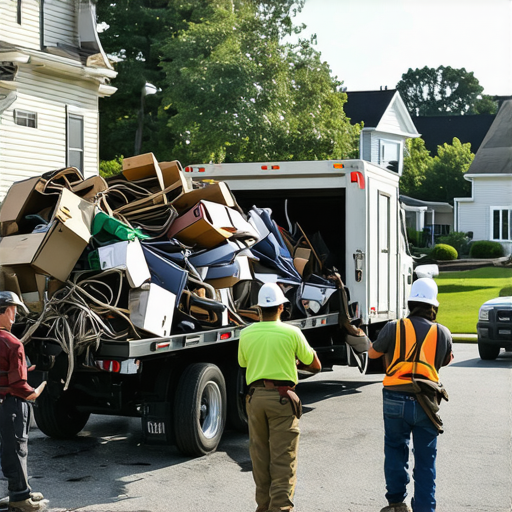
A business owner tried to save €500 by hiring a guy with a pickup truck from a social media ad. Two weeks later, the police called him because his company’s confidential files were found in a ditch. Your junk is your liability until it hits the scale at a certified transfer station. This is the reality of the waste industry. I have spent 25 years watching diesel engines roar and hydraulic rams crush the remnants of poorly planned cleanouts. I smell like hydraulic fluid and burnt coffee most days. I see the physics of the load while others just see a pile of old chairs. When a truck pulls up to your Aurora driveway, you aren’t just paying for muscle. You are paying for a chain of custody. If that chain breaks in a forest preserve or a vacant lot, the environmental protection agencies look for the source. They find it in your old mail, your discarded utility bills, or a branded box. The cost of a professional 15-yard load is nothing compared to a five-figure fine for illegal disposal. We track every cubic yard. We calculate the density of every haul. If the truck is not cubed out correctly, it is a logistical failure that costs fuel and time. Wasted air space in a truck bed is a sin in this business.
“Waste is merely a resource in the wrong place; professional removal is the science of putting it back where it belongs.” – Disposal Industry Maxim
Why your garage became a graveyard
Garage Clean outs in Aurora fail when homeowners underestimate the sheer weight and volume of accumulated residential debris. Effective Junk Removal Aurora requires a systematic approach to sorting materials into metal, wood, and general waste streams. Failure to categorize leads to higher tipping fees and wasted space during the hauling process.
The concrete floor of a garage tells a story. It tells a story of leaked oil, forgotten hobbies, and the slow accumulation of mass. Most people look at their garage and see a weekend project. I look at it and see four tons of material that needs a specific destination. You have the appliance removal phase. You have the hazardous household waste phase. Then you have the bulk debris. A standard refrigerator weighs about 250 pounds. If it has a compressor, it contains refrigerants like Freon that must be recovered. You cannot just toss it. When we perform a Hoarder Clean Out Aurora, we deal with extreme density. I have seen floors snap under the weight of wet paper. Paper absorbs humidity. It becomes a leaden mass. We use structural load limits to decide how to stage the removal. We do not just grab things. We analyze the exit path. We check the structural integrity of the stairs. If you are doing this yourself, you are likely ignoring the strain on your back and your vehicle. Your sedan was not built to carry 800 pounds of broken tile. The suspension will fail. The tires will bulge. Professional Junk Removal is about protecting the assets you keep while removing the ones you do not want.
| Material Type | Typical Decomposition Time | Recovery Potential |
|---|---|---|
| Untreated Wood | 2 to 5 Years | High (Mulch/Fuel) |
| Corrugated Cardboard | 3 Months | High (Fiber) |
| High-Density Polyethylene | 500 Years | Moderate (Pellets) |
| Standard Steel Scraps | 50 Years | Infinite (Melting) |
| Latex Paint (Wet) | Indefinite | Zero (Hazardous) |
The heavy cost of keeping everything
Hoarder Clean Out Aurora projects require specialized logistics to manage the high volume of organic and inorganic material safely. Professional teams use high-capacity trucks and industrial-grade personal protective equipment to handle biohazards or structural instabilities. Proper disposal involves navigating local Aurora landfill regulations and specific diversion requirements for recyclable materials.
Density is the enemy of the amateur. In a typical home, a cubic yard of space might hold 100 pounds of stuff. In a hoarding situation, that same cubic yard can hold 400 pounds. This is the data overflow of the physical world. The air is thick. The smell is a mix of old paper and stagnant dust. We approach these jobs like a tactical recovery. We establish a backdoor logistics chain. We move the heavy hitters first. Large furniture removal comes early to clear the lanes. Then we move to the smaller, high-density items. Every item is a decision. Every decision takes energy. Homeowners make the mistake of trying to touch every piece of paper. This is how a one-day job turns into a three-week marathon. We focus on the volume. We look at the truck. We see the Tetris. We stack flat items against the walls. We put heavy items on the bottom. We fill the voids with soft goods. This is cubing out. If I see a truck leave a job site with gaps between the boxes, someone is getting a lecture. Efficiency is the only way to keep costs down at the transfer station. Tipping fees are calculated by the ton or by the yard. If you bring a light load that takes up a lot of space, you are paying for air. I hate paying for air.
The hidden cocktail of garage chemicals
Appliance removal and garage purging often uncover hidden hazardous materials that cannot be placed in standard Dumpster Rentals Aurora. Items like lead-acid batteries, old propane tanks, and mercury-containing thermostats require specialized handling according to RCRA guidelines. Mixing these with general trash creates a significant fire risk and environmental liability for the property owner.
I watched a rookie almost lose his eyebrows because a customer hid a half-full propane tank inside a pile of harmless yard waste. We do not just lift. We inspect. Every. Single. Item. The garage is a chemistry set of the 1990s. You have old pesticides that are now banned. You have lead-based paints. You have pool chemicals that can ignite if they get wet. When you rent a dumpster, the company gives you a list of prohibited items. Homeowners ignore this list. They think the landfill won’t notice a few gallons of oil buried under some drywall. They are wrong. Modern transfer stations have sensors. They have spotters. If they find your hazard, the whole load is rejected. You pay for the reload. You pay for the hazardous waste transport. You pay the fine. While most people think recycling is always better, the carbon footprint of hauling low-grade plastics 500 miles often exceeds the impact of local, high-efficiency waste-to-energy incineration. This is the contrarian truth of the industry. Sometimes, the most environmental choice is the one that involves the least amount of transport. We prioritize local Aurora disposal routes to minimize the diesel burn. Every mile counts.
“The management of solid waste is a matter of public health and safety that requires rigorous adherence to local transfer station protocols.” – Solid Waste Association of North America Guidelines
- Leaded glass from old CRT televisions
- Refrigerants and cooling gases in HVAC units
- Propane, butane, and oxygen tanks
- Wet oil-based paints and chemical solvents
- Automotive fluids including transmission and brake fluid
- Industrial grade cleaning agents
- Biohazardous materials or medical waste
Furniture removal and the death of quality
Furniture Removal in Aurora is increasingly dominated by low-grade particle board items that possess zero resale value and high landfill volume. Identifying solid wood versus manufactured wood is vital for determining whether an item can be diverted for wood waste recovery. Professional haulers use specific breakdown techniques to minimize the cubic footprint of large sectional sofas and entertainment centers.
I miss the old days of oak and mahogany. Modern furniture is mostly glue and sawdust. It breaks if you look at it wrong. It is a nightmare for the loader. You can’t stack it because the legs snap. You can’t lean it because it bows. When we do a Furniture Removal Aurora job, we often have to dismantle these pieces on-site just to fit them in the truck efficiently. The screws are usually stripped. The laminate is peeling. This is the throwaway culture in physical form. It takes up massive amounts of space but weighs very little. This is where the pricing conflict happens. A homeowner thinks the job should be cheap because the furniture is light. I have to charge for the space it occupies in the 20-yard truck. We call this the volumetric rate. If your couch takes up a third of my truck, it doesn’t matter if it’s made of feathers or lead. I can’t put anything else there. We use moving blankets for the pieces that have value, but most of it is headed for the shredder. The BTU potential of recovered wood waste is actually quite high, but particle board is full of resins that make it difficult to burn cleanly. We try to find the backdoor for everything. Can the metal be stripped? Can the fabric be repurposed? Usually, the answer is no. The load goes to the transfer station. The scale hums. The bill is paid. This is the cycle of the heavy-load specialist. We clear the space so you can breathe again. We do the math so you don’t have to.