
The structural toll of a lifetime
Hoarder Clean Out Aurora services require structural assessment because the physical weight of accumulated materials often exceeds the residential floor load limits established by the International Building Code. Professional haulers must calculate the static load of paper, clothing, and furniture before extraction to prevent sudden floor failure during removal operations. I once cleared a house where the junk wasn’t just stuff. It was a structural hazard. We found the floor joists were bowing under the weight of 40 years of newspapers that had absorbed ten years of basement humidity. The paper had basically turned into a solid block of cellulose, weighing nearly 200 pounds per cubic foot. It was a deathtrap for the senior living inside and a nightmare for my crew. The floor snapped under a single step. We had to shore up the basement with jacks before we could even start the Junk Removal Aurora project. This is not just about cleaning. It is about engineering. Every cubic yard of debris represents a specific density that must be managed. When seniors scale down, they face the compression of decades. Materials like newsprint and textiles can reach a density of 400 pounds per cubic yard when compressed by gravity and moisture. In the dry climate of Aurora, Colorado, this waste becomes a tinderbox. A single spark from an old appliance wire could ignite a flashover in seconds. Logistics dictate that we move from the top down, clearing egress paths first to ensure a rapid exit if the structure fails. We do not just haul. We stabilize. We analyze the integrity of the home before the first bag is lifted. Failure to do so is a liability that no professional should accept.
A tactical approach to heavy lifting
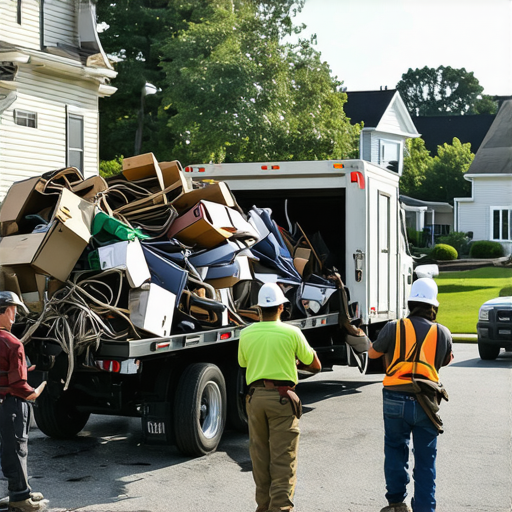
Junk Removal Aurora strategies prioritize the removal of high-density items like old furniture and appliances to reduce the immediate floor load of the property. Tactical extraction involves identifying load-bearing paths through the home to prevent workers from falling through weakened floorboards during heavy item transport. Every Furniture Removal task starts with a structural scan. Modern furniture is often made of medium-density fiberboard (MDF) which is heavy but lacks structural strength. Older furniture from the mid-20th century is solid oak or maple, weighing hundreds of pounds. Moving a 300-pound dresser requires more than muscle. It requires a pivot strategy. We use specialized sliders to distribute the weight across multiple floor joists. If the floor feels soft, we lay down plywood tracks. This creates a temporary subfloor that spreads the PSI (pounds per square inch) across a wider surface area. Many seniors in Aurora have lived in their homes since the 1970s. These homes have aged along with the occupants. The plumbing is often brittle. One wrong bump with a heavy sofa and you have a flooded basement. We map out every shut-off valve before we touch a single piece of junk. It is a logistical checklist that prevents catastrophes. We also consider the truck loading sequence. A heavy appliance must sit over the axle, not at the rear of the bed. This prevents the truck from fishtailing on the I-225 during the haul to the landfill.
“Waste is merely a resource in the wrong place; professional removal is the science of putting it back where it belongs.” – Disposal Industry Maxim
The hidden dangers of chemical waste
Appliance removal involves the legal handling of hazardous materials such as chlorofluorocarbons (CFCs) and polychlorinated biphenyls (PCBs) found in older household units. Federal law requires that refrigerants be recovered by a certified technician before the metal casing can be recycled at an Aurora scrap yard. We see this often with old chest freezers and window air conditioners. These units are heavy, but their true weight is the environmental liability they carry. If a line is cut, the gas escapes. That is a fine from the EPA. We use specialized recovery pumps to vacuum the gas into tanks. Only then do we move the unit. Seniors often have old chemicals stored in the garage. This is where Garage Clean outs become dangerous. We find lead-acid batteries, old gasoline, and jars of mercury. These cannot go into a standard dumpster. They require a hazardous waste manifest. In the Denver metro area, the Denver Arapahoe Disposal Site (DADS) has strict rules. You cannot just bury a lithium-ion battery. It will catch fire under the pressure of the bulldozer. We have seen trucks catch fire on the highway because a customer hid a drill battery in a bag of trash. We inspect every bag. We verify every box. Safety is not an option. It is the core of the mission.
Why truck volume beats weight every time
Dumpster Rentals Aurora pricing is often determined by the volume of space used within the container rather than the total tonnage of the debris. Understanding the relationship between cubic yardage and tipping fees is essential for seniors looking to minimize the costs of a large-scale cleanout. A 20-yard dumpster has a specific footprint. If you toss items in randomly, you create air pockets. Air is expensive. We practice the art of cubing out. This means breaking down boxes, removing legs from tables, and stacking flat items first. We aim for a 90 percent density rate. Anything less is a waste of the client’s money. We also monitor weight. If you fill a dumpster with concrete or dirt, the truck cannot lift it. The hydraulic system has limits. In Aurora, if a dumpster exceeds 10 tons, it stays on the driveway until you unload it. That is a costly mistake. We use weight-to-volume ratios to estimate the load. Household junk typically weighs 250 pounds per cubic yard. Construction debris is closer to 500 pounds. We do the math so you do not have to. This logistical precision is why professional Junk Removal is superior to hiring a random person with a truck. We manage the payload. We manage the liability. We manage the cost.
| Material Type | Decomposition Time | Environmental Risk Level |
|---|---|---|
| Particle Board Furniture | 25 Years | Moderate (Formaldehyde) |
| Major Appliances | 50 Years | High (CFCs/Heavy Metals) |
| Newspapers/Paper Junk | 5 Years | Low (Methane source) |
| Plastic Storage Tubs | 450 Years | High (Microplastics) |
| Glass Bottles | 1,000,000 Years | Low (Inert) |
Local disposal laws in the Denver metro area
Junk Removal Aurora operations must comply with the Solid Waste Association of North America (SWANA) safety standards and local municipal codes regarding bulky item disposal. The city of Aurora has specific days for large item pickup, but these programs are often too limited for a full hoarder cleanout project. If you leave 20 bags on the curb, the city will fine you. They will not take furniture or appliances with chemicals. This is where private hauling becomes mandatory. We use the transfer stations on the edge of the city. These facilities sort the waste. Some goes to the landfill. Some goes to the recycling center. Metal is stripped. Wood is chipped. We aim for a high diversion rate. This means we keep as much as possible out of the ground. Seniors often feel guilty about throwing things away. Knowing that their items are being recycled helps with the emotional transition. We provide a receipt of disposal. This proves the items were handled legally. It protects the homeowner from illegal dumping fines. Your junk is your liability until it hits the scale. We take that liability off your shoulders the moment we pull out of the driveway.
- Lead-acid car and mower batteries
- Propane tanks and pressurized canisters
- Wet paint and liquid solvents
- Biological waste or medical sharps
- Asbestos-containing floor tiles or pipe insulation
- Explosives or old ammunition
“The management of solid waste is a fundamental requirement of public health and environmental protection in the modern urban landscape.” – SWANA Industry Standard
The logistics of downsizing for 2026
Seniors scaling down in 2026 face a changing landscape of disposal fees and environmental regulations that make early intervention a financial necessity. The cost of tipping fees at the DADS landfill rises every year. Waiting to clean out a garage or basement only increases the final bill. We recommend a phased approach. Start with the heavy items. Clear the paths. Remove the appliances. Then focus on the smaller debris. This allows for better sorting and more recycling. 2026 will see stricter rules on e-waste. Old televisions and computers already require special handling. This will only get more complex. By acting now, seniors can avoid the rush and the price hikes. We provide a full logistical roadmap for every project. We handle the heavy lifting. We handle the sorting. We handle the transport. You simply point at what needs to go. The process is clean. The process is professional. The process is complete. We turn a cluttered house back into a home. Or we prepare it for the market. Either way, the junk is gone. The risk is gone. The burden is gone. We are the masters of the load. We are the experts in the exit strategy. Trust the diesel. Trust the math. Trust the pros.