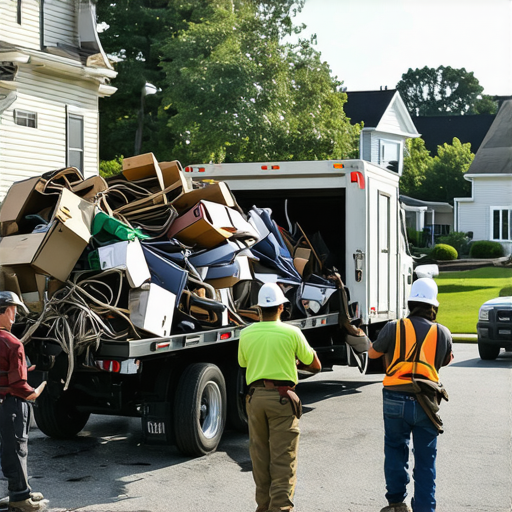

The smell of diesel and hydraulic fluid is a constant companion in the world of heavy-load logistics. I once cleared a house where the junk wasn’t just stuff. It was a structural hazard. We found the floor joists were bowing under the weight of 40 years of newspapers that had absorbed ten years of basement humidity. The air was thick with the smell of wet cellulose and stagnant history. Every step was a gamble. The floor snapped. We had to reinforce the subflooring with plywood just to get the first 5-yard load out. This is the reality of waste management that the curbside cowboys never see. They think it is just about lifting. It is about physics. It is about calculating the PSI of a rotten floor and the logistical flow of 15 tons of debris through a standard 36-inch front door. Junk Removal Aurora is a specialized discipline that requires a mastery of cubic-yard density and environmental compliance.
The hidden physics of a residential hoard
Hoarder Clean Out aurora operations require a profound understanding of load-bearing dynamics and material density within residential structures. When possessions accumulate over decades, they undergo a process of compaction that increases the weight per square foot far beyond what modern residential engineering intends. A single cubic yard of loose household debris might weigh 250 pounds, but when that same material is compressed under its own weight and saturated with Illinois humidity, that figure can triple. This creates a lethal environment for the uninitiated. Garage Clean outs often reveal the same issues where old paint cans and engine blocks have settled into the foundation. We look at a room and see more than clutter. We see the aggregate weight of three thousand pounds of saturated particulate board. We see the gravitational pull of a second-story living room. The structural integrity of a 1950s Aurora bungalow becomes a variable rather than a constant. We calculate the escape route before we touch the first box. This is the science of recovery.
“Waste is merely a resource in the wrong place; professional removal is the science of putting it back where it belongs.” – Disposal Industry Maxim
Why your cheap hauler is a legal time bomb
Junk Removal Aurora services must be vetted for legal compliance and liability insurance to protect the homeowner from significant financial risk. If you hire a guy with a rusted truck because he quoted you fifty dollars less than a professional, you are gambling with your future. Your junk is your liability until it hits the scale at the transfer station and a manifest is generated. If that hauler dumps your old furniture in a ditch along Route 30, the authorities will find your name on a piece of mail. They will come to your door. I have seen business owners lose thousands in fines because they chose the curbside cowboy over a certified professional. In the Fox Valley area, the police do not take illegal dumping lightly. They track the source. They issue the citations. Your signature on a disposal contract is your only protection against the environmental negligence of others. We track every pound. We document every tip. This is how we ensure the chain of custody remains unbroken from your driveway to the landfill or the recycling center.
The logistical reality of furniture and appliance removal
Furniture Removal and Appliance removal involve high-mass logistics and hazardous material protocols that exceed the capabilities of standard residential waste programs. A vintage refrigerator is not just a heavy box. It is a pressurized system containing refrigerants that must be recovered according to federal law. Tossing a fridge into a dumpster is a violation of the Clean Air Act. We use specialized dollies and pneumatic lifts to navigate the narrow stairwells found in Aurora’s historic districts. We account for the center of gravity. We understand the sheer force required to move a 400-pound oak armoire without destroying the hardwood floors. Junk Removal is not a brute force activity. It is a controlled extraction. We utilize the Tetris method in our trucks to ensure we do not transport air. Air is expensive. We pack to the ceiling. We maximize the 15-yard capacity to ensure the client gets the best value per cubic foot. This is the hallmark of a veteran logistics manager. We do not waste space and we do not waste time.
| Material Type | Decomposition Time | Recovery Value | Aurora Disposal Difficulty |
|---|---|---|---|
| Corrugated Cardboard | 2-3 Months | High | Low |
| Untreated Timber | 10-15 Years | Medium | Low |
| High-Density Polyethylene | 500+ Years | Low | High |
| Ferrous Metal | 50-100 Years | Very High | Low |
| Composite Furniture | Indefinite | None | Medium |
The permit landscape for dumpster rentals in Illinois
Dumpster Rentals Aurora projects are governed by municipal ordinances and right-of-way permits that dictate where and how long a container can sit. If you plan to place a 20-yard roll-off on the street in a neighborhood like Pigeon Hill, you need to understand the local permit requirements. The City of Aurora has specific rules about blocking public access. A dumpster sitting on a residential street without the proper reflective markings is a massive insurance liability. We handle the logistics of placement. We ensure the container is situated to prevent asphalt damage. Many homeowners forget that a full dumpster can weigh ten tons. Without proper wooden planking underneath the rollers, that weight will crack a standard driveway like an eggshell. We monitor the weight limits of our fleet to avoid damaging the local infrastructure. We know which streets can handle a heavy truck and which ones require a smaller, more agile vehicle. This is local knowledge applied to waste management.
“Proper waste segregation at the source is the most effective way to reduce the volume of material entering landfills and maximize recovery of secondary raw materials.” – Solid Waste Association of North America
A checklist for hazardous materials and prohibited items
Hazardous waste management requires specialized handling and legal disposal routes that differ significantly from general household debris. Federal and state laws like the Resource Conservation and Recovery Act (RCRA) prohibit the mixing of certain materials in general waste streams. As a professional, I must be an inspector. I look for the hidden hazards. I look for the lithium batteries that can start a fire in the back of my truck. I look for the old cans of lead-based paint that can leach into the groundwater. We do not just lift. We verify. If a customer hides a propane tank in a pile of yard waste, they are putting my crew in danger. We have a strict protocol for identification and isolation of these items. Use this list to prepare for your clean out:
- Lithium-ion and lead-acid batteries (Fire hazard)
- Wet paint and chemical solvents (Leachate risk)
- Propane tanks and pressurized cylinders (Explosion risk)
- Tires without rims (Landfill prohibition)
- Medical waste and sharps (Biological hazard)
- Fluorescent tubes containing mercury (Toxic vapor)
The true cost of waste diversion
Environmental stewardship in Aurora Hoarder Clean Out scenarios involves diversion strategies that prioritize recycling over simple landfilling. While most people think recycling is always better, the carbon footprint of hauling low-grade plastics 500 miles often exceeds the impact of local, high-efficiency waste-to-energy incineration. We look for the most efficient path. We take scrap metal to local Aurora processors. We take clean wood to mulch facilities. We minimize the trip to the landfill because every mile driven is fuel burned. The goal is a high diversion rate. We aim to keep 60 percent of a hoard out of the landfill. This requires meticulous sorting on the fly. It requires a crew that knows the difference between recyclable HDPE and non-recyclable composites. We manage the mess so the environment does not have to. Your junk is a puzzle of materials. We solve that puzzle one cubic yard at a time. The floor snapped once, but it will not happen on my watch again. We lead with logic. We finish with a clean space.