
The invisible weight on local floor joists
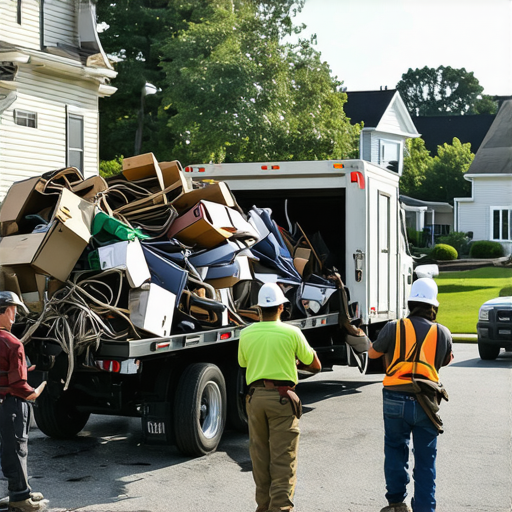
Hoarder Clean Out aurora operations require an immediate assessment of structural load and air quality. Junk Removal Aurora experts identify sagging subfloors and mold spores before any debris leaves the threshold to prevent catastrophic floor failure. I once cleared a house where the junk was not just stuff. It was a structural hazard. We found the floor joists were bowing under the weight of 40 years of newspapers that had absorbed ten years of basement humidity. The stack had reached a density comparable to wet concrete. Every step we took produced a sickening groan from the timber. We had to shore up the basement with jacks before the first bag was moved. This is the reality of waste management at scale. It is not about tidying up. It is about engineering a safe exit for thousands of pounds of compressed neglect. The air smells like diesel and hydraulic fluid when the trucks arrive, but inside, it smells like slow decay and ammonia. My obsession is the tetris of the load. I hate wasted air space in a truck. Every cubic yard costs money at the Denver Arapahoe Disposal Site. If you do not pack the 15-yard bin with mathematical precision, you are throwing away profit and fuel.
The physics of a safe structural recovery
Furniture Removal and heavy debris extraction involve calculating the Center of Gravity for every load. Appliance removal in Aurora must account for coolant recovery and heavy steel weights that shift during transit. Most homeowners underestimate the sheer mass of their belongings. A single stack of magazines three feet high weighs more than a standard kitchen table. When these items saturate with Colorado basement humidity, the weight doubles. We use hydraulic lifts and reinforced dollies to manage the transition from the room to the driveway. If you misjudge a turn on a narrow staircase, you do not just scratch the wall. You risk a structural collapse of the stairs themselves.
“Waste is merely a resource in the wrong place; professional removal is the science of putting it back where it belongs.” – Disposal Industry Maxim
Why your local landfill hates your garage
Garage Clean outs often reveal hidden chemical liabilities that Dumpster Rentals Aurora services cannot legally accept. Junk Removal technicians must identify old lead-acid batteries, pesticides, and pressurized canisters that pose explosive risks in a compactor. The modern throwaway culture ignores the BTU potential of recovered wood while simultaneously poisoning the waste stream with lithium-ion batteries. I have seen rookies lose eyebrows because a customer hid a propane tank in a pile of yard waste. We inspect every layer. We do not just lift. We categorize. We manifest. We ensure that the stream of debris is diverted to the correct facility, whether it is a transfer station or a specialized recycler.
The six stages of structural reclamation
Aurora Hoarder Clean Out procedures begin with Hazard Containment followed by Logistical Staging to ensure a clear path for exit. Junk Removal Aurora specialists then execute the Primary Load Out of bulk items before moving to Detail Extraction and Biological Sanitization. Stage one is the air. If the particulate count is too high, we don masks. Stage two is the perimeter. We create a five-foot wide egress. Stage three is the high-density items. Stage four is the appliance extraction. Stage five is the sorting of hazardous materials. Stage six is the final sweep for structural damage. This process ensures that the home does not just look better but functions as a safe habitat again.
Math of the fifteen yard bin
Dumpster Rentals Aurora costs are determined by Cubic Yard Density and Tipping Fees at local stations. Junk Removal pricing fluctuates based on the weight of the material and the labor hours required for technical extraction.
| Material Type | Weight per Cubic Yard | Decomposition Time | |
|---|---|---|---|
| Wet Newspaper | 400-600 lbs | 2-6 Weeks | |
| Mixed Construction Debris | 350-500 lbs | 50-100 Years | |
| Standard Household Junk | 150-250 lbs | 20-200 Years | |
| E-Waste | Varied | 1,000+ Years |
“Hazardous waste management requires a cradle-to-grave tracking system to prevent environmental degradation.” – EPA Guidelines
Items your hauler cannot legally touch
Appliance removal excludes units with active Chlorofluorocarbons unless the hauler has specific EPA certifications. Junk Removal Aurora companies must decline items like wet paint, motor oil, and industrial solvents to maintain their transport permits.
- Liquid paint and thinners
- Automotive batteries and oils
- Unsecured pressurized tanks
- Biohazardous materials or medical waste
- Asbestos-containing insulation
- Explosives or fireworks
The logistical reality of the Aurora waste stream
Junk Removal Aurora operations are dictated by the proximity to the Tower Road transfer stations and the specific gate hours of regional landfills. Garage Clean outs in the winter months require extra planning for ice-slicked ramps and frozen debris. While most people think recycling is always better, the carbon footprint of hauling low-grade plastics 500 miles often exceeds the impact of local, high-efficiency waste-to-energy incineration. We choose the disposal path that balances environmental recovery with the energy cost of the haul. A 20-yard dumpster is a permit nightmare in some high-density Aurora neighborhoods. We often recommend a live-load truck to avoid the bureaucracy of street placement permits and the risk of neighbors filling your bin overnight. Your junk is your liability until it hits the scale. If you hire a guy with a truck who dumps in a ditch, the authorities will find your mail in that pile. The police will call you. Your name is on the trash until the landfill issues a receipt. We provide that receipt. We provide the peace of mind that comes from knowing the logistical chain is closed. The house is empty. The truck is cubed out. The job is done correctly.
Reading this post really highlights how much more is involved in a hoarding cleanup than just removing clutter. The part about assessing the structural load of the home really struck a chord; I once volunteered for a cleanup where we found extensive wood rot and sagging floors after dealing with years of accumulated waste. It made me wonder how many homes are unknowingly facing serious safety hazards because of this invisible weight that isn’t immediately obvious. I’m curious, how do professionals typically assess the integrity of the structure beforehand? Additionally, managing hazardous materials in a safe, compliant way seems crucial but complex. Has anyone here had experience navigating local regulations for hazardous waste disposal during such clear-outs? I think understanding the logistics and safety protocols is just as important as the physical removal itself; it’s all about creating a safe environment for residents and workers alike. Overall, this post reminds me how detailed and careful the process needs to be to truly reclaim a home from neglect.
This post really underscores how vital a thorough structural and environmental assessment is before starting debris removal. I recall a project where we encountered similar issues with collapsed floors owing to years of accumulated waste and moisture damage—such hazards are often hidden until it’s almost too late. What I’ve learned from those experiences is that early identification of risks like mold spores, weakened joists, or chemical hazards can drastically change the cleanup strategy and significantly improve safety for everyone involved. I’m interested in how professionals typically perform these initial assessments—do they usually carry out detailed inspections or rely on visual cues? Also, when it comes to hazardous materials, navigating local disposal regulations can be complicated—any tips on streamlining that process? I believe that integrating environmental safety with structural integrity assessments should be standard in hoarder cleanup protocols. Has anyone found effective methods to speed up these evaluations without compromising safety? It would be great to hear different approaches or tools that have worked well in similar situations.
This post offers such an in-depth look at the complexities involved in safe hoarder cleanouts, especially in a place like Aurora where humidity and aging structures can exacerbate hazards. I’ve personally seen homes where years of accumulated newspapers and furniture not only created health issues but also severely damaged the building’s integrity. The part about assessing structural load before removing debris is crucial—I’ve always wondered if there are specific tools or inspection methods that professionals favor for quick yet thorough evaluations. We often overlook how much weight saturated materials add and how that affects safe removal procedures, especially in tight or fragile spaces. Additionally, hazardous chemical management seems to be a major concern; proper identification and disposal can be tricky. Have any of you faced challenges with local regulations around hazardous waste, particularly in multi-family or dense neighborhoods? It feels like a balancing act between safety, compliance, and environmental responsibility, but it seems that a meticulous approach can prevent future disasters. Would love to hear about some innovative strategies or tools others have used in this process.