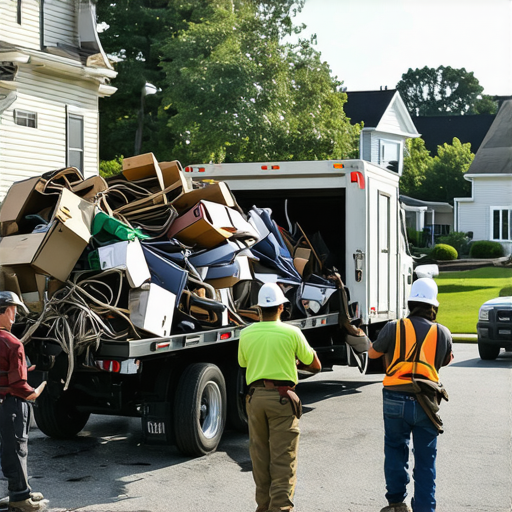

A garage is not just a room. It is a four-hundred-square-foot ecosystem. When I pull my 15-yard truck up to an Aurora driveway, I smell more than just old tires and stale air. I smell the sharp ammonia of rodent urine. I see the greasy rub marks along the baseboards where rats have skirted the perimeter for years. As a logistics manager with two decades in the waste game, I do not see a pile of boxes. I see a high-density fuel load for a fire or a luxury apartment complex for pests. My crew and I operate on the physics of cubing out a truck. We maximize every square inch of that hydraulic bed. But before we touch a single piece of furniture, we perform a sensory sweep. If you ignore the signs of an infestation, you are not just cleaning a garage. You are transporting a biological hazard into my vehicle and eventually to the Aurora Transfer Station.
The hazardous surprise hiding in the junk
I watched a rookie almost lose his eyebrows because a customer hid a half-full propane tank inside a pile of harmless yard waste. We do not just lift. We inspect every single item. This incident happened during a routine garage clean out near the Cherry Creek Reservoir. The homeowner had piled up old patio cushions and bags of leaves. My guy, eager to hit his tonnage goals, grabbed a large bundle. The friction of the drag against the concrete sparked. If that tank had a leak, we would have been looking at a localized explosion rather than a junk haul. This is why we treat every hoard as a potential crime scene. We look for hidden pressurized vessels, leaking lead-acid batteries, and the most common threat: pests. A nest of mice inside a sofa can turn a simple furniture removal into a sanitation nightmare. Your junk is your liability until it hits the scale at the landfill. If we find evidence of a major infestation, the protocol changes. We have to wrap items in 6-mil poly sheeting to prevent the spread of bedbugs or roaches during transit through Aurora streets.
The anatomy of a garage biome
Rodents and insects thrive in stagnant environments like Aurora garages where organic material meets moisture. The arid Colorado climate often drives pests indoors seeking the relative humidity of a cluttered space. When you stack cardboard boxes directly on a concrete floor, you create a thermal bridge. Moisture wicks up into the paper. This softens the cellulose and provides both a food source and a bedding material for silverfish and crickets. Once these smaller insects move in, the predators follow. Black widows are a constant threat in Colorado garage clean outs. They prefer the dark, undisturbed corners behind old appliances. We have a strict glove-only policy for this reason. You should never stick your hand where you cannot see. The logistics of a clean out require a clear path of egress. We clear from the door inward, creating a sterile zone as we go. This prevents pests from retreating further into the structure of your home.
Signs of hidden intruders in your junk
Look for frass, chew marks, and nesting materials in cardboard to identify an active infestation. Frass is a technical term for insect excrement. In the case of wood-boring beetles or termites, it looks like fine sawdust. If you see piles of dust under your old wooden workbenches, that is not just dirt. It is a sign of structural compromise. Rodent droppings are the most obvious indicator. Fresh droppings are dark and moist, while older ones are grey and crumbly. If we encounter fresh droppings, we mask up. The risk of Hantavirus is real in the Western United States. We also look for sebum trails. Rats have oily fur. As they run along walls, they leave a dark, greasy smudge. If I see a smudge trail leading behind a stack of old tires, I know we are about to find a nest. This changes the load-out strategy. We cannot just toss that material. It has to be contained to ensure we do not contaminate the rest of the truck.
Why Aurora homeowners fall for the hoarding trap
Accumulation creates thermal pockets and food sources that sustain pest populations through the winter. Many residents in Aurora use their garages as a secondary storage unit for items that do not fit in the house. This is a logistical failure. Every item stored is a loss of square footage value. Over time, the density of the junk increases. We call this the pack-out effect. The items at the bottom of the pile become compressed. This creates a dense, warm core that stays at a stable temperature even when the Colorado winter drops below zero. This core is the primary breeding ground for mice. They will shred the insulation from your old refrigerator or the stuffing from a discarded mattress to build nests. When we perform a hoarder clean out in Aurora, we often find that the junk has become a living entity. The weight of the debris can actually bow the floor joists if the garage is elevated or has a crawlspace beneath it.
“Waste is merely a resource in the wrong place; professional removal is the science of putting it back where it belongs.” – Disposal Industry Maxim
The logistical nightmare of infested appliance removal
Roaches hide in compressor coils and moving them risks spreading the infestation to the truck and the next job. Appliance removal is one of our most common requests. Old fridges and freezers are heavy. They require specialized dollies and a two-man team. But they are also the favorite hiding spot for German cockroaches. The warmth of the motor and the moisture from the defrost tray create a perfect habitat. If we tip a fridge and see insects scurrying, the job stops. We do not want to infest our vehicle. My truck is my livelihood. A single infested appliance can lead to a fleet-wide problem. We recommend that homeowners treat appliances with a residual insecticide 48 hours before we arrive if they suspect an issue. This ensures a safe transition from the garage to the recycling center where the refrigerants are drained according to EPA Section 608 standards.
The heavy cost of keeping everything
The financial math of junk storage is brutal. People pay thousands of dollars in mortgage interest for space occupied by broken lawnmowers and scrap wood. In Aurora, the cost of a 20-yard dumpster rental is significant, but it is a fraction of the cost of a structural repair necessitated by a pest-induced fire or wood rot. When we calculate a quote, we look at the volume in cubic yards. A standard garage can hold between 15 and 40 cubic yards of loose debris. If that debris is infested, the disposal fees may rise. Landfills have strict rules about contaminated loads. If we bring a load that is visibly crawling with vermin, we might be turned away or charged a special handling fee. This is why professional junk removal is not just about brawn. It is about waste stream management and knowing the legal requirements of the Resource Conservation and Recovery Act.
| Material Type | Decomposition Time | Pest Attraction Level |
|---|---|---|
| Untreated Cardboard | 2-5 Months | High (Nesting) |
| Synthetic Furniture | 20-50 Years | Medium (Shelter) |
| Aluminum Cans | 80-200 Years | Low (Water Storage) |
| Glass Bottles | 1 Million Years | Low (Void Spaces) |
| Plastic Bags | 10-20 Years | High (Nesting) |
How to prepare for professional junk removal in Aurora
Sort, bag, and identify hazards before the truck arrives to ensure a fast and safe removal. Preparation is the key to a low-cost haul. If my crew has to spend three hours sorting through loose trash, your bill will reflect that labor. We prefer that customers group items by material. Put all the metal in one corner. Stack the wood in another. This allows us to hit different disposal sites. We try to divert as much as possible from the landfill. Metal goes to the scrap yard. Clean wood goes to the mulcher. If you have hazardous materials, you must set them aside. Most junk removal companies in Aurora cannot legally haul wet paint, motor oil, or pesticides. These require a hazardous waste drop-off at the regional facility. By identifying these items early, you prevent us from having to leave a pile behind.
- Wet paint and solvent containers
- Lead-acid car batteries
- Propane tanks and pressurized cylinders
- Used motor oil and filters
- Industrial chemicals and pesticides
- Tires (requires a special disposal fee)
- Biohazardous waste or medical needles
“The management of solid waste is a public health necessity that requires precise logistical execution and environmental stewardship.” – Solid Waste Association of North America
The reality of local disposal fees and landfill rules
Aurora Transfer Station and Denver Regional Landfill have specific bans on certain items and charge based on weight and type. Every load we haul is weighed. We pay by the ton. If you have a garage full of heavy debris like concrete, brick, or dirt, the price will be higher than a load of old couches. This is due to the tipping fees at the landfill. In Aurora, we have to be mindful of the wind. Landfills often close their tipping faces if the wind exceeds 30 miles per hour to prevent trash from blowing across the plains. This can delay your clean out. We also have to account for the fuel surcharges. My trucks get about 8 miles to the gallon when fully loaded. The logistics of a hoarder clean out aurora require us to plan the route to the nearest transfer station to minimize these costs. We are not just movers. We are efficiency experts.
The environmental impact of irresponsible dumping
Illegal dumping is a plague on the Aurora community. I have seen people dump entire garage clean outs in the ditches near Cherry Creek. This is a short-sighted move. The fines for illegal dumping in Colorado are massive, and the environmental impact is worse. Leaking fluids from old appliances can seep into the groundwater. Pests from a dumped mattress can migrate to nearby homes. When you hire a professional, you are paying for the peace of mind that your waste is handled according to state regulations. We provide a manifest of where the junk went. Whether it was recycled, donated, or landfilled, there is a paper trail. This protects you from the liability of your junk being found in a place it should not be. Your junk is your legacy. Do not let it be a toxic one.
The ghost in the garage
Sometimes the junk we remove tells a story. We found a vintage motorcycle buried under a pile of newspapers from the 1970s. The chrome was pitted from the acidity of the rotting paper. The leather seat was a honeycomb of mouse tunnels. This is the tragedy of the garage hoard. Valuable items are destroyed by the very space meant to protect them. The logistics of removing a vehicle from a cluttered garage are complex. We often have to use winches and skates to move a seized-up machine. But once the floor is clear, the relief the homeowner feels is palpable. The air in the garage changes. The smell of decay is replaced by the smell of possibility. A clean garage is a reset button for your home and your mental state. It removes the hiding spots for pests and the fuel for fires. It turns a liability back into an asset. We leave the space swept and ready for its next life, whether that is a home gym or a place to actually park a car. That is the true value of professional waste management.