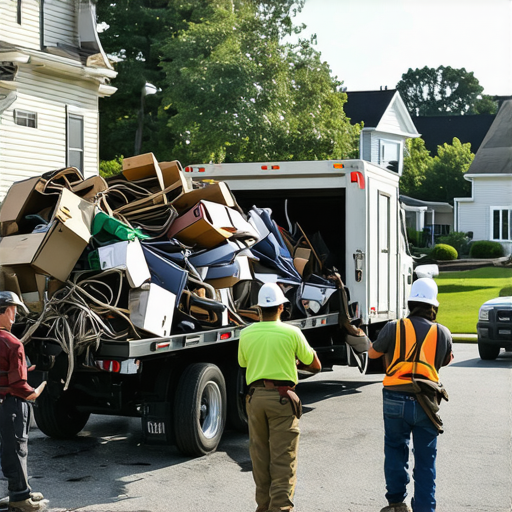
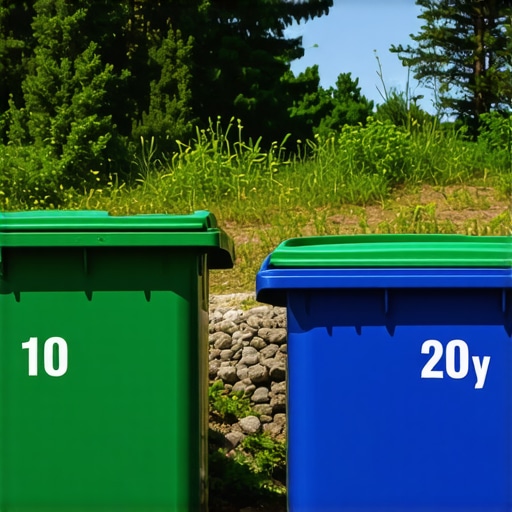
The air in the cab of my Mack truck smells like cold coffee and 15W-40 hydraulic fluid. I have spent twenty five years watching people underestimate the weight of their own lives. In the world of Aurora dumpster rentals, space is not just a dimension, it is a liability. If you choose the wrong bin, you either pay for air or you pay for an overweight violation that would make a logistics manager weep. I have seen the consequences of poor planning firsthand. A local business owner in Aurora once tried to save five hundred dollars by hiring a guy with a rusted pickup truck from a social media ad instead of renting a proper 20-yard bin. Two weeks later, the police called him because his company confidential files and three desks were found in a ditch near the Fox River. Your junk is your legal responsibility until it hits the scale at a licensed transfer station. This is the reality of the junk removal industry. We do not just lift, we manage the flow of material from your site to the ultimate destination, whether that is the Orchard Hills Landfill or a specialized recycling center in Kane County. This guide will break down the exact physics of choosing between a 10-yard vs 20-yard bin for your garage clean outs or furniture removal projects.
The math of a ten yard container
A 10-yard dumpster is the precision tool of the Aurora dumpster rentals market, designed for heavy debris and small scale projects. This bin typically measures ten feet long, eight feet wide, and three point five feet high. It is the gold standard for junk removal Aurora when dealing with high density materials like concrete, asphalt shingles, or dirt. The volume of a 10-yard bin is equivalent to roughly four to five pickup truck loads. However, the true metric is weight. If you are doing a roof tear off, a 10-yard dumpster can handle about twenty five squares of three tab shingles before it hits the legal road limit. The physics of the load matter. If you fill a 10-yard bin with loose concrete, the truck hydraulics will strain at the limit. We call this cubing out. It means you have hit the weight capacity before you filled the physical space. For a small garage clean out, this size is perfect because it fits in a single car driveway without blocking the sidewalk. It is a compact, dense solution for homeowners who understand that air space is wasted money.
“Waste is merely a resource in the wrong place; professional removal is the science of putting it back where it belongs.” – Disposal Industry Maxim
Why bigger is not always better for your driveway
Choosing a 20-yard bin in Aurora requires a clear understanding of the project scope and the structural integrity of your staging area. A 20-yard dumpster provides double the volume of its smaller sibling, measuring twenty feet long, eight feet wide, and four feet high. It is the workhorse for hoarder clean out aurora and major furniture removal tasks. While the extra space is tempting, you must consider the footprint. A 20-foot steel box requires at least sixty feet of linear space for the truck to drop it and pick it up. In older Aurora neighborhoods with narrow streets or steep driveway inclines, a 20-yard bin can be a logistical nightmare. The hydraulic arms of a roll off truck exert massive downward pressure. If your asphalt is thin or the ground is saturated from Illinois rain, that 20-yard bin will sink. I always tell clients to place 2×4 planks under the rollers to distribute the load. This prevents the steel from biting into the driveway surface. The 20-yard option is best for bulky, light debris like drywall, old carpeting, or wooden furniture that takes up massive volume but does not weigh as much as stone or soil.
The hidden weight of Aurora household waste
Effective junk removal relies on understanding material density and the specific gravity of the debris you are discarding. In Aurora, we see a lot of appliance removal and furniture removal where the items are composite materials. Particle board furniture is essentially compressed wood glue and sawdust, which is incredibly heavy when it gets damp. If you are clearing out a basement that has seen humidity, your junk is likely thirty percent heavier than you think. This is where the 10-yard vs 20-yard decision becomes critical. If you fill a 20-yard bin with waterlogged basement debris, you might exceed the truck lifting capacity of 60,000 pounds. This results in a dry run charge where the driver cannot physically lift the bin. You then have to manually unload the dumpster to get it under the weight limit. It is backbreaking work that costs time and money. Professional junk removal Aurora specialists look at the BTU potential and the weight per cubic yard of every item. We calculate the load to ensure the center of gravity stays low in the bin, preventing the truck from tipping during the pull.
| Material Type | Weight per Cubic Yard (Lbs) | Recommended Bin Size |
|---|---|---|
| Loose Household Debris | 250 – 300 | 20-Yard |
| Demolition Debris | 350 – 500 | 20-Yard |
| Roofing Shingles | 6,000 – 8,000 | 10-Yard |
| Concrete or Dirt | 2,000 – 3,000 | 10-Yard (Max 5 yards) |
| Mixed Furniture | 150 – 250 | 20-Yard |
Items that turn a bin into a crime scene
Every Aurora dumpster rental comes with a strict list of prohibited items that can lead to massive fines and environmental hazards. You cannot simply throw anything into a bin and expect it to disappear. Certain materials require specialized appliance removal or hazmat handling. If you hide a lithium ion battery inside a pile of household junk, you are creating a fire hazard that can ignite inside the truck or at the transfer station. I have seen entire trucks lost to battery fires because a customer thought they could sneak one past the inspector. The Resource Conservation and Recovery Act (RCRA) dictates how these items must be handled. In the Aurora area, we are particularly strict about protecting the local watershed. Illegal dumping of chemicals or oils is a fast track to an EPA investigation. Your junk is your liability until the manifest is signed at the gate. Professional junk removal services will inspect the load to ensure compliance with Illinois state laws.
- Lead-acid batteries and lithium power cells
- Refrigerants like Freon (requires EPA Section 608 certification)
- Wet paint, solvents, and thinners
- Tires (they float to the top of landfills and create methane pockets)
- Propane tanks and pressurized cylinders
- Asbestos containing materials (ACMs)
- Biohazardous waste or medical needles
“The legal responsibility for hazardous waste follows the generator from the cradle to the grave, regardless of who hauls the bin.” – RCRA Compliance Handbook
Environmental realities of the Fox River Valley
While many people believe that recycling is the ultimate solution for every piece of junk removal Aurora, the carbon reality is more complex. The energy required to haul low grade plastics five hundred miles to a specialized processing center often exceeds the environmental benefit. In some cases, high efficiency waste to energy incineration is a more sustainable path for non recyclable residuals. When we perform a hoarder clean out aurora, we are looking for high value recovery items like scrap metal, clean cardboard, and untreated wood. These materials have a high diversion rate and can be processed locally. Drywall is a particular problem. When gypsum is buried in a landfill, it can produce hydrogen sulfide gas, which smells like rotten eggs and can be toxic in high concentrations. This is why professional Aurora dumpster rentals often require the separation of construction debris. By choosing the right bin and sorting your waste, you are participating in a complex logistical dance that protects the Aurora environment and keeps disposal costs manageable for everyone in the Fox River Valley.