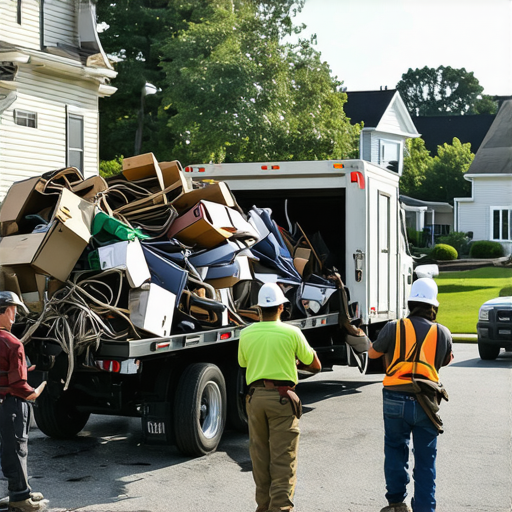

The dangerous reality of the backyard compressor
Appliance removal in Aurora requires specialized handling because units contain hazardous refrigerants, heavy metals, and oils that violate state environmental regulations. Local landfills reject these items to prevent soil contamination and atmospheric damage from ozone depleting substances found in older cooling units and insulation. Professional removal services ensure these materials are extracted by certified technicians before the metal shell is scrapped. I watched a rookie almost lose his eyebrows because a customer hid a half-full propane tank inside a pile of harmless yard waste. We do not just lift, we inspect. Every. Single. Item. This industry is not just about muscle, it is about forensic investigation of every load to ensure no hazardous materials trigger a chemical fire in the back of a 15 yard dump truck. People think they can save a few bucks by hiding a toaster oven or a microwave in a garbage bag, but the heavy metal load in the electronics will eventually leach into the local Aurora groundwater if it hits a standard landfill. It is a logistical and moral failure to treat a refrigerator like a bag of grass clippings.
The chemical ghost inside your fridge
Refrigerants like R-22 and R-134a are powerful greenhouse gases that must be recovered under Section 608 of the Clean Air Act before any appliance is crushed. Aurora waste management protocols strictly forbid the disposal of cooling units in general trash streams because the atmospheric impact of one leaking fridge equals thousands of miles of car emissions. When we arrive for a Junk Removal Aurora project, our first task is checking the integrity of the cooling coils. If those lines are snapped by a careless homeowner, the gas is gone, and the liability begins. The EPA mandates that only certified technicians with vacuum recovery systems can tap these lines. Beyond the gases, the compressors themselves are often submerged in thick, viscous oils that contain PCBs in older models. These oils are a nightmare for standard landfill liners. If a compressor leaks in a landfill, the oil migrates through the waste layers, picking up other toxins and creating a lethal leachate cocktail. This is why you see those red ‘Rejection’ stickers at the transfer station when you try to sneak a mini-fridge into the pile.
“Waste is merely a resource in the wrong place; professional removal is the science of putting it back where it belongs.” – Disposal Industry Maxim
Why your local transfer station turns you away
Municipal transfer stations in Aurora and Kane County are designed for high volume household waste, not the complex deconstruction required for white goods and bulky appliances. These facilities operate on tight margins and rapid turnover, meaning they lack the specialized equipment to safely dismantle a washing machine or an upright freezer. The Appliance removal process involves more than just a truck. It involves a chain of custody that tracks the unit from your basement to a specialized de-manufacturing plant. When you hire for a Garage Clean out, the physics of the load change the moment an appliance is added. A standard refrigerator takes up approximately 60 cubic feet of air space but weighs nearly 300 pounds. This density disrupts the weight distribution of the truck. If a hauler does not know how to cube out a load, they risk an axle snap or a dangerous shift during transport on the Eola Road curves. We calculate the center of gravity for every heavy load to ensure the hydraulic lift gates operate within their safe working load limits.
The hidden hazard of the compressor
Compressors are high pressure vessels that act like small bombs if they are pierced or crushed by the heavy machinery at a landfill. The internal pressure can reach hundreds of PSI, and when a landfill compactor runs over a sealed compressor, the resulting explosion can send shrapnel through the trash pile. This is a primary safety concern for the operators at the Orchard Hills Landfill or any regional facility near Aurora. Furthermore, the copper winding inside these compressors is a high value secondary commodity, but it is locked inside a thick steel shell. Landfills are in the business of burying, not mining. They do not have the labor to extract $15 worth of copper from a 200 pound steel block. By diverting these to a specialized recycler, we ensure the circular economy stays functional. Every pound of copper recovered is a pound that does not have to be mined from a virgin open pit somewhere else. It is about the BTU potential of the recycled material versus the energy waste of simple burial.
Scaling the cost of a garage clean out
Pricing for furniture removal and appliance disposal is determined by the cubic yardage and the specific surcharge for hazardous components. A standard Dumpster Rentals Aurora service might seem cheap until you read the fine print about prohibited items. Most dumpster companies will fine you $50 to $100 per appliance found in the container because they are charged those same fees at the scale house. Below is a breakdown of how we evaluate the logistics of a typical removal job.
| Item Type | Disposal Complexity | Aurora Tipping Surcharge | Recycling Potential |
|---|---|---|---|
| Standard Sofa | Low | $0 – $15 | Low (Landfill) |
| Refrigerator | Critical | $25 – $55 | High (98% Recyclable) |
| Washing Machine | Medium | $10 – $20 | High (Steel/Motors) |
| CRT Television | High | $35 – $60 | Toxic (Lead Glass) |
| Tires | Moderate | $5 – $15 per tire | High (Crumb Rubber) |
The logistical art of the appliance load
A professional crew uses the tetris method to minimize wasted air space while maintaining a safe exit path for the heavy items. When we perform Furniture Removal alongside appliances, the furniture acts as ‘dunnage’ or padding to prevent the heavy metal units from sliding. We never place a refrigerator on its side if it is being donated because the oil will flow into the cooling coils and ruin the unit permanently. We use appliance dollies with stair climbing tracks to protect your hardwood and prevent structural load failures on residential stairs. A standard fridge has a point load of about 75 pounds per square inch on its tiny plastic wheels. If you roll that across a soft pine floor, you are leaving permanent ruts. Our logistics managers plan the extraction route like a tactical operation, measuring door clearances to the millimeter and using floor protection blankets. The goal is zero impact on the home and maximum recovery of the material.
Items your hauler cannot legally touch
State and federal laws like the Resource Conservation and Recovery Act define exactly what a private junk hauler can and cannot transport without a hazmat manifest. Even during a massive Hoarder Clean Out aurora, there are boundaries we cannot cross for the safety of the crew and the environment. If we find these items, we provide the customer with the correct municipal hazardous waste contact information. Here is the ‘No-Go’ list for standard removal operations:
- Lead-acid car batteries (Leaking acid is a fire and skin burn hazard).
- Wet paint and solvent thinners (High VOCs and potential for spills).
- Propane tanks, even if they feel empty (Residual gas is an explosion risk).
- Biohazardous waste or medical sharps (Require specialized containment).
- Ammunition or explosives (Federal transport violations).
- Asbestos-containing materials from old pipe insulation.
“Environmental stewardship is not an option in waste management; it is the baseline for legal operation.” – SWANA Safety Guidelines
Electronic waste and the heavy metal threat
Modern junk removal is increasingly focused on E-waste because televisions and computer monitors contain up to eight pounds of lead each. When people call for Junk Removal Aurora, they often group their old tube TVs with their appliances. These require a completely different disposal path. The phosphors in old monitors are highly toxic. If the glass breaks in a truck, the dust becomes a respiratory hazard for the crew. We wrap these items in heavy duty plastic to contain any potential breakage. The irony is that while these items are the most difficult to dispose of, they are also the most rich in rare earth metals. A professional recycler can recover gold, silver, and palladium from the circuit boards. This is why a ‘curbside cowboy’ with a pickup truck is a danger to the community. They will take your $40, smash the TV in a field to get the $2 worth of copper, and leave the leaded glass to poison the soil. Your junk is your liability until it hits a certified scale with a receipt. Always demand a proof of proper disposal to protect your own legal standing.
The heavy cost of keeping everything
Hoarding situations in Aurora create unique logistical challenges because the weight of the debris can exceed the structural design of the home. When we are called for a Hoarder Clean Out aurora, we are not just moving trash, we are performing a structural intervention. Paper, when stacked in blocks, has a density approaching that of soft wood. A room filled five feet high with old newspapers can put a load of 150 pounds per square foot on the floor joists. Most residential floors are only rated for 40 pounds per square foot live load. We have seen floors bowing under the weight of accumulated appliances and magazines. In these cases, we have to shore up the floor from the basement before we can safely remove the items. This is the zooming reality of the job. It is not just picking up a box. It is understanding the physics of the house and the chemistry of the waste. While most people think recycling is always better, the carbon footprint of hauling low grade plastics 500 miles often exceeds the impact of local, high efficiency waste to energy incineration. We make those calls based on the current market for secondary materials and the local Aurora disposal landscape. Every load is a data set that must be optimized for weight, volume, and environmental compliance.