The hazardous surprise behind every kitchen wall
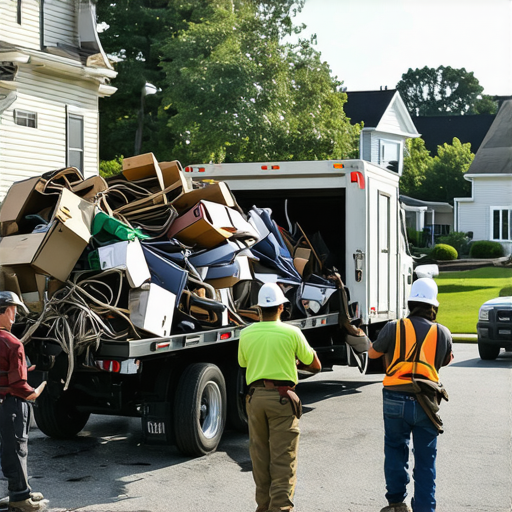
I watched a rookie almost lose his eyebrows because a customer hid a half-full propane tank inside a pile of harmless yard waste. We do not just lift, we inspect. Every. Single. Item. That incident taught my crew that what people call junk is often a pressurized bomb or a chemical spill waiting for a spark. When you handle appliance removal in Aurora, you are not just moving metal. You are transporting a pressurized system of refrigerants and heavy insulators. I have spent 25 years watching the hydraulic lifts of my trucks groan under the weight of 1970s era refrigerators that were built like tanks but leak like sieves. The logistics of disposal are unforgiving. If you miscalculate the weight of a commercial sub-zero unit, you risk snapping a ramp or blowing a tire on the way to the transfer station. This is the reality of the waste management industry. It is a world of tipping fees, axle weights, and rigid environmental compliance.
The high price of improper refrigerant handling
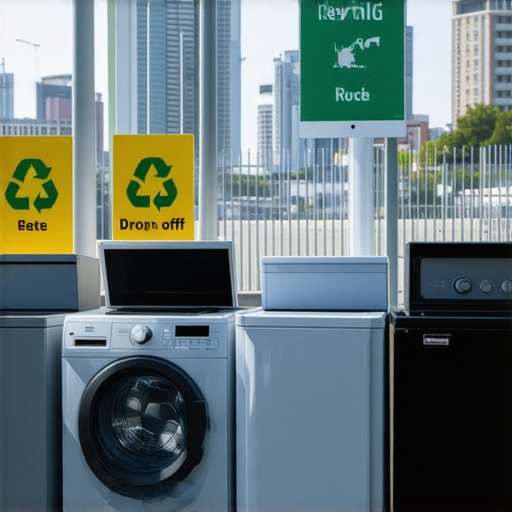
Finding the right Aurora fridge drop-off spot requires identifying certified appliance recyclers, municipal transfer stations, and scrap metal processors. These facilities handle Freon recovery, capacitor disposal, and steel reclamation. Aurora residents must navigate local bulky item ordinances and EPA Section 608 requirements to ensure legal disposal and avoid heavy fines for venting gases. The chemistry of an old fridge is a nightmare for the uninitiated. Older units contain R-12 chlorofluorocarbons that eat the ozone for breakfast. Newer ones use R-134a or R-600a. You cannot just chuck these into a landfill. The law requires a certified technician to recover these gases using a vacuum pump and a recovery cylinder before the shell is crushed. If you see a guy with a pickup truck offering to take your fridge for ten bucks, he is likely cutting the lines with a pair of side-cutters and venting the gas into the air. That is a federal crime. It is also a moral failure that poisons the local air shed.
“Waste is merely a resource in the wrong place; professional removal is the science of putting it back where it belongs.” – Disposal Industry Maxim
The logistical tetris of a fifteen yard dumpster
Loading a truck is an art form. Most people think you just toss items in. They are wrong. You have to cube out the load. This means eliminating all air space. When we handle a hoarder clean out Aurora project, we start with the heavy, flat items on the bottom. Appliances go against the bulkhead of the truck to keep the center of gravity forward. A fridge is a giant hollow box. If you do not fill the inside of that fridge with smaller debris like toaster ovens or clothing, you are paying to haul Aurora air. I hate wasted space. It is the biggest drain on profit in this business. Every cubic inch of that truck bed costs money in fuel, insurance, and labor. We look at a fridge as a vessel. We pack it tight. We secure the doors with duct tape or ratchet straps so they do not fly open on the E-470. The physics of a 300 pound appliance shifting mid-turn is enough to flip a light duty trailer. We do not take those risks.
Items your hauler cannot legally touch
Legal restrictions dictate every move a professional junk removal service makes. There are items that are simply too dangerous or too regulated for a standard heavy load permit. Before you call for furniture removal or a garage clean out, you must audit your inventory for these prohibited materials.
- Propane tanks and pressurized cylinders
- Leaking lead acid batteries
- Industrial solvents and chemical thinners
- Asbestos containing floor tiles or pipe insulation
- Biohazardous medical waste or used needles
- Gasoline and liquid fuels
- Ammunition and explosive materials
The weight versus volume calculation in Aurora
Disposal costs are dictated by two primary metrics: the space occupied in the truck and the actual tonnage at the scale. Landfills in the Aurora region charge by the ton, while most junk removal services charge by the fraction of the truck. This creates a tension between volume and density. A fridge is high volume but medium weight. A pile of concrete is low volume but extreme weight. You have to balance the two to avoid being overweight on your axles while still making the trip worth the fuel. The following table breaks down the typical disposal profile for common household items in a professional haul.
| Item Category | Average Weight | Space Impact | Disposal Complexity |
|---|---|---|---|
| Standard Refrigerator | 250 lbs | 60 Cubic Feet | High (Gas Recovery) |
| Sectional Sofa | 300 lbs | 120 Cubic Feet | Medium (Bulky) |
| Construction Debris | 2,000 lbs | 40 Cubic Feet | Low (Weight Restricted) |
| E-Waste (TVs/Monitors) | 50 lbs | 10 Cubic Feet | High (Toxic Components) |
| Yard Waste | 400 lbs | 150 Cubic Feet | Low (Compostable) |
The ghost in the garage
Every garage in Aurora seems to have a ghost. It is that old chest freezer or the fridge from 1985 that still runs but uses more electricity than the rest of the house combined. These units are often forgotten until they die and start leaking putrid defrost water onto the concrete. At that point, the appliance removal becomes a biohazard job. I have walked into basements where a failed freezer had been sitting for six months. The smell of rotting protein is something that never leaves your nostrils. It permeates your clothes and your skin. We have to use respirators and heavy duty liners just to get the unit out of the house without dripping fluid on the carpet. This is why you do not wait. If the appliance is not serving a purpose, it is a liability. It is a fire hazard. It is a nesting ground for rodents. Get it out while it is still structurally sound and dry.
“The Resource Conservation and Recovery Act (RCRA) creates the framework for the proper management of hazardous and non-hazardous solid waste.” – Environmental Protection Agency
The heavy cost of basement appliances
Moving a fridge from a kitchen is easy. Moving one from a basement with a narrow staircase and a ninety degree turn is a feat of engineering. We use specialized appliance dollies with stair climbing tracks. We remove the doors of the unit to shave off three inches of width. We often have to remove the handrails from the walls. I have seen rookies try to muscle a fridge up stairs and end up with a broken toe or a hole in the drywall. It is about leverage and center of gravity. You let the tool do the work. If the stairs are wooden and rotting, we have to lay down plywood to distribute the load. The structural integrity of the home is our primary concern. A 400 pound load concentrated on a single stair tread can snap the wood like a toothpick. We calculate the PSI of every step.
Why your cheap hauler is a legal time bomb
A business owner tried to save money by hiring a guy with a pickup truck from a social media ad. Two weeks later, the police called him because his company’s confidential files and several old air conditioners were found in a ditch. Your junk is your liability until it hits the scale at a licensed facility. If you hire an unlicensed hauler who illegally dumps your fridge in an Aurora field, the serial number can be traced back to you. You are responsible for the cleanup costs and the environmental fines. We provide a manifest. We provide a receipt from the transfer station. This is your proof of life for your waste. It shows that the chain of custody remained intact and the environment was protected. Do not gamble with your legal standing just to save a few bucks on a dump fee. The local landfills like the Denver Regional Landfill or the various transfer stations in the Aurora area have strict logging protocols for a reason.