The toxic anatomy of a broken blender
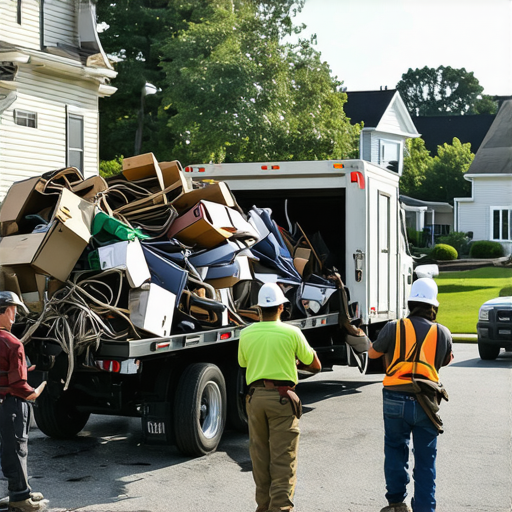
Kitchen appliances contain heavy metals and PCBs that require specialized hazardous waste handling in Aurora. Throwing these items into a general trash bin risks groundwater contamination at local landfills like the Denver Regional Landfill. Professional junk removal ensures these units are stripped for copper and circuit board reclamation rather than rotting in a pit. I watched a rookie almost lose his eyebrows because a customer hid a half-full propane tank inside a pile of ‘harmless’ yard waste. We do not just lift. We inspect. Every. Single. Item. This happened during a massive kitchen gut job near East Colfax. The client thought they were clever. They buried a butane canister under three broken stand mixers. When the compactor cycled, the hiss of escaping gas stopped the heart of every veteran on my crew. That is the reality of waste. It is never just trash. It is a series of chemical and physical liabilities waiting for a catalyst. In Aurora, junk removal is not a luxury service. It is a risk management operation. Small kitchen gear represents a unique logistical nightmare. These items are dense. They are composed of mixed polymers and ferrous metals that are bonded together in ways that make separation difficult for standard municipal facilities. When you look at a toaster, you see a breakfast tool. I see 0.4 pounds of low-grade steel, a mica heating element, and a plastic shell that will outlive your grandchildren. The logistics of removing these items involves calculating the displacement of volume in a 15-yard truck versus the weight-based tipping fees at the transfer station. We call this ‘cubing out’ the load. If we fill the truck with light, airy junk, we lose money. If we pack it with dense appliances, we hit the weight limit before the truck is half full. Balancing these factors is the science of the haul.
“Waste is merely a resource in the wrong place; professional removal is the science of putting it back where it belongs.” – Disposal Industry Maxim
Why your curbside dreams fail the recycling test
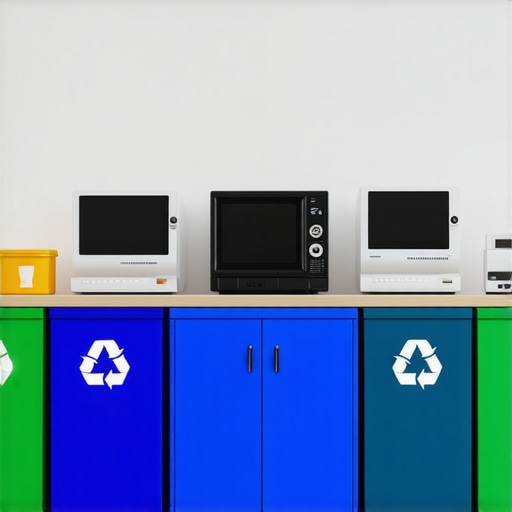
Standard Aurora recycling bins cannot process small kitchen appliances because the sorting machines are designed for bottles and cans. Mixers and food processors wrap around the rotating screens of the Materials Recovery Facility, or MRF, causing expensive mechanical failures and system downtime. You are not being helpful by putting a blender in the blue bin. You are committing ‘wish-cycling’ which actually contaminates the legitimate recycling stream. The reality of the waste stream in Colorado is harsh. Most small appliances end up in the landfill because the cost of labor to disassemble them exceeds the market value of the recovered copper. This is where professional Junk Removal Aurora services provide value. We aggregate these items until we have enough volume to make a dedicated trip to a scrap processor who can use industrial shredders to separate the materials. This is the backdoor logistics of the waste industry. We are not just movers. We are the filter between your house and the environment. Consider the microwave. It contains a high-voltage transformer and a magnetron with a ceramic insulator that may contain beryllium oxide. If that ceramic breaks, it is a respiratory hazard. A curbside cowboy will just toss it. A pro knows to keep the casing intact until it reaches a facility equipped for hazardous extraction. The legal requirements of the Resource Conservation and Recovery Act, or RCRA, mandate that businesses handle certain types of electronic waste with documented chains of custody. While homeowners are often exempt, the moral and environmental liability remains the same. Your junk is your legacy. Don’t let it be a toxic one.
[IMAGE_PLACEHOLDER]
The physics of the fifteen yard truck
Maximizing truck capacity requires an understanding of cubic-yard density and the structural integrity of the load. Small kitchen appliances are the ‘shrapnel’ of the junk removal world. They fill the gaps between larger items like sofas or refrigerators, increasing the overall weight density of the haul. When we perform a Garage Clean outs project in Aurora, we look for these small items first. They act as ballast. If we place them at the bottom of the truck, they create a stable base. If we toss them on top, they shift during transport on I-225, creating a dangerous center of gravity. The math is simple but punishing. A standard 15-yard truck can carry roughly 2,000 to 4,000 pounds of household debris before the suspension starts to scream. A kitchen’s worth of small appliances can easily weigh 300 pounds but only take up half a cubic yard. This high density is why professional pricing is often a mix of volume and weight. We calculate the BTU potential of recovered wood waste and the scrap value of steel. Wood from old cabinets has a high BTU value for waste-to-energy plants, but only if it is not contaminated with lead paint or heavy laminates. The logistics manager must decide in real-time whether a load goes to the landfill or the transfer station based on the current tipping fees. In Aurora, those fees fluctuate based on fuel costs and landfill capacity. We are constantly playing a game of geographic arbitrage, finding the cheapest place to dump that is also legally compliant.
| Material Type | Decomposition Time | Recovery Value | Hazard Level |
|---|---|---|---|
| Stainless Steel | 100+ Years | High | Low |
| ABS Plastic | 500+ Years | Low | Medium |
| Copper Wiring | Indefinite | High | Low |
| Circuit Boards | 1000+ Years | Medium | High |
The hidden cost of keeping everything
Hoarding kitchen gear creates a structural load on your floor joists that most residential buildings were not designed to sustain. A collection of 50 vintage stand mixers can exert over 1,500 pounds of static pressure on a small area of the kitchen floor. During a Hoarder Clean out aurora, we often see floor bowing or cracked drywall caused by the sheer mass of ‘stuff.’ This is not just a cleaning issue. It is a structural engineering issue. The moisture trapped beneath piles of small appliances can rot subflooring, leading to a catastrophic collapse. We approach these jobs with the same precision as a tactical team. We establish a ‘hot zone’ and a ‘cold zone.’ We clear paths to ensure the weight is distributed as we move items out. People think Junk Removal is about muscles. It is actually about levers and fulcrums. We use heavy-duty dollies with pneumatic tires to move dense boxes of kitchen gear without scarring the hardwood. We use 3-mil contractor bags for small debris because anything thinner will be shredded by the sharp edges of broken glass or metal. The carbon footprint of hauling these items is another factor. While most people think recycling is always better, the carbon footprint of hauling low-grade plastics 500 miles often exceeds the impact of local, high-efficiency waste-to-energy incineration. This is the contrarian truth of the industry. Sometimes, the most ‘green’ thing you can do is destroy the item in a controlled, high-heat environment that captures the energy and scrubs the emissions.
“The most effective way to manage waste is to prevent its creation; the second most effective is to ensure its professional extraction from the residential ecosystem.” – Solid Waste Association of North America (SWANA)
Items your hauler cannot legally touch
Federal and state laws prohibit junk removal companies from transporting certain hazardous materials without specific licensing and equipment. If a hauler tells you they can take anything, they are likely operating illegally and putting your property at risk. In Aurora, we must adhere to strict guidelines regarding what enters our trucks. If we are caught with prohibited items at the transfer station, we face massive fines and the loss of our dumping privileges. This is why we inspect every box during a Garage Clean outs or basement purge. The following list represents common items that require specialized hazardous waste disposal experts rather than general haulers:
- Unbound Lithium-Ion Batteries
- Wet Lead-Acid Batteries from old backup systems
- Uncontained or friable Asbestos
- Pressurized Gas Canisters or Propane Tanks
- Biohazardous or Medical Waste
- Liquid Paint or Solvents that have not been solidified
- Industrial grade pesticides or herbicides
If you have these items, do not hide them. Tell us. We can often provide the contact information for the Aurora household hazardous waste program. Honesty saves lives and prevents truck fires. A single lithium battery crushed by a hydraulic ram can ignite a fire that will consume a $150,000 truck in minutes. We have seen it happen. The heat is intense enough to melt the aluminum siding off a nearby house. This is why we are so pedantic about our inspections. We are not just being difficult. We are staying alive. Appliance removal is a high-stakes game. When you hire us for Furniture Removal or a full house clear-out, you are hiring our eyes and our expertise as much as our trucks. We know the difference between a vintage appliance worth saving and a piece of junk that is a fire waiting to happen. We know how to navigate the narrow streets of older Aurora neighborhoods where a Dumpster Rentals Aurora permit is impossible to get. In those cases, we use a ‘live load’ strategy. We bring the truck, we load it, and we are gone in two hours. No permits. No blocked driveways. No complaints from the neighbors. That is how a pro handles the heavy lifting.