The illegal dumping trap
Appliance recycling in Aurora requires navigating strict municipal regulations and environmental safety protocols to ensure that heavy metals and non-biodegradable polymers do not contaminate local soil. Professional junk removal services identify hazardous components and transport them to certified transfer stations rather than letting them sit in residential driveways or illegal dump sites.
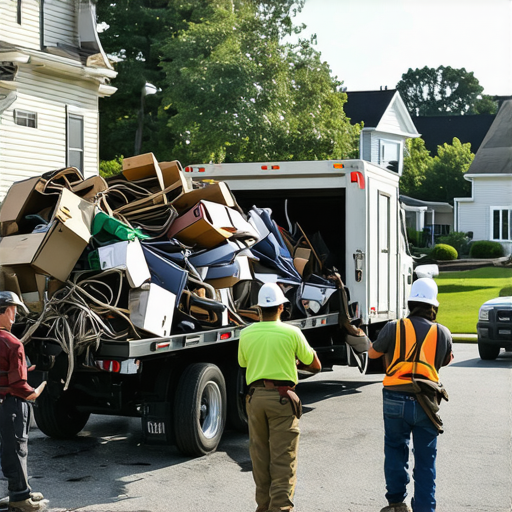
A business owner tried to save €500 by hiring a guy with a pickup truck from a social media ad. Two weeks later, the police called him because his company’s confidential files were found in a ditch. Your junk is your liability until it hits the scale. This reality hits home when dealing with appliance removal in Aurora. I have spent decades watching how people handle their waste. Most think a dishwasher is just a metal box. They are wrong. It is a complex assembly of specialized materials that require distinct disposal paths. When we pull a unit from a kitchen in a Hoarder Clean Out aurora project, we are looking at the weight distribution and the potential for leaks. The floor snapped under the weight of one particularly old unit that had been leaking for years. The subfloor was a sponge. We had to reinforce the path with plywood just to get the unit out without someone falling through to the crawlspace.
“Waste is merely a resource in the wrong place; professional removal is the science of putting it back where it belongs.” – Disposal Industry Maxim
The mechanical anatomy of a dishwasher
A standard dishwasher consists of high-grade stainless steel, copper motor windings, specialized rubber gaskets, and bitumen sound-dampening sheets that require mechanical separation for effective recycling. Processing these items involves extracting the electric motor and stripping the wiring to recover valuable non-ferrous metals before the chassis enters a shredder.
The logistics of the load are unforgiving. A dishwasher is a bulky, hollow cube. In the waste management industry, we call this wasted air space. If you toss it into a truck without thinking, you lose money. We stack smaller debris inside the dishwasher tub during Garage Clean outs to maximize the density of the load. This is the tetris of the trade. Every cubic yard in that truck costs money in fuel and tipping fees at the Aurora transfer station. If the truck is not packed tight, the profit evaporates. We look at the pump housing. It is usually a high-density plastic. Then there is the rack. Most people think it is just plastic. It is actually steel wire coated in a thick layer of polyvinyl chloride. You cannot just melt that down. The PVC must be stripped or burned in a high-temperature waste-to-energy facility to prevent toxic off-gassing. The insulation is another story. Older units use fiberglass. Newer ones use heavy bitumen mats. Bitumen is a petroleum-based product. It adds weight. It adds cost. We track every pound because the scales at the landfill do not lie.
[image_placeholder]
Aurora disposal laws and white goods
Waste management ordinances in Aurora classify dishwashers as white goods, which are prohibited from standard landfill disposal due to their metal content and potential for hazardous component leakage. Local law requires these appliances to be processed at specialized facilities that can handle capacitors and electronic control boards according to state environmental standards.
The Fox River valley has specific drainage concerns that influence how we handle Junk Removal Aurora. We do not leave appliances sitting on soil. The lubricants in the pump motor can leak. These are often synthetic oils that do not break down easily. If you are doing a DIY Garage Clean out, you might think leaving that old washer in the yard for a week is fine. It is not. Rain washes those oils into the storm drains. We use heavy-duty dollies with non-marking tires to move these units. We protect the threshold of the home. A 100-pound dishwasher can ruin a custom oak floor in three seconds if a rock gets caught in the wheels. We see it all the time with amateurs. They drag the unit. They leave a gouge that costs more to fix than the removal fee. Our team uses a hydraulic lift gate on the truck. It saves the backs of the crew and prevents the jarring impact that can break the seals on other items already in the truck.
| Component | Material | Weight (lbs) | Disposal Path |
|---|---|---|---|
| Housing | Stainless Steel | 45 | Scrap Metal |
| Motor | Copper/Iron | 8 | Secondary Smelting |
| Rack | PVC Coated Steel | 12 | Polymer Stripping |
| Insulation | Bitumen/Fiber | 15 | Landfill or WTE |
The hidden chemistry inside old racks
Modern dishwasher racks are coated in nylon or PVC to prevent corrosion, but these coatings complicate the recycling process by requiring cryogenic stripping or thermal decomposition to separate the polymer from the steel core. Understanding the chemical bond between the coating and the metal is vital for determining the scrap value of the unit at an Aurora processing center.
The smell of a used dishwasher is a mix of stagnant water and old detergent. That water often sits in the bottom of the pump. If you tilt the unit the wrong way during Furniture Removal or appliance hauling, that water spills. It is gray water. It is full of bacteria. We use plugs to seal the drain lines before we move a single inch. This is the difference between a pro and a guy with a truck. We treat your home like a clean room. When we handle a Hoarder Clean Out aurora, the complexity triples. We are not just moving one dishwasher. We are moving ten years of accumulated debris that might be burying the appliance. The load limit of the stairs is a real concern. We calculate the structural integrity of the basement steps before we carry a 150-pound load up them. If the wood is soft from humidity, we do not take the risk. We use ramps.
“Improper disposal of white goods leads to heavy metal leaching that persists in groundwater for generations.” – EPA Waste Management Division
Why your garage clean out fails without a plan
Effective garage organization and debris removal depend on a clear sorting strategy that separates recyclable metals from general household waste and hazardous materials. Failing to account for the volume of large appliances like dishwashers results in overcrowded dumpsters and increased rental costs due to inefficient space utilization.
Most people underestimate the volume. They rent a small container for Dumpster Rentals Aurora and then realize one dishwasher and a sofa have taken up half the space. You need to break things down. We do not just toss things in. We dismantle where possible. The circuit boards in modern dishwashers are e-waste. They contain trace amounts of gold, silver, and palladium. They also contain lead solder. We pull those boards. They go into a separate bin. This is how we achieve high diversion rates. We do not want this stuff in the ground. While most people think recycling is always better, the carbon footprint of hauling low-grade plastics 500 miles often exceeds the impact of local, high-efficiency waste-to-energy incineration. We make those calls based on the current market for materials. If the scrap price for light iron is down, we might prioritize a facility that uses the waste to generate electricity for the Aurora grid.
Items Your Hauler Cannot Legally Touch
- Wet Paint and Thinners
- Lead Acid Batteries
- Propane Tanks and Pressurized Cylinders
- Medical Waste and Sharps
- Asbestos-containing Materials
- Large Quantities of Dirt or Concrete without prior notice
The heavy cost of keeping everything
Hoarding appliances and metal scrap leads to structural degradation of residential properties as the concentrated weight exceeds the design capacity of floor joists. Professional intervention prevents long-term damage by systematically clearing high-density items and restoring the logistical flow of the living space.
The floor joists were bowing under the weight of 40 years of newspapers that had absorbed ten years of basement humidity. This was in a house near the downtown Aurora area. We found three old dishwashers in that basement. They had been kept for parts. The parts were rusted solid. That is the tragedy of the throwaway culture. People save things they can no longer use, and the weight literally destroys their home. We had to use a Sawzall to cut those units into manageable pieces. It was the only way to get them up the narrow, rotting stairs. The dust was thick. We wore respirators. You never know what is living inside an old appliance. Roaches, mice, and mold are standard. We sanitize our gear after every job. We do not bring one person’s problem to the next customer’s driveway. That is the standard of Junk Removal Aurora that we maintain. The truck is cleaned. The blankets are washed. The tools are wiped down. We operate like a tactical unit because waste management is a war against entropy. Every dishwasher we recycle is a small victory for the local environment. We take the load. We process the metal. We protect the city.
This post really highlights how complex appliance recycling is, especially with items like dishwashers containing hazardous materials. I once saw a DIY attempt where someone just dragged a dishwasher to the curb thinking it was mostly metal—big mistake. The environmental implications of improper disposal are startling, especially considering heavy metals leaching into groundwater. It made me wonder, how do local regulations in other municipalities compare to Aurora’s? Are there common best practices that could be adopted more universally? Also, I appreciate the insight into the detailed disassembly process, particularly how plastic components like PVC-coated steel racks require specialized treatment. It’s a good reminder that recycling isn’t just about throwing things in a bin but involves a complex process that requires expertise. Has anyone encountered challenges trying to sell or recycle appliances with coatings or parts that are difficult to process? What’s the most innovative or effective method you’ve seen for handling these? I’d love to hear more about how communities can better educate residents on proper appliance disposal to avoid the hazards and costs outlined here.
Reading this post really emphasizes how critical proper disposal methods are for appliances like dishwashers. I recall a situation where a neighbor tried to do a DIY removal of an old unit and ended up spilling gray water into their yard, not knowing the risks involved. It made me think about how many people underestimate the complexity of these appliances and the potential environmental hazards. In my experience, educating property owners on the importance of specialized recycling can make a big difference, especially in communities where regulations are less strict. I’m curious, how effective are local outreach programs in Aurora at informing residents about these regulations? Also, for older units with fiberglass insulation or PVC coatings, are there emerging recycling technologies that can process these materials more efficiently and safely? It seems like a shared effort between local governments, recycling centers, and waste removal companies is essential to both protect our environment and prevent costly property damage. Would love to hear about innovative approaches others have seen that help promote responsible appliance disposal.