Appliance Recycling Aurora: Handling High-Tech Trash 2026
I watched a rookie almost lose his eyebrows because a customer hid a half-full propane tank inside a pile of harmless yard waste. We do not just lift, we inspect. Every. Single. Item. The smell of diesel and hydraulic fluid is the perfume of a well-run job site. My career has been defined by the weight of things people no longer want. In Aurora, the logistics of waste have shifted from simple hauling to complex material recovery. If you think junk removal is just about a strong back and a truck, you are twenty years behind the curve. It is a game of cubic yard density and hazardous material identification. The modern appliance is a chemical cocktail wrapped in sheet metal. Handling it requires more than muscle, it requires a strategy for diversion and a deep knowledge of the local waste stream. Every piece of high-tech trash has a destination, and if it is not a licensed recycling facility, you are creating a liability that could haunt you for years.
The hidden danger in your kitchen
Appliance removal in Aurora requires certified technicians to manage refrigerants like CFCs and HFCs. These chemicals possess a high Global Warming Potential. Local transfer stations demand documented Freon recovery before accepting any refrigeration unit or air conditioner to prevent atmospheric leakage and legal fines. The compressor of a 2026-era smart fridge is not just a pump. It is an integrated system containing a Printed Circuit Board with tantalum capacitors and lithium-ion battery backups for internal memory. When we pull a fridge out of a kitchen in Aurora, we are looking for the UL tag. We check the seals. We look for the integrity of the cooling coils. If those coils are punctured during a clumsy move, the gas escapes. It is odorless. It is invisible. It is also a violation of the Clean Air Act. We use motorized dollies with a 1,200-pound capacity because the floors in these modern builds are not made for the impact of a dropped compressor. The physics of a fridge removal are unforgiving. One slip and you are replacing a five-thousand-dollar hardwood floor. The metal groans. We use a motorized dolly for any unit over 300 pounds. The strap tension is critical. If it snaps, the porcelain tile is gone.
“Waste is merely a resource in the wrong place; professional removal is the science of putting it back where it belongs.” – Disposal Industry Maxim
The physics of a 15-yard pack
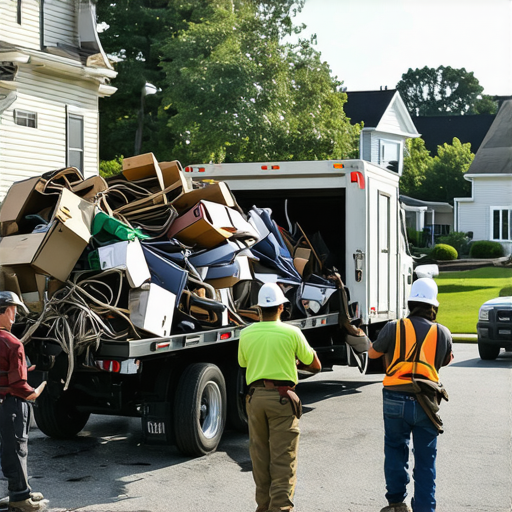
Junk Removal in Aurora relies on the concept of cubing out a truck to maximize volumetric efficiency. By stacking furniture and appliances with zero air gaps, we reduce the number of trips to the landfill. This process lowers the carbon footprint of the haul and minimizes tipping fees. Most people see a pile of trash. I see a geometric puzzle. A sofa is not a solid object. It is a hollow frame filled with polyurethane foam. If you throw it in the truck whole, you are paying to transport Aurora air. I break it down. We remove the cushions to fill the gaps between the washing machine and the dryer. We flip the sofa frame and nestle smaller boxes of electronics inside the cavity. This is how you win at the logistics of disposal. Every cubic inch of the truck bed has a dollar value. If I leave a gap, I am losing money. If I overload the axle, I am risking a DOT fine. The balance is narrow. The truck is a 2026 heavy-duty diesel with a 15-yard dump body. It has a hydraulic lift gate that can handle a commercial refrigerator. We calculate the density of the load before we even start the engine.
Why the local landfill rejects your old fridge
Appliance recycling centers in Aurora operate under strict RCRA guidelines regarding heavy metals and PCB capacitors. Old appliances manufactured before 1979 often contain polychlorinated biphenyls in the ballasts. Modern high-tech trash contains lead, mercury, and cadmium that must be separated before the steel shell is crushed. You cannot just drop these at the Denver Regional Landfill without a manifest. They will turn you away at the scale. The gatekeepers at the transfer station are trained to spot hazardous components. If they see a microwave with the glass removed or a dishwasher with the insulation exposed, they start asking for certifications. The insulation in older dishwashers is often bitumen-based or contains asbestos fibers for sound dampening. In the 2026 models, we see more fiberglass and recycled plastic, but the electronic controls are more complex. These controls are e-waste. They do not belong in the ground. They belong in a shredder that can reclaim the gold and silver from the circuit paths.
| Appliance Type | Metal Recovery % | Hazardous Component | Disposal Priority |
|---|---|---|---|
| Smart Refrigerator | 85% | Refrigerant / PCBs | High |
| Old Dishwasher | 60% | Asbestos / Bitumen | Medium |
| Microwave Oven | 70% | High Voltage Capacitor | High |
| Washing Machine | 90% | Lead Weights | Low |
The logistical nightmare of a hoarder clean out aurora
A Hoarder Clean Out in Aurora involves managing structural loads and biological hazards while identifying recyclable appliances buried in the debris. These jobs require HEPA filtration and industrial-strength PPE to handle the methane buildup and ammonia from organic waste trapped beneath the heavy piles. I once cleared a house where the junk was a structural hazard. The floor joists were bowing under the weight of decades of accumulated items. In those situations, we do not just start throwing things in a dumpster rental. We have to brace the floor from the basement. We have to clear a path for the exit. It is a tactical operation. We use 20-yard dumpsters because anything larger becomes too heavy to lift once it is full of wet paper and old textiles. The weight of a 40-year accumulation is staggering. It is dense. It is packed. It is often fused together by moisture and time. We found a vintage 1950s chest freezer at the bottom of a pile in Aurora last month. It was still plugged in. The motor had burned out years ago, but the insulation was still holding a foul, frozen secret. That is the reality of the job. It is not pretty. It is necessary.
“Landfilling is the failure of imagination; every ton of diverted appliance steel saves 2,500 pounds of iron ore.” – Solid Waste Association of North America
The environmental debt of high-tech trash
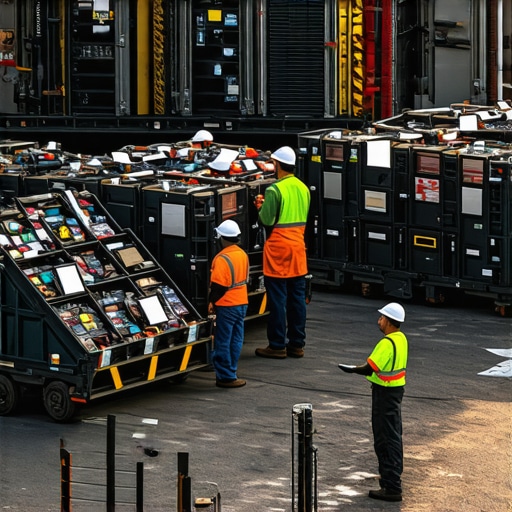
E-waste within Appliance removal is the fastest-growing waste stream in Aurora. Modern smart appliances contain rare earth metals like neodymium and dysprosium in their motors. While most people think recycling is always better, the carbon footprint of hauling low-grade plastics 500 miles often exceeds the impact of local, high-efficiency waste-to-energy incineration. We have to be smart about where the material goes. If we are hauling a load of e-waste from a garage clean out, we are looking for a local processor. We do not want that material on a slow boat to a foreign country where it is burned in an open pit. That is a failure of the system. In Aurora, we have access to some of the best metal recovery facilities in the region. We use them. We track the weight. We get the certificates of destruction. For a business, those certificates are the only thing standing between them and a massive environmental fine. If your confidential files or your branded equipment ends up in a ditch, it is your problem. Your junk is your liability until it hits the scale and the ticket is printed.
Items your hauler cannot legally touch
- Propane tanks and pressurized cylinders
- Liquid paint and industrial solvents
- Lead-acid batteries that are leaking
- Pesticides and herbicides in unsealed containers
- Radioactive smoke detectors from the 1970s
- Biohazardous waste or medical sharps
- Asbestos-wrapped piping or insulation
The heavy cost of keeping everything
Garage clean outs in Aurora often reveal the hidden costs of clutter, from pest infestations to concrete degradation. When heavy appliances sit in one spot for a decade, they trap moisture against the slab. This leads to spalling and structural cracking. We see it every time. We move a heavy dryer and the concrete underneath is soft. The homeowners are shocked. They shouldn’t be. Physics does not care about your storage needs. If you are looking for Dumpster Rentals in Aurora, you need to understand the weight limits. A 10-yard bin filled with concrete or old tile will exceed the lift capacity of the truck. Then you are stuck. You have to shovel it out by hand. I have seen it happen to DIYers a hundred times. They think they are saving money. They end up paying double in overage fees and labor. Hire a pro. We know the limits of the equipment. We know the rules of the road. We know how to turn your high-tech trash into a recovered resource. The floor snapped. That is what happens when you ignore the load limits. Do not let your house become a statistic. Clean it out. Do it right. Follow the manifest.