The hidden weight of Auroras forgotten kitchens
Appliance removal in Aurora requires a deep understanding of logistical planning, waste diversion, and heavy-load physics. To successfully navigate Appliance Recycling Aurora, homeowners must identify trash compactors as high-density units containing electric motors, hydraulic systems, and structural steel that require specialized Junk Removal techniques to prevent local environmental contamination.
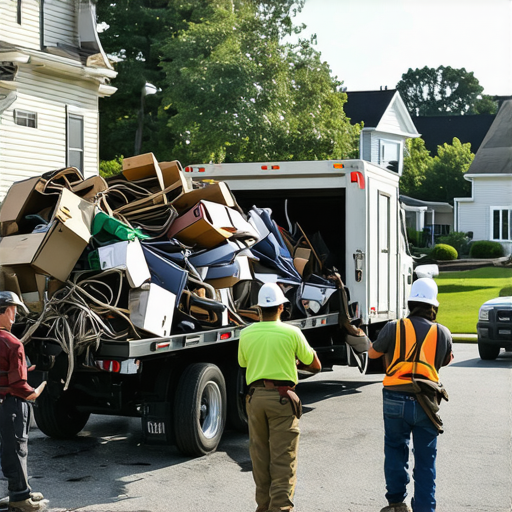
I watched a rookie almost lose his eyebrows because a customer hid a half-full propane tank inside a pile of harmless yard waste. We do not just lift. We inspect. Every. Single. Item. That was ten years ago. Now, I run the tightest fleet in Colorado. When you deal with a trash compactor, you are not dealing with a simple box. You are dealing with a machine designed to crush. It is heavy. It is awkward. It is a logistical trap for the unprepared. My trucks smell like diesel and hydraulic fluid for a reason. We move the things that break regular men. A trash compactor is the heavy hitter of the kitchen. It sits there, bolted to the cabinetry, waiting to throw out a rookies back. The unit itself can weigh anywhere from 150 to 200 pounds of concentrated metal. If you do not know the center of gravity, you are in trouble. We see it every day in Aurora. People think they can just drag it to the curb. Then the scratches happen. The floor tiles crack. The liability rises. Your junk is your liability until it hits the scale at the transfer station. That is the rule of the road. We operate with the precision of a tactical unit because we have to. The landfill does not care about your excuses. They care about the manifest. They care about whether that appliance contains hazardous components that could leak into the groundwater near the Cherry Creek Reservoir.
The mechanical anatomy of a disposal failure
Trash compactors represent a specific challenge for Junk Removal Aurora due to their metal density and mechanical components. Efficient appliance removal involves disconnecting power supplies, managing residual waste, and utilizing dolly systems to transport these heavy loads from residential kitchens to recycling facilities without causing property damage or personal injury.
A compactor is a box of tension. The ram inside is usually held by a chain or a screw drive. If that mechanism is seized, you are carrying a dead weight that is off-balance. I hate wasted air space in my trucks. Every cubic inch costs money. When we load a compactor, it becomes the anchor for the rest of the pile. We call it cubing out the load. You put the heavy, dense items on the floor of the truck bed to keep the center of gravity low. This is not just hauling. This is physics. In Aurora, the temperature swings can make the plastic components brittle. If you handle a unit roughly in January, it shatters. In July, the grease inside the motor housing gets thin and leaks. You have to know the chemistry. You have to know the mechanics. Most people just see an old appliance. I see a combination of high-grade steel and low-grade electrical waste that needs to be separated. The Resource Conservation and Recovery Act is very clear about how certain industrial components must be handled. Even a residential compactor falls under the umbrella of responsible disposal. If you toss this in a ditch near Colfax Avenue, you are not just a litterer. You are a threat to the local ecosystem. We take these units to specialized scrap processors who strip the copper and recycle the steel. This keeps the diversion rate high and the tipping fees manageable.
“Waste is merely a resource in the wrong place; professional removal is the science of putting it back where it belongs.” – Disposal Industry Maxim
Why your cheap hauler is a legal time bomb
Illegal dumping and unlicensed hauling in Aurora create significant legal liabilities for property owners. Professional Junk Removal Aurora services ensure that appliance removal follows municipal codes, providing disposal receipts and landfill manifests that prove the old trash compactor was processed at an approved recycling center or transfer station.
The curbside cowboys are the plague of this industry. They show up in a beat-up pickup truck with no insurance and no plan. They take your fifty bucks and drive until they find a dark alley. Then your trash compactor becomes the city’s problem. If a code enforcement officer finds your serial number in a vacant lot, the fine comes back to you. We see it constantly. A business owner tries to save money and ends up in court. Professionalism has a price. That price covers the fuel, the insurance, and the astronomical tipping fees at sites like the Denver Arapahoe Disposal Site. We have to pay to get rid of your stuff. If someone is charging you less than the cost of the dump fee, they are lying to you. They are dumping it. My team uses a 15-yard truck configuration. We know exactly how much weight that axle can take before we start burning too much diesel. We calculate the density of every load. A compactor is dense. It is the opposite of a sofa. A sofa is all air and foam. A compactor is all mass. You cannot mix them haphazardly. You have to layer the load. Heavy on the bottom. Light on the top. Secure everything with straps. One loose appliance can slide and tip a truck on a sharp turn near Buckley Air Force Base. We do not take risks. We take measurements.
| Disposal Factor | Standard Appliance Removal | High-Density Compactor Removal |
|---|---|---|
| Weight per Cubic Yard | 250 lbs | 600+ lbs |
| Labor Intensity | Low | High (Requires 2 Men) |
| Recycling Potential | Mixed | High (Steel/Copper) |
| Hazardous Risk | Low | Moderate (Oils/Capacitors) |
The logistical reality of Aurora transfer stations
Waste management infrastructure in Aurora dictates the efficiency of Garage Clean outs and Furniture Removal. Accessing the Aurora Transfer Station or local landfills requires professional haulers to adhere to safety protocols, weight limits, and material segregation rules that often prohibit hazardous waste from entering the general waste stream.
The line at the transfer station is where time goes to die. If you do not have your load sorted, they will turn you around. They do not have time for amateurs. We arrive with the appliances at the back of the truck so they can be offloaded at the scrap metal pile first. This is strategic. It saves us twenty minutes per trip. Over a week, that is hours of reclaimed labor. Most people do not think about the BTU potential of recovered wood or the scrap value of an old trash compactor. They just want it gone. But the logistics are complex. We have to navigate the narrow driveways in older Aurora neighborhoods. We have to avoid the overhead power lines. We have to make sure the weight of the truck does not collapse a weak driveway. I have seen it happen. A heavy truck parks on a thin slab and cracks it right down the middle. Now the junk removal job just became a concrete repair job. We use plywood pads for outriggers. We use high-visibility cones. We treat every driveway like a sensitive landing zone. It is the only way to maintain a reputation in this town. People talk. If you ruin a lawn in Tallyn’s Reach, everyone knows it. We stay clean. We stay efficient.
Items your hauler cannot legally touch
- Lead-Acid Batteries: These are a chemical fire hazard and require specialized hazmat handling.
- Propane Tanks: Even if they feel empty, they are pressurized bombs in a crusher.
- Wet Paint and Solvents: These leak through the truck bed and contaminate the entire load.
- Asbestos-Containing Materials: Older appliances or insulation can contain this carcinogen.
- Medical Waste: Biohazards require a completely different set of permits and disposal paths.
- Unlabeled Chemicals: If we do not know what it is, it does not go on the truck.
The heavy cost of keeping everything
Hoarder Clean Out aurora projects highlight the psychological and structural burden of accumulated junk. Removing old appliances like trash compactors from a cluttered garage or basement improves indoor air quality, reduces fire risks, and restores functional square footage to Aurora homes through professional Hoarder Clean Out services.
I once cleared a house where the junk wasn’t just stuff. It was a structural hazard. We found the floor joists were bowing under the weight of 40 years of newspapers that had absorbed ten years of basement humidity. This is the extreme end of the spectrum. But even a single old compactor in a corner is a problem. It becomes a home for rodents. It gathers dust and allergens. People think they will fix it someday. They won’t. It is a monument to indecision. The carbon footprint of keeping a non-functional appliance is surprisingly high when you factor in the space it occupies. That space has to be heated and cooled. While most people think recycling is always better, the carbon footprint of hauling low-grade plastics 500 miles often exceeds the impact of local, high-efficiency waste-to-energy incineration. However, with metal, the math is different. Steel is infinitely recyclable. Taking that compactor to a local Aurora scrapper is the most ethical choice. It saves energy. It reduces mining. It puts money back into the local economy. We are the middlemen in this cycle. We are the ones who ensure the material reaches the right destination. We do not just dump. We distribute. Every load is a puzzle. Every day is a lesson in volume. We keep Aurora clean one cubic yard at a time. The floor snapped in that hoarding house. We had to bridge the gap with steel plates. We finished the job. We always finish the job. That is what a professional does. We handle the heavy, the dirty, and the dangerous. We leave the space empty and the customer relieved. It is a simple mission. It is a hard life. I would not do anything else. The smell of diesel in the morning is the smell of a job waiting to be done right. No shortcuts. No excuses. Just hauling.