The hazardous reality of forgotten hardware
I watched a rookie almost lose his eyebrows because a customer hid a half-full propane tank inside a pile of ‘harmless’ yard waste. We don’t just lift. We inspect. Every. Single. Item. This logistical rigor is the only thing standing between a successful job and a localized disaster on an Aurora residential street. When I am managing a hoarder clean out aurora project, I am not looking for treasure. I am looking for liabilities. Appliance recycling in Aurora necessitates a granular understanding of stove top disposal and cooktop materials. Professional junk removal aurora experts must identify ferrous metals, hazardous insulation, and mercury switches to ensure EPA compliance and maximize material diversion rates from the Denver Arapahoe Disposal Site.
“Waste is merely a resource in the wrong place; professional removal is the science of putting it back where it belongs.” – Disposal Industry Maxim
Science of the Aurora appliance stream
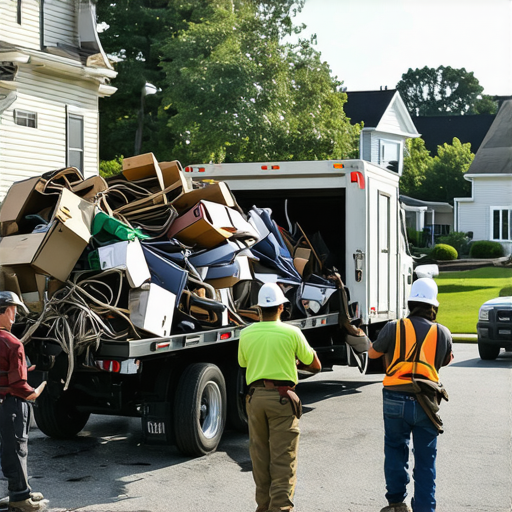
Appliance removal in the Aurora region is governed by both state environmental laws and the physics of the load. A standard electric stove top weighs between forty and sixty pounds. However, the density of these items changes when you factor in the cast iron grates of a gas range. The logistics manager looks at a 15-yard truck and calculates the cubic yard density. We do not want air gaps. Every empty pocket in that truck bed is a loss of efficiency. We stack the flat stove tops against the side walls of the container. This creates a structural perimeter for lighter items like furniture removal components. The hydraulic system of a modern hauling truck operates at pressures exceeding 2,500 psi. If a load is not balanced, that pressure translates into uneven tire wear and increased fuel consumption. We track these metrics because junk removal is a game of margins.
Mechanical anatomy of a range
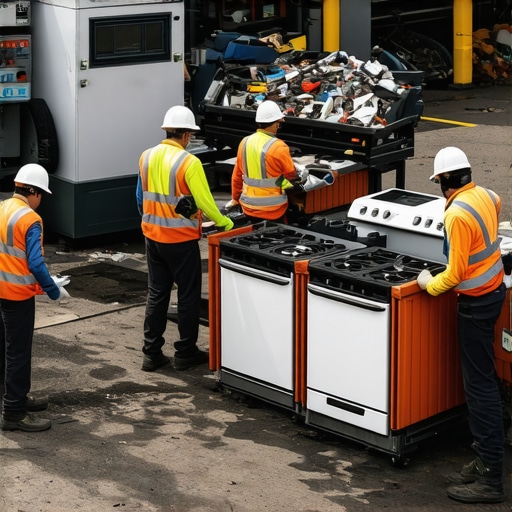
Disassembling a stove top is a lesson in material science. The heating elements are typically composed of nichrome wire. This is an alloy of eighty percent nickel and twenty percent chromium. It is surrounded by magnesium oxide powder and encased in a stainless steel tube. From a recycling standpoint, the nickel content is high value. Most homeowners think they can just throw these in a dumpster rentals aurora bin. They are wrong. Municipalities like Aurora have strict rules against mixing heavy metals with general household waste. The glass ceramic used in modern radiant cooktops is a lithium-aluminosilicate material. It is designed to resist thermal shock. This makes it a nightmare for standard glass recyclers. It does not melt at the same temperature as soda-lime glass bottles. If you toss a glass cooktop into a recycling bin, you are contaminating the entire batch. It ends up in the landfill anyway, but only after wasting the energy of the transport and sorting facility.
| Material Type | Recovery Potential | Logistical Effort | Aurora Disposal Route |
|---|---|---|---|
| Cast Iron Grates | High | Low | Scrap Metal Yard |
| Copper Induction Coils | Very High | Moderate | Specialized E-Waste |
| Ceramic Glass | Zero | High | Municipal Landfill |
| Stainless Steel Chassis | High | Low | General Metal Stream |
The shadow economy of scrap metal
There is a hidden world of metal recovery that the average person never sees. When we perform garage clean outs, we are essentially mining for industrial minerals. A gas stove top contains brass valves. Brass is a copper-zinc alloy that fetches a premium price at local yards. The logistical challenge is the labor-hour cost of extraction. It takes a technician approximately fifteen minutes to strip a manifold of its brass fittings. If the hourly labor rate is sixty dollars, the brass must be worth more than fifteen dollars to justify the disassembly on-site. Usually, it is not. We haul the units whole to a centralized processing facility where heavy machinery can do the work of ten men. This is the industrial logic that curbside collectors lack. They spend hours for pennies. We spend minutes for dollars. Professional junk removal aurora services rely on this volume-based efficiency.
Physics of the fifteen yard bin
Loading a truck is a tactical exercise. You have to consider the center of gravity. If you put six heavy cast iron stove tops on the left side of the truck, you are putting thousands of pounds of pressure on the left suspension leaf springs. This makes the truck pull to the left during braking. In a city like Aurora with its specific traffic patterns, this is a safety hazard. We practice the “Tetris” method. Heavy appliances go on the bottom, centered over the rear axles. We use the stove tops as dividers. They are flat and rigid. They make excellent bulkheads to separate furniture removal items from loose debris found during a hoarder clean out aurora. The goal is a zero-shift load. If the load shifts during a turn on East Colfax Avenue, the momentum can be enough to tip a high-profile vehicle. We do not take chances with physics.
“Effective solid waste management requires a transition from traditional disposal to a circular economy focused on resource recovery.” – SWANA Technical Report
Hazardous inventory protocol
We do not just grab and go. Every appliance is screened. Some older stove tops and ovens contain asbestos insulation. This was common in units manufactured before the late 1970s. If we see friable white material leaking from a range body, we stop. That requires a hazmat team, not a junk hauler. Then there are the capacitors in the control boards of induction units. These can hold a lethal electrical charge even weeks after the unit has been unplugged. We handle them with insulated gloves. The average “guy with a truck” does not know this. He sees a piece of metal. I see a potential electrical arc. This is why professional appliance removal costs more than the cheap alternatives. You are paying for the lack of a lawsuit.
- Sealed pressurized cylinders like fire extinguishers
- Open containers of automotive fluids or gasoline
- Medical waste or used needles
- Lead-acid batteries from backup power systems
- Industrial chemicals without original labeling
Local regulations on the high plains
In Aurora, the municipal code is specific about bulky item disposal. You cannot simply leave a stove top on the curb and hope the trash fairies take it. The city requires specialized pickups for anything containing refrigerants or complex electronics. While a stove top does not have Freon, it falls under the scrap metal and e-waste umbrella. If you are doing a garage clean outs project, you need to coordinate with a service that has the permits to enter the Aurora Transfer Station or the DADS Landfill. These facilities charge tipping fees based on weight and material type. We maintain commercial accounts that allow us to bypass the long lines of residential vehicles. This saved time is passed back to the customer. We get in, we scale out, and we get the truck back into the field. This is the heartbeat of Aurora logistics.
The heavy cost of keeping everything
Hoarding is often viewed through a psychological lens, but for me, it is a structural problem. I have seen floors in Aurora bungalows sagging three inches in the center because of the weight of accumulated appliances. A single kitchen range is not the issue. It is the three ranges in the basement and the four in the garage. When we perform a hoarder clean out aurora, we have to calculate the load-bearing capacity of the stairs. If we are moving a vintage cast iron stove, we might be looking at four hundred pounds. That requires a three-man team and specialized appliance dollies with pneumatic tires to prevent floor damage. We have to be careful. One wrong step and a technician is through the floorboards or has a shattered ankle. The logistics of the human body are just as vital as the logistics of the truck.
Truth about glass ceramic waste
A specific, contrarian reality of our industry is that recycling is not always the best environmental choice. While most people think recycling is always better, the carbon footprint of hauling low-grade plastics or specialized ceramics 500 miles often exceeds the impact of local, high-efficiency waste-to-energy incineration. For stove tops with glass-ceramic tops, the energy required to separate the glass from the bonded heating elements is massive. In some cases, the most responsible move is to strip the copper and steel and send the contaminated ceramic to a lined landfill where it will remain inert. We do not greenwash our services. We provide the most efficient logistical path for the material. Sometimes that path is a scrap yard. Sometimes it is a landfill. We follow the data, not the trends.
Final logistical summary
Managing the waste stream of a city like Aurora is an endless cycle of sorting and transporting. Whether it is a single appliance removal or a massive hoarder clean out aurora, the principles remain the same. Inspect for hazards. Sort for value. Load for safety. The stove top you see as junk, I see as a specific weight-to-volume ratio that must be managed within the constraints of Aurora city ordinances. We keep the city clean by understanding the chemicals, the physics, and the legalities of the load. This is the science of junk removal. It is loud, it is heavy, and it is vital for the health of our community.