The steel ghost in your kitchen
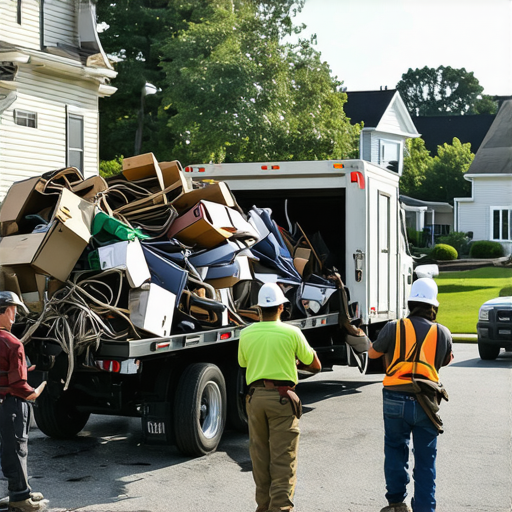
Dishwasher disposal in Aurora involves appliance recycling, scrap metal recovery, and professional junk removal. To handle an old dishwasher, one must disconnect the water supply line, manage electrical hardwiring, and navigate local waste ordinances at the Aurora Transfer Station or through private dumpster rentals Aurora. I watched a rookie almost lose his eyebrows because a customer hid a half-full propane tank inside a pile of harmless yard waste. We do not just lift. We inspect. Every. Single. Item. This industry is built on the sweat of those who understand that an appliance is not just a machine but a complex assembly of high-grade steel, copper wiring, and potentially hazardous insulation. When you call for appliance removal in Aurora, you are not just paying for a strong back. You are paying for the logistical certainty that your old unit will not end up in a ditch along Gun Club Road. The reality of waste management is found in the weight. A standard built-in dishwasher weighs between 60 and 100 pounds. This is not heavy for a single lift, but the geometry is a nightmare. You are dealing with a 24-inch cube that holds stagnant water in its pump assembly. If you tilt it wrong, that gray water ruins your carpet. The logistics manager knows that every drop of water adds weight and every inch of space in the truck costs money. We view the truck bed as a game of high-stakes Tetris. Empty space is the enemy of profit. When we perform a garage clean out, the dishwasher is often the anchor of the load, placed low to lower the center of gravity and provide a flat surface for furniture removal stacking.
“Waste is merely a resource in the wrong place; professional removal is the science of putting it back where it belongs.” – Disposal Industry Maxim
Physics of the heavy kitchen lift
Appliance removal requires forensic disconnection, load balancing, and navigational precision within residential structures. Moving a dishwasher through a narrow kitchen galley requires a heavy-duty appliance dolly with non-marring tires to protect hardwood floors and ceramic tile during the extraction process. The floor snapped. I have seen it happen when a homeowner tries to drag a unit without checking the leveling legs. Those legs are often rusted into the subfloor. A 15-yard truck has a specific volumetric capacity, but the weight limit is the real ceiling. In Aurora, tipping fees at the landfill are often calculated by the ton. If we pack a truck with nothing but old appliances, we hit our weight limit long before we cube out the volume. This is why a logistics expert balances the load with lighter debris from garage clean outs. We look at the density. A dishwasher has a density of approximately 10 pounds per cubic foot. Compare that to a sofa, which might only be 3 pounds per cubic foot. Balancing these materials is the only way to keep prices competitive. If your hauler does not understand density, they are losing money or overcharging you. The water line is another failure point. Most people forget the shut-off valve under the sink is 20 years old. You touch it, and it starts weeping. We carry caps. We carry towels. We carry the experience of a thousand floods.
Aurora transfer station protocols
Local waste management in Aurora, Colorado is governed by municipal codes that mandate the segregation of white goods from general household trash. Appliance recycling must occur at certified facilities like the Denver Regional Landfill or specialized scrap metal processors to ensure EPA compliance. Your junk is your liability until it hits the scale. If a fly-by-night hauler dumps your dishwasher in a field, and the serial number is traced back to your address, you are the one the city inspectors will call. The Resource Conservation and Recovery Act is very clear about the chain of custody for waste. In Aurora, we face specific challenges with soil alkalinity and water table protection. Tossing an appliance into a dumpster rental without stripping the hazardous components is a violation of local trust. We strip the motors. We clip the cords. We ensure the plastic tubs are separated from the stainless steel liners. The steel is a commodity. Its price fluctuates on the global market. One month, that dishwasher is worth five dollars in scrap. The next month, it is worth fifty cents. A professional company absorbs that volatility so the customer gets a flat rate. We do not just see a machine. We see 40 pounds of shredded steel, 2 pounds of copper, and a plastic housing that needs to be ground into pellets for secondary manufacturing.
| Disposal Method | Cost Range | Effort Level | Environmental Recovery |
|---|---|---|---|
| Municipal Bulk Pickup | $20 – $45 | High (Curbside) | 40% Diversion |
| Professional Hauler | $95 – $160 | Zero | 85% Diversion |
| Scrap Yard Drop-off | +$5 Profit | Extreme | 98% Diversion |
| Dumpster Rental | $350+ | Medium | 20% Diversion |
The myth of total recyclability
Sustainable waste disposal involves material separation, thermal processing, and downcycling of complex polymers found in modern dishwashers. While steel frames are infinitely recyclable, the bitumen sound-dampening pads and reinforced plastic tubs often end up in Colorado landfills due to high processing costs. While most people think recycling is always better, the carbon footprint of hauling low-grade plastics 500 miles often exceeds the impact of local, high-efficiency waste-to-energy incineration. We have to be honest about the math. If I drive a 10-ton diesel truck 40 miles to drop off one plastic tub, I have done more damage to the Aurora air quality than if that plastic sat in a lined landfill for 100 years. Logistics is about the net gain. We consolidate. We wait until we have a full load of appliances before we hit the specialist processors. This is the backdoor logic of the waste industry. We are not just movers. We are carbon accountants. A dishwasher manufactured in 1995 is a tank. It is 80 percent steel. A dishwasher manufactured in 2023 is a toy. It is 60 percent plastic. The older units are actually better for the environment because their recovery value is higher. The newer units are logistical headaches that require more manual labor to strip for less financial return. We see this trend across all furniture removal and appliance removal sectors. Everything is getting lighter, cheaper, and harder to recycle.
“Landfills are not bottomless pits; they are the physical manifestation of our inability to design for the end of a product’s life.” – SWANA Technical Report
Why your garage clean out fails
Residential decluttering and hoarder clean outs in Aurora fail when heavy appliances are not prioritized for removal. A cluttered garage creates logistical bottlenecks that increase the labor hours required for junk removal services to clear the space. You have to clear the path. I have seen 500-square-foot garages that take six hours to clear because the owner buried the heavy appliances at the very back behind a wall of moving boxes. This is a data overflow error in physical space. You have to move the high-volume, low-weight items first to create a staging area for the heavy hitters. In the world of junk removal, the dishwasher is a mid-tier heavy. It is not a piano, but it is not a bag of clothes. It requires a specific stance. Keep the back straight. Use the legs. If you are doing a hoarder clean out in Aurora, you have to watch for the structural integrity of the floor. Appliances that have leaked over decades rot the subfloor. I have seen guys step through a kitchen floor because a slow dishwasher leak had turned the plywood into mush over fifteen years. We inspect the floor before we roll the dolly. Safety is the first line of the manifest. We do not take risks for a hundred-dollar pickup.
- Leaking refrigerators containing CFCs or Freon
- Unstable household chemicals or pool chlorine
- Ammunition and pressurized firearm components
- Medical waste and biohazardous materials
- Closed pressurized tanks including propane and oxygen
- Lead-acid batteries that have cracked casings
The heavy cost of keeping everything
Long-term storage of obsolete appliances leads to pest infestations, structural degradation, and increased disposal costs due to material oxidation. In Aurora basements, a discarded dishwasher becomes a breeding ground for urban wildlife and mold spores that degrade indoor air quality. The ghost in the garage is the item you meant to fix but never did. Now it is a rusted hulk that is twice as hard to move. Rust creates friction. Friction ruins dollies. We see this in furniture removal too. Particle board furniture that sits in a damp garage for five years loses its structural bond. You go to lift it, and it disintegrates in your hands. Now instead of one item, I have a thousand pieces of trash to sweep up. It turns a ten-minute job into a forty-minute job. The clock is always ticking. In the logistics world, time is diesel. Every minute the truck sits idle is a minute we are not hitting the scale at the transfer station. This is why we push for total removal. Do not leave the old dishwasher in the corner. It is not getting any lighter. It is not getting any more valuable. It is a liability that is taking up three square feet of prime real estate in your home. Clear it out. Recycle it properly. Let the steel go back into the supply chain.