The hazardous surprise in the driveway
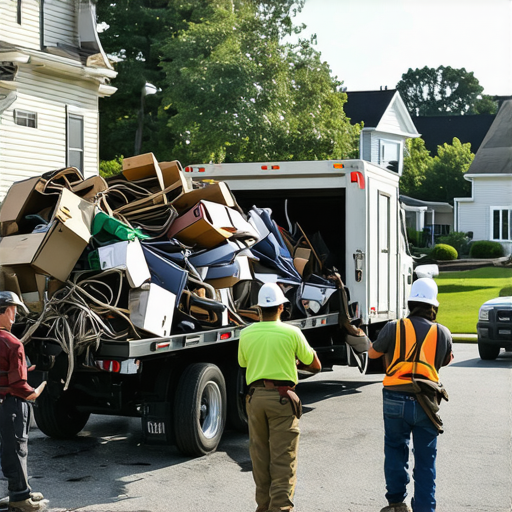
I watched a rookie almost lose his eyebrows because a customer hid a half-full propane tank inside a pile of harmless yard waste. We do not just lift. We inspect. Every. Single. Item. As a veteran of the waste industry, I have seen every trick in the book. A business owner once tried to save five hundred dollars by hiring a guy with a pickup truck from a social media ad. Two weeks later, the police called him because his confidential files were found in a ditch. Your junk is your liability until it hits the scale. In Aurora, the logistics of junk removal are governed by strict municipal codes and environmental safety standards that the average homeowner simply does not see. This is not about moving boxes. This is about managing the hazardous lifecycle of physical matter. We operate in a world of diesel fumes, hydraulic pressure, and the constant threat of chemical leaching. When you call for appliance removal, you are not just hiring muscle. You are hiring a logistics team that understands the Resource Conservation and Recovery Act better than most lawyers understand the tax code.
The hidden chemistry of modern appliances
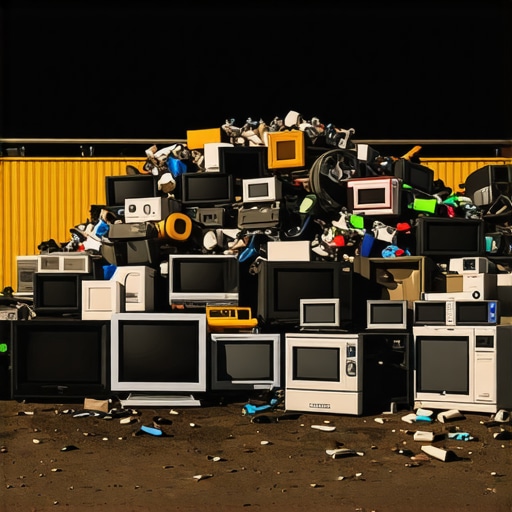
Appliance removal in Aurora requires a deep understanding of the chemical refrigerants and heavy metals found in modern cooling units and electronics. Modern refrigerators often contain R-600a, an isobutane refrigerant that is highly flammable. Older units still circulating in Aurora basements often house R-134a or even the legacy R-12, which has an ozone depletion potential that necessitates professional recovery. You cannot simply throw these into a dumpster rental. The physics of the compressor unit involve a sealed system under pressure. If a rookie hauler punctures the line with a reciprocating saw, you have an immediate environmental violation on your hands. Beyond the refrigerants, the printed circuit boards in high tech junk contain lead, cadmium, and hexavalent chromium. These materials require a specific manifest for transport to a certified e-waste processor. The process of appliance recycling Aurora residents need involves more than a trip to the scrap yard. It involves the careful extraction of the capacitor, which may contain PCBs in units manufactured before nineteen seventy nine. We treat every appliance as a potential hazmat situation until proven otherwise.
“Waste is merely a resource in the wrong place; professional removal is the science of putting it back where it belongs.” – Disposal Industry Maxim
Why local Aurora transfer stations reject uncertified units
Junk removal Aurora operations are limited by the strict acceptance policies of regional transfer stations like the Denver Arapahoe Disposal Site or local Fox Valley facilities. Transfer station operators are trained to spot the telltale signs of an uncertified appliance. If the refrigerant lines are cut but there is no EPA certification tag on the chassis, the entire load can be rejected. This causes a logistical nightmare for the hauler. It results in wasted fuel and lost man hours. Most municipal sites require a proof of evacuation for any cooling unit. This is why professional junk removal is vital. We provide the documentation that proves the hazardous components were handled according to federal law. Without this, you are just a person with a truck full of illegal waste. The scale house does not care if you were trying to be helpful. They care about the purity of the waste stream and the safety of their workers who must process the metal for recovery.
The physics of the fifteen yard truck load
Junk removal is a game of volumetric density and structural weight limits. A standard fifteen yard dump truck has a specific weight capacity that cannot be exceeded without risking the hydraulic lift system or the axle integrity. When we perform a garage clean out, we look for the tetris of the load. We place heavy, dense items like old washing machines or cast iron tubs at the bottom, directly over the axles. This centers the gravity of the vehicle. We then use light, high volume items like broken furniture or cardboard to cube out the top of the truck. If you leave empty air space, you are losing money. Every cubic inch must be filled. A poorly packed truck is a logistical failure. It increases the number of trips to the landfill, which spikes the carbon footprint of the project. We calculate the density of every load before we pull out of the driveway. If we are hauling furniture removal Aurora projects, we assess the weight of the particle board versus solid oak. Particle board is heavy and brittle. Oak is dense but structurally sound. These factors dictate how we stack the truck and how we secure the load for highway speeds.
Hazardous materials your hauler cannot legally touch
Dumpster rentals Aurora customers often forget that a bin is not a universal portal to another dimension. There are strict legal boundaries on what a private hauler can transport. We are restricted by the weight and the toxicity of the materials. Below is the definitive list of items that require specialized hazmat disposal and cannot be placed in a standard junk removal truck or dumpster.
- Lead acid batteries from vehicles or backup power systems.
- Propane tanks, even if they appear to be empty.
- Wet paint, thinners, and oil based solvents.
- Biohazardous waste or medical sharps.
- Industrial grade chemicals or concentrated pesticides.
- Asbestos containing materials from old pipe insulation.
- Tires, which are banned from most landfills due to methane trapping.
Furniture removal and the structural limits of residential stairs
Furniture removal is a technical challenge that involves the structural analysis of your home. When we move a sleeper sofa that weighs three hundred pounds, we are looking at the load bearing capacity of the stair treads. Most residential stairs are designed for human foot traffic, not the concentrated weight of two haulers and a steel framed sofa. We use high friction floor protection and specialized dollies to distribute the weight across multiple joists. If you try to drag a heavy dresser across a hardwood floor, you are not just moving junk. You are damaging the real estate. We also consider the clearance of the turn. High tech junk like large screen televisions or heavy gaming consoles often have fragile screens that cannot withstand the torque of a tight hallway turn. We wrap everything in industrial film to prevent snagging. This is the difference between a professional crew and a couple of guys with a van. We protect the property as much as we protect the load.
A comparison of disposal costs by volume and weight
Junk removal Aurora pricing is not arbitrary. It is a calculation of volume, weight, and disposal fees. Tipping fees at the landfill are usually charged by the ton, while we charge the customer by the volume. This creates a risk profile for the hauler. If we pick up a load of heavy shingles, our profit margin disappears into the tipping fee. If we pick up a load of empty boxes, our volume is used up but our weight is low. Below is how we evaluate the different categories of waste.
| Material Category | Weight Density | Disposal Complexity | Toxicity Level |
|---|---|---|---|
| Large Appliances | High | High (EPA Rules) | Moderate |
| Old Furniture | Medium | Low | Low |
| E-Waste | Low | Critical | High |
| Construction Debris | Very High | Moderate | Low |
| Yard Waste | Variable | Low | Low |
Dumpster rentals and the permit trap in Aurora neighborhoods
Dumpster rentals Aurora residents often overlook the legal requirements of placing a steel bin on a public street. Most neighborhoods in Aurora require a temporary use permit if the dumpster will obstruct the right of way. If you place a twenty yard bin on the street without a permit, you risk a daily fine from the city. We also look at the surface where the bin will sit. An empty dumpster weighs about two tons. A full one can weigh six tons or more. If you place that on an asphalt driveway during a hot Aurora summer, the steel feet will sink two inches into your pavement. We use plywood outriggers to prevent this. We also consider the overhead clearance. Power lines and low hanging tree branches are the enemies of the roll off truck. A twenty foot high lift is required to drop a bin. If you have a narrow driveway or low wires, you are better off with a live load junk removal service where the truck never leaves the street.
Professional hoarder clean out logistics in suburban homes
Hoarder clean out Aurora projects are the most complex logistical operations we perform. These are not just junk removals. They are excavations. We often find that the junk has become a structural part of the home. Newspapers stacked to the ceiling can weigh thousands of pounds, causing the floor joists to bow. When we begin the removal, we have to monitor the structural integrity of the room. We also face biological hazards. Dust, mold, and animal waste are common in high volume hoard situations. Our teams wear respirators and Tyvek suits for a reason. We do not just toss items out the window. We create a staging area. We sort for recyclables, hazardous waste, and items of value. The goal is to maximize the diversion rate while minimizing the risk to the crew. It is a slow, methodical process that requires extreme patience and a strong stomach. We once cleared a house where the humidity from a leaking pipe had turned a mountain of magazines into a solid, four ton block of cellulose. We had to use chainsaws to break it down. That is the reality of the job.
“The proper management of hazardous waste is not just a regulatory hurdle but a fundamental requirement for the protection of groundwater and public safety.” – Environmental Protection Agency
The carbon footprint of local waste recovery streams
Garage clean outs often result in a pile of mixed materials. Most people believe that every piece of plastic can be recycled. This is a fallacy. The carbon footprint of hauling low grade plastics five hundred miles to a specialized processing center often exceeds the environmental impact of local, high efficiency waste to energy incineration. In the Aurora region, we prioritize the recovery of ferrous and non-ferrous metals because the energy savings are massive. Recycling aluminum saves ninety five percent of the energy required to make it from raw ore. However, for contaminated paper or low grade film plastic, the most responsible path is often the local landfill where it can be sequestered. We analyze the waste stream to ensure that we are not just moving junk around the country in a way that burns more diesel than the recycling process saves. Professional junk removal is about making these hard choices. We aim for the highest diversion rate possible, but we stay grounded in the physics of transport and the reality of the global recycling market.