The Logistical Reality of Heavy Waste Management in Aurora
I smell diesel exhaust and hydraulic fluid every morning. To most people, a dumpster is just a metal box. To me, it is a ten-ton kinetic energy problem waiting to happen on your property. After twenty-five years in the hauling trenches, I have seen every possible failure of logistics. I once watched a 20-yard bin sink four inches into a fresh asphalt driveway in the middle of a July heatwave in Aurora because the operator did not understand surface PSI. Your junk is not just an eyesore. It is a mass-volume equation that requires precise execution. A business owner tried to save five hundred dollars by hiring a guy with a pickup truck from a social media ad. Two weeks later, the police called him because his company’s confidential files and old desks were found in a ditch near the Cherry Creek spillway. Your junk is your liability until it hits the scale and you have a manifest in hand. Junk Removal Aurora services are about risk mitigation as much as they are about cleanliness.
The physics of driveway failure and surface protection
Dumpster Rentals Aurora requires a deep understanding of load-bearing capacities and surface tension to prevent permanent structural damage to residential concrete or asphalt. When a roll-off truck arrives, it exerts massive downward pressure through its rear tires and the metal rollers of the bin. If your driveway is built on the expansive clay soils common in the Aurora region, that pressure can cause immediate cracking or sub-surface shifting. We always use three-quarter-inch plywood or specialized heavy-duty rubber mats under the contact points. This distributes the weight across a larger surface area, reducing the pounds-per-square-inch impact. Without these barriers, the steel wheels of a fully loaded dumpster can gouge deep grooves into your property. Asphalt is particularly vulnerable in the Colorado sun. The heat softens the bitumen, making it behave like a viscous fluid under the weight of a ten-ton load of construction debris. Proper surface selection is the difference between a successful project and a five-thousand-dollar driveway repair bill.
“Waste is merely a resource in the wrong place; professional removal is the science of putting it back where it belongs.” – Disposal Industry Maxim
The chemical ghost inside your old appliances
Appliance removal in Aurora is governed by strict environmental protocols because of refrigerants and heavy metals found in cooling systems and circuit boards. You cannot simply toss a refrigerator into a standard landfill. The EPA enforces the Clean Air Act, which requires the recovery of ozone-depleting substances like CFCs and HCFCs. When we pull an old chest freezer out of a basement, we are looking for the manufacturing date and the coolant type. We use specialized evacuation pumps to strip the gas before the metal frame is sent for scrap recycling. If you hide a small fridge in a general waste dumpster, you are risking massive fines for the hauler and yourself. The compressor oil alone contains contaminants that can leach into groundwater if the casing is punctured during the compaction process at the transfer station. Our logistics team treats every appliance as a potential hazmat situation until proven otherwise.
The structural audit of a hoarder clean out
Hoarder Clean Out aurora projects are logistical nightmares that involve volumetric density and structural integrity risks for the recovery crew. When a home is packed from floor to ceiling, the weight on the floor joists often exceeds the original engineering specifications. I have entered homes where the stacks of old magazines and clothing have absorbed years of ambient humidity, effectively doubling their weight. This creates a tipping point for the subfloor. We approach these jobs with a ‘top-down’ extraction strategy. We clear paths to load-bearing walls first to stabilize the environment. Every cubic yard removed is a calculation of truck capacity and weight limits. If we pull five tons of paper out of a single room, we have to ensure the truck’s suspension can handle the density. You do not just throw things in a bin. You cube it out. This means placing heavy, flat items at the bottom and layering lighter materials on top to maximize the fifteen or twenty cubic yards of space available. Empty air in a truck is lost revenue and wasted fuel.
“The Resource Conservation and Recovery Act (RCRA) creates the framework for the proper management of hazardous and non-hazardous solid waste, ensuring that human health and the environment are protected from the hazards of waste disposal.” – Environmental Protection Agency
Why your furniture disposal requires a weight assessment
Furniture Removal in the modern era is frustrating because of the rise of low-density fiberboard and composite materials that lack structural value. Old-growth oak furniture is heavy but has high BTU value or resale potential. Modern flat-pack furniture is essentially sawdust held together by glue. It takes up massive volume but has zero weight-to-value ratio. When we perform Junk Removal for a full estate, we categorize items by their material recovery potential. Metal frames go to the scrap yard. Solid wood might go to a wood-waste boiler. The rest is fluff that kills our ‘cubing’ efficiency. If we are loading a truck, we break down particle board furniture to prevent the ‘bird nesting’ effect, where large, awkward pieces create huge pockets of wasted space in the middle of the load. Efficiency is the only way to keep tipping fees manageable for the client.
The technical breakdown of disposal costs
| Material Type | Decomposition Time | Disposal Method | Logistical Complexity |
|---|---|---|---|
| Untreated Wood | 10-15 Years | Biomass Fuel | Medium |
| Asphalt Shingles | 300+ Years | Recycled Pave | High (Weight) |
| Modern Sofa | 50-80 Years | Landfill | High (Volume) |
| Steel Appliances | Never | Smelting | Medium (Hazmat) |
| Drywall (Gypsum) | Variable | Landfill (Special) | Low |
The legal trap of the discount hauler
Junk Removal Aurora is a licensed and regulated industry, yet the market is flooded with ‘curbside cowboys’ who operate without commercial insurance or proper disposal permits. When you hire someone based solely on the lowest price, you are likely participating in an illegal dumping chain. If that hauler dumps your old couch and a box of old tax returns in a vacant lot in Adams County, the authorities will trace those documents back to you. You are legally responsible for your waste until it reaches a licensed facility like the Denver Regional Landfill or the Aurora Transfer Station. We provide digital manifests for every load. This is your ‘get out of jail free’ card. It proves that the Garage Clean outs we performed resulted in legal, ethical disposal. We track our diversion rates, which is the percentage of waste we keep out of the landfill through recycling and donation. A high diversion rate is the hallmark of a professional strategist.
Items that require specialized manifests
- Lithium-ion batteries from power tools and electronics.
- Propane tanks, even if they appear to be empty.
- Wet chemicals, paints, and unsealed automotive fluids.
- Industrial-grade cleaning solvents and pesticides.
- Tires, which must be processed at a dedicated shredding facility.
- Asbestos-containing materials like old floor tiles or pipe insulation.
The mechanics of a successful garage purge
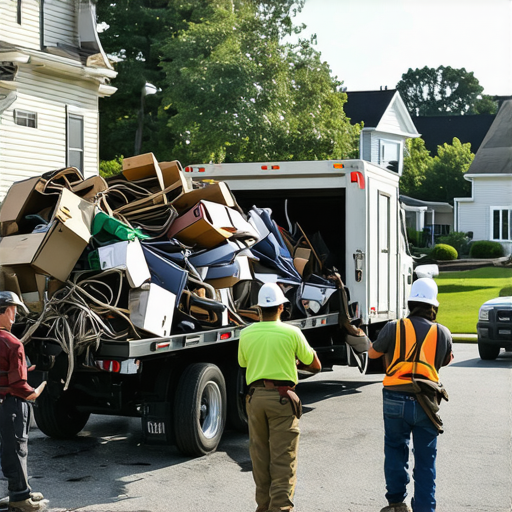
Garage Clean outs are the most common request we receive, but they require the highest level of sorting precision. Most garages are a graveyard for ‘maybe’ items. Our process starts with a staging area. We divide the contents into four streams: metal, clean wood, hazardous waste, and general debris. By separating the metal, we reduce the total weight of the landfill portion, which lowers the tipping fee. We look for heavy-load items like old engine blocks or weight lifting sets and place them over the axles of our trucks. This is critical for vehicle safety. A truck that is ‘tail-heavy’ is a death trap on the highway. We also inspect every box. I have found hidden cans of old gasoline inside boxes of Christmas decorations. In the dry Colorado climate, that is a fire waiting for a spark during the compaction cycle of the truck. We do not just lift. We audit. Every cubic inch of that garage is scrutinized for safety and density before it touches our truck bed. [IMAGE_PLACEHOLDER] “