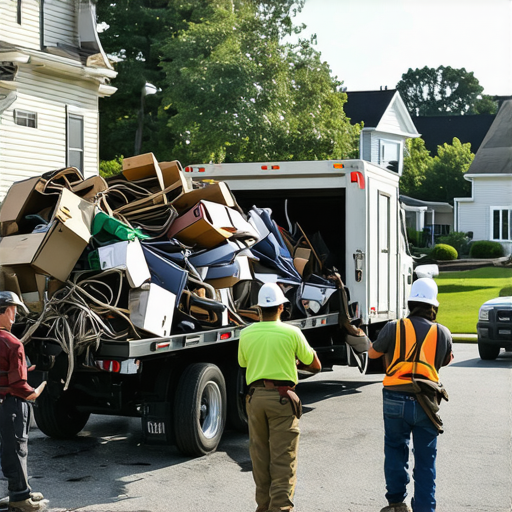

The liability of the ditch
A business owner tried to save 500 dollars by hiring a guy with a pickup truck from a social media ad. Two weeks later, the police called him because his company confidential files were found in a ditch. Your junk is your liability until it hits the scale. This is the reality of the hauling industry in Illinois. When you hire for junk removal Aurora, you are not just paying for muscle. You are paying for a chain of custody that protects you from legal blowback and environmental fines. I have spent twenty five years watching trucks cube out and seeing exactly where the waste goes. If it does not end up at a licensed transfer station, it is your name on the line. The smell of diesel and hydraulic fluid is the scent of a job done correctly. Every cubic yard of space in a 15 yard dump truck must be utilized like a game of high stakes tetris to ensure the customer gets their money worth while maintaining road safety weight limits.
The shifting reality of junk removal Aurora
Junk removal Aurora services provide professional extraction of household debris, construction waste, and unwanted furniture from residential and commercial properties. These operations utilize heavy duty vehicles to transport materials to specific sorting facilities where items are diverted from landfills. Local Aurora ordinances require strict adherence to volume based disposal fees and material segregation protocols. The physics of a garage clean out are complex. You are dealing with varying bulk densities. A pile of cardboard has a low specific gravity but high volume, whereas a stack of old shingles is dense and can easily exceed the gross vehicle weight rating of a standard truck. My crews are trained to calculate the structural load limits of residential stairs before moving a single piano. We look for signs of wood rot or settling that could turn a simple furniture removal into a structural collapse. We do not just lift. We analyze the integrity of the environment.
“Waste is merely a resource in the wrong place; professional removal is the science of putting it back where it belongs.” – Disposal Industry Maxim
The heavy cost of keeping everything
Hoarder clean out Aurora projects require a strategic approach to biohazard management and structural load balancing. These sites often contain high concentrations of decomposed organic matter and compressed paper products that have absorbed atmospheric moisture for decades. This creates a dangerous floor load that can cause joist failure during the extraction process. When we enter a hoarding situation, we are essentially performing a logistical autopsy. We categorize the hoard by its recovery potential. Textiles, metals, and clean paper are separated at the source to minimize tipping fees at the landfill. The goal is to reach a high diversion rate. While many believe that every item can be recycled, the reality of contaminated materials often makes disposal the only sanitary option. In Aurora, the 2026 textile mandates will change how we handle these high volume clean outs, requiring even more precision in how we sort fabrics from general refuse.
| Material Type | Cubic Yard Density (lbs) | Disposal Complexity | Recovery Potential |
|---|---|---|---|
| Loose Textiles | 250 | High | 90% |
| Demolition Debris | 2,000 | Low | 10% |
| Mixed Household Junk | 400 | Medium | 40% |
| E-Waste | 600 | Extreme | 95% |
The Aurora textile recycling 2026 mandate
Aurora textile recycling 2026 represents a major shift in municipal waste policy aimed at diverting nearly all post consumer fiber from the waste stream. This initiative will require specialized collection points and processing facilities capable of shredding and spinning low grade cotton and polyester into industrial insulation or new garments. By 2026, throwing a bag of old clothes into a standard dumpster rental Aurora unit will be a violation of local waste codes. The carbon footprint of hauling low grade plastics 500 miles often exceeds the impact of local, high efficiency waste to energy incineration, but textiles are different. They represent a significant BTU potential if processed correctly. We are preparing our logistics chain to handle the surge in fiber recovery. This means more frequent pickups and smaller, more agile trucks to navigate the narrow residential streets of older Aurora neighborhoods where large roll off containers simply cannot fit without blocking fire lanes.
The logistics of dumpster rentals Aurora
Dumpster rentals Aurora involve the placement of open top steel containers for the temporary storage of bulk waste materials. These containers range from 10 to 40 cubic yards and must be placed on stable, level ground to prevent sinking or tipping during the loading process. Professional haulers must account for the swing radius of the truck cable system and the overhead clearance of power lines. When you rent a dumpster, you are renting a piece of heavy equipment. If you overload it with concrete, the driver will not be able to pull it onto the bed without damaging the hydraulic lift. We often see homeowners try to hide tires or lead acid batteries at the bottom of these bins. This is a hazardous mistake. Lead acid batteries can leak, creating a toxic slurry that contaminates the entire load, turning a standard disposal run into a hazmat incident that costs thousands of dollars to remediate.
- Refrigerants and Freon based appliances
- Lead acid automotive batteries
- Wet paint and chemical solvents
- Propane tanks and pressurized cylinders
- Asbestos containing materials
- Industrial grade pesticides
Why your cheap hauler is a legal time bomb
Professional appliance removal and furniture removal must follow strict hazardous waste guidelines set by the Resource Conservation and Recovery Act. Modern refrigerators contain specific gasses that must be captured by a certified technician before the metal can be scrapped. A cheap hauler will simply vent these gasses into the atmosphere to save time. This is a federal offense. When we handle an appliance removal, we are managing a complex assembly of glass, plastic, metal, and chemical agents. The same applies to furniture removal. Older sofas may contain flame retardants that are now classified as environmental toxins. We ensure these items are stripped down to their base components. The wood goes to a chipper, the springs go to a metal recycler, and the foam is handled according to current chemical safety standards. This level of detail is what separates a professional waste strategist from a curbside amateur.
“Proper waste management is the first line of defense in urban environmental health.” – Solid Waste Association of North America
The future of fiber and local disposal
The transition to the 2026 standards for Aurora textile recycling will require a mindset shift. We will see a rise in micro logistics where small batches of sorted waste are moved to regional hubs. This reduces the deadhead miles of our heavy trucks and improves our fuel efficiency. In the waste industry, air is the enemy. Every inch of empty space in a truck is lost revenue and wasted carbon. We use industrial compactors to ensure that when we leave a site, we are carrying the maximum legal weight. This efficiency is what allows us to keep costs down for the consumer while still adhering to the increasingly strict environmental regulations of the state. Your junk is not just trash. It is a puzzle of materials that must be solved with precision and authority. “