
The structural gravity of a lifetime of collection
Hoarder Clean Out aurora requires a deep understanding of waste management, structural load limits, and logistical planning to manage the tonnage effectively. I once cleared a house where the junk wasn’t just ‘stuff.’ It was a structural hazard. We found the floor joists were bowing under the weight of 40 years of newspapers that had absorbed ten years of basement humidity. The paper had turned into a solid block of cellulose, weighing nearly 50 pounds per cubic foot. When we started pulling it out, the house groaned. It was a physical release of tension that had been building since the Nixon administration. This isn’t just about moving boxes. It is about physics. The Aurora soil and the foundation of the home can only handle so much static weight before the structural integrity is compromised. When the piles reach the ceiling, the fire hazard increases because the thermal mass of the debris creates a chimney effect. This is the reality of extreme recovery.
Why a 15 yard truck is a game of volumetric chess
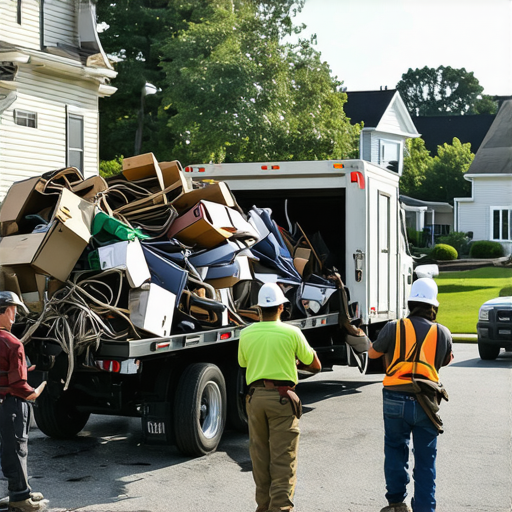
Junk Removal Aurora services utilize volumetric pricing which depends on truck capacity, cubic yardage, and load density to determine the total cost of disposal. The math is simple but the execution is hard. A standard 15-yard truck has 405 cubic feet of space. If you toss items in randomly, you lose 30 percent of that space to air. That is wasted money. Professional haulers use ‘tetris’ loading. We break down furniture. We remove the legs from tables. We nest chairs. We fill the gaps with soft goods. This maximizes the density of the load. In Aurora, tipping fees at the Denver Arapahoe Disposal Site are based on weight, but the customer pays for the space. If the load is poorly packed, the customer pays for air. We hate air. Air is the enemy of a profitable waste route. We aim for 95 percent volume efficiency on every run through Aurora streets.
| Material Type | Weight per Cubic Yard | Disposal Route |
|---|---|---|
| Mixed Household Junk | 350 lbs | Transfer Station |
| Demolition Debris | 500 lbs | Landfill |
| Concrete and Brick | 4000 lbs | Inert Fill Site |
| Yard Waste | 250 lbs | Compost Facility |
The ghost in the garage
Garage Clean outs focus on hazardous material identification, metal recycling, and clearing floor space to restore the original utility of the structure. The garage is where the dangerous items hide. Old paint cans. Used motor oil. Pesticides from three summers ago. These cannot go into the general waste stream. In Aurora, the Resource Conservation and Recovery Act dictates how we handle these items. If we dump a lead-acid battery into a standard landfill, the acid leaches into the groundwater. We inspect every bucket. We smell every jar. It is a slow process, but it is the only way to stay compliant. A single lithium battery crushed in the back of a junk removal truck can ignite the entire load. I have seen trucks go up in flames on the I-225 because a customer hid a laptop battery in a bag of trash. We do not take that risk.
“Waste is merely a resource in the wrong place; professional removal is the science of putting it back where it belongs.” – Disposal Industry Maxim
Appliance removal and the CFC trap
Appliance removal involves the safe handling of refrigerants, scrap metal recovery, and compliance with EPA Section 608 regulations during the disposal process. Old refrigerators contain CFCs or HCFCs which deplete the ozone layer. You cannot just drop a fridge at the curb in Aurora and hope for the best. The compressor must be tapped. The gas must be recovered by a certified technician. We look at an old fridge and see a steel carcass, a copper coil, and a hazardous gas canister. The steel goes to the scrap yard. The gas goes to a reclaimer. The insulation foam, which often contains blowing agents, is the only part that should ever see a landfill. This is the circular economy in action. It is about breaking an object down to its base elements.
Hidden poisons in the Aurora basement
Hoarder Clean Out aurora projects often encounter biohazards, mold spores, and chemical leaks that require specialized Personal Protective Equipment and remediation protocols. Humidity in a basement turns old cardboard into a petri dish. We wear N95 masks or P100 respirators because the dust isn’t just dust. It is dried rodent droppings. It is fungal spores. It is the residue of decayed organic matter. When we move a pile that has been sitting for twenty years, the air becomes toxic. We use industrial air scrubbers. We spray antimicrobial solutions. This is not a job for a guy with a pickup truck and a pair of gardening gloves. This is a logistical operation that requires a hazmat mindset. The legal liability of improper disposal in Aurora falls on the property owner until the waste is officially accepted at a licensed facility.
- Gasoline and Propane Tanks
- Wet Paint and Solvents
- Medical Biohazards
- Lithium-Ion Batteries
- Asbestos-Containing Materials
Furniture Removal and the breaking of wood
Furniture Removal utilizes mechanical leverage, disassembly techniques, and material sorting to reduce the physical footprint of bulky items for transport. Modern furniture is mostly particle board held together by formaldehyde resins. It has no structural value. We break it down with sledges to save space. Antique furniture is different. It is solid oak or mahogany. It is heavy. A solid wood dresser can weigh 300 pounds. Moving that down a narrow flight of stairs in an older Aurora home is a lesson in physics. We use forearm forklifts and shoulder dollies. We calculate the pivot points. If you miss the angle by an inch, you put a hole in the drywall. That is a logistical failure. We aim for zero-impact removals. The goal is to leave the house exactly as it was, minus the clutter.
Dumpster Rentals Aurora and the permit nightmare
Dumpster Rentals Aurora services require right-of-way permits, weight limit monitoring, and strategic placement to avoid property damage or municipal fines. If you put a 20-yard bin on a public street in Aurora without a permit, the city will find you. If you put it on your driveway and fill it with concrete, the driveway will crack. Concrete weighs 4,000 pounds per cubic yard. A full bin can weigh 20 tons. Most residential driveways are only four inches thick. They are not designed for that psi. We use protective boards. We check the weather. Wet ground is soft ground. A dumpster can sink six inches into a lawn overnight if it rains. We manage the surface pressure. We ensure the load limit of the truck can actually lift the bin once it is full. This is why Full Service Junk Removal is often safer than a rental.
“The generation of hazardous waste must be minimized and managed to protect human health and the environment.” – RCRA Statutory Framework
The heavy cost of keeping everything
Junk Removal is the financial mitigation of depreciating assets and the reclamation of real estate value through aggressive decluttering and waste diversion. Every square foot of a home in Aurora has a market value. If that square foot is covered in junk, that value is zero. You are paying a mortgage on a storage unit for things you do not use. The carrying cost of clutter is high. We see people holding onto old CRT televisions. These contain 4 to 8 pounds of lead. They are expensive to recycle because the glass is toxic. While most people think recycling is always better, the carbon footprint of hauling low-grade plastics 500 miles often exceeds the impact of local, high-efficiency waste-to-energy incineration. We look for the lowest net impact. We find the shortest path to the most ethical disposal point. The floor snapped. The hinges screamed. The space returned. That is the Master Junk Removal Engine at work.