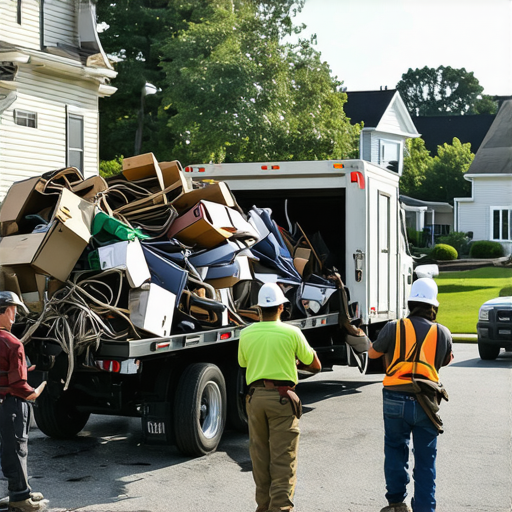
I have spent thirty years staring at the back of a hydraulic pack. My lungs have a permanent coat of transfer station dust. To me, a pile of discarded mattresses in an Aurora alleyway is not just junk. It is a logistical failure. It is a fire code violation. It is a puzzle of cubic density that most property managers fail to solve. I have seen the results of poor waste management first hand, and it usually ends in a heavy fine or a lawsuit. Most people see a couch. I see forty pounds of polyurethane foam, a rusted steel frame, and a dozen hidden pockets of biological hazards that need to be diverted from the local water table. Junk removal is not about muscles. It is about the science of displacement and the legalities of the tipping floor. Most haulers in Aurora are just kids with a truck. They do not understand the math of the load or the liability of the debris.
The phantom cost of curbside abandonment
Aurora apartment complex owners often ignore the abandoned furniture left near communal dumpsters until the municipal code enforcement officers arrive. Junk Removal Aurora operations require an immediate understanding of volumetric displacement to prevent fire lane obstructions and illegal dumping penalties that reach into the thousands of dollars. A business owner tried to save five hundred dollars by hiring a guy with a pickup truck from a social media ad. Two weeks later, the police called him because his company confidential files and three broken desks were found in a ditch near Tower Road. Your junk is your liability until it hits the scale. If that truck driver dumps your old office chairs in a park, the serial numbers on the equipment or the paperwork in the drawers lead straight back to you. I have seen companies shut down because a cheap hauler decided to avoid the tipping fees at the Denver Arapahoe Disposal Site. Professional removal is the only way to sever that chain of liability. You are paying for the manifest, not just the lift. Every pound of waste we pull from a complex in Aurora is tracked. We know the weight. We know the destination. We know the diversion rate. If you do not have a paper trail, you are just waiting for a summons from the city. The floor snapped when we were clearing a hoarder unit last winter. It was not the wood rot. It was the sheer weight of compressed magazines and old furniture. The density was so high the structural joists were under three times their rated load. This is the reality of waste. It has mass. It has gravity. It has consequences.
“Waste is merely a resource in the wrong place; professional removal is the science of putting it back where it belongs.” – Disposal Industry Maxim
Why the cheap haul is a legal trap
Illegal dumping in Aurora is a rising epidemic that targets apartment complex dumpsters and vacant lots. Furniture removal and appliance removal services must provide a disposal receipt to ensure the Responsible Party is cleared of environmental negligence under the Resource Conservation and Recovery Act. When you hire a crew to perform a garage clean out Aurora, you are trusting them with your reputation. If they take those old paint cans and pour them into a storm drain behind a strip mall, the EPA does not go after the guy in the truck first. They go after the property where the waste originated. I have watched rookies try to lift a refrigerator without checking the compressor. They snap the line, Freon hisses into the air, and suddenly they are looking at a ten thousand dollar fine for violating the Clean Air Act. We do not just lift. We inspect. Every. Single. Item. We look for the hidden hazards. We look for the lithium batteries buried in the cushions. We look for the mercury switches in the old appliances. If you do not know what you are carrying, you are a walking biohazard. The logistics of a fifteen yard truck require precise packing. We call it cubing out. If you leave air gaps, you are losing money. If you overstuff, you are a road hazard. The suspension of a truck has a limit. The patience of a weigh station officer has a limit. We operate within those limits because the alternative is a catastrophic failure on I-225 during rush hour.
| Waste Category | Decomposition Time | Tipping Fee Impact | Recovery Potential |
|---|---|---|---|
| Untreated Wood | 10 to 15 Years | Low | High |
| Particle Board | 20 to 30 Years | Medium | Zero |
| Polyurethane Foam | 1,000 Plus Years | High | Low |
| Steel Frames | Perpetual | Negative | 100% |
The mathematics of the hydraulic ram
Volumetric pricing models for junk removal Aurora are based on the density of the debris and the labor hours required for vertical extraction. Furniture disposal in multi story apartment complexes requires a logistical audit of elevator weight capacities and stairwell clearance geometries to avoid property damage. If you are moving a piano from the fourth floor, you are not just moving an instrument. You are managing a thousand pounds of kinetic energy. One slip and that piano becomes a wrecking ball. We calculate the turn radius of every landing. We check the PSI of the tires on our dollies. We do not guess. We measure. The hydraulic ram on a modern pack truck can exert thousands of pounds of pressure. It can crush a sofa into a fraction of its size. But you cannot crush everything. You cannot crush a water heater. You cannot crush a cast iron tub. You have to know where to place the heavy hitters in the bed of the truck to maintain the center of gravity. A poorly loaded truck is a death trap. I have seen trucks tip over on a sharp turn because the driver put all the heavy appliances on one side. That is the difference between a laborer and a logistics specialist. We understand the physics of the load.
Hazardous shadows in the upholstery
Appliance removal involves more than just heavy lifting as it requires hazardous material identification for refrigerants and heavy metals. Junk Removal Aurora specialists must adhere to state recycling mandates that prohibit the landfilling of electronics and white goods containing ozone depleting substances. A couch is not just fabric and wood. In many Aurora apartment complexes, old furniture is a breeding ground for pests and a reservoir for chemical flame retardants. When we pull a sofa out of a unit, we are often dealing with years of accumulated biological material. We wear PPE because we have to. We treat every item as if it is contaminated. The EPA is very clear about the disposal of certain materials. You cannot just throw a CRT television in the trash. It contains lead. It contains cadmium. It is a toxic bomb. If that glass breaks in the back of a truck, the entire load is now hazardous waste. The cost of disposal triples. This is why we have a strict checklist of what we can and cannot touch without special permits.
- Wet Paint and Solvent Containers
- Loose Asbestos Siding or Insulation
- Sealed Propane Tanks and Cylinders
- Lead Acid Car Batteries
- Medical Sharps and Biohazard Bags
- Industrial Chemicals and Pesticides
Dumpster rentals Aurora permit realities
Dumpster rentals Aurora services are governed by zoning laws that dictate container placement and duration limits on public right of way. Garage clean outs and hoarder clean out Aurora projects often require temporary use permits to avoid obstruction citations from the Department of Public Works. If you drop a twenty yard roll off on a city street without a permit, you will have a ticket on your windshield before the driver clears the block. We know which streets require permits and which ones do not. We know the weight limits of the asphalt in mid July when the heat makes the road soft. If you put a heavy dumpster on a soft driveway, you are going to crack the concrete. We use wood blocking to distribute the weight. We protect the property. A live load is often better for apartment complexes. We bring the truck, we load it, and we leave. No dumpster sitting overnight for people to throw their own trash into. Because that is what happens. You rent a dumpster for your old furniture, and by morning, the neighborhood has filled it with their construction debris. Now you are paying to dispose of someone else’s junk. A live load eliminates that risk.
“Safety in waste handling is not a checkbox; it is a structural requirement of the modern urban ecosystem.” – Solid Waste Association of North America
The anatomy of a hoarder clean out aurora
Hoarder clean out Aurora operations are high density logistics challenges that require respiratory protection and structural stabilization of the interior environment. Junk Removal in these contexts is a tactical extraction where sorting and haulage happen simultaneously to maintain egress safety for the recovery crew. I once cleared a house where the junk was not just stuff. It was a structural hazard. We found the floor joists were bowing under the weight of forty years of newspapers that had absorbed ten years of basement humidity. The air was thick with mold spores. We had to shore up the floor from the basement before we could even start the removal. This is not a job for a weekend warrior. This is a job for someone who understands structural loads. We clear a path first. We establish a perimeter. We work from the top down. If you pull from the bottom of a hoard, the whole thing can collapse. It is like a game of Jenga where the pieces weigh fifty pounds each and are covered in mouse droppings. We use high volume fans to clear the air. We use industrial grade disinfectants. When we are done, the space is not just empty. It is safe. That is the goal. Safety. Efficiency. Compliance.
The heavy cost of keeping everything
Furniture removal Aurora is the final step in a property management cycle that prioritizes unit turnover speed and safety compliance. Appliance removal and junk removal are the operational pillars of maintaining property value and preventing pest infestations in high density residential zones. Every day an apartment sits full of old furniture is a day of lost revenue. But you cannot rush it. You have to do it right. You have to think about the carbon footprint. While most people think recycling is always better, the carbon footprint of hauling low grade plastics five hundred miles often exceeds the impact of local, high efficiency waste to energy incineration. We look for the most efficient path. We donate what can be saved. We recycle what can be processed. We landfill only what is truly inert. In Aurora, we are lucky to have access to several specialized recycling centers for e-waste and metal. We use them. We make sure that your old stove ends up as new steel, not as a leaching eyesore in a field. The industry is changing. The regulations are getting tighter. The fees are going up. You need a partner who understands the shifting landscape of waste. You need someone who knows the difference between a fifteen yard load and a twenty yard liability. We are that partner. We have the trucks. We have the permits. We have the experience. We do not just move junk. We manage waste. We protect you from the consequences of your own debris. The next time you see a pile of furniture, do not just think about the mess. Think about the logistics. Think about the law. Then call the professionals.
This post really highlights the complex nature of junk removal that often goes unnoticed. Having worked in property management for years, I’ve seen firsthand how improper disposal can lead to expensive legal complications and safety hazards. The detailed explanation of volumetric displacement and load balancing brought back memories of a challenging apartment clean-out where we had to precisely calculate how to safely remove a large old refrigerator from a tight stairwell without damaging the property. One thing I wonder about is how the industry is adapting to these increasing regulations around hazardous waste, especially for older buildings. Are new technologies or methodologies emerging that could streamline compliance while reducing costs? It seems like a balance between responsible disposal and operational efficiency is critical here. Would love to hear others’ experiences or insights on managing this delicate interplay between safety, legality, and affordability.