The phantom liability of the curbside pickup
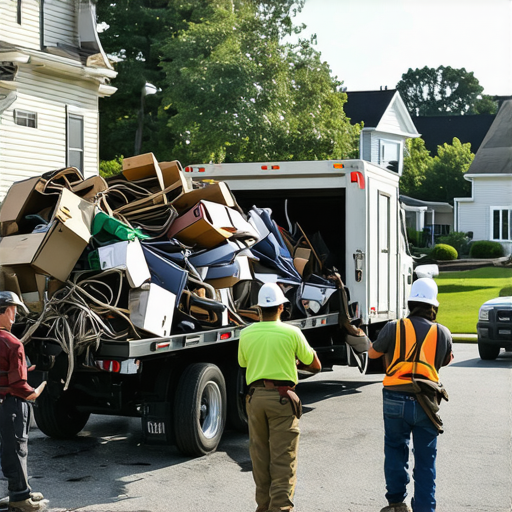
Junk removal in Aurora requires more than a strong back and a flatbed truck because illegal dumping creates a chain of legal responsibility that stops with the property owner. Many residents assume that once a pile of debris leaves their driveway, their liability vanishes. This is a dangerous misconception in the modern regulatory environment. I have seen the fallout firsthand. A business owner tried to save $500 by hiring a guy with a pickup truck from a social media ad. Two weeks later, the police called him because his company confidential files and branded equipment were found in a ditch near a local creek. Your junk is your liability until it hits the scale at a certified transfer station. Professional haulers provide a paper trail. We provide peace of mind. Every load we carry through Aurora is logged, weighed, and manifest. This is the difference between a professional operation and a curbside cowboy. The cowboy sees a quick buck. I see a logistical chain of custody that protects the local ecosystem and the client’s reputation.
The physics of the fifteen yard dumpster rental
Dumpster rentals in Aurora depend entirely on the density of the material and the spatial geometry of the load to remain cost-effective. A 15-yard container is not just a box. It is a puzzle. When you throw items in randomly, you create air pockets. You pay for those air pockets. Air has no weight, but it takes up volume. If you fill a dumpster with un-broken-down furniture, you are paying to transport Illinois air. We teach our crews the Tetris method. Large, flat items go on the bottom. Heavy aggregates like concrete or soil must be distributed evenly to avoid axle stress on the delivery truck. A lopsided load is a safety hazard on the I-88. We calculate the displacement of every item. A standard refrigerator occupies approximately 1.2 cubic yards. If you leave the shelves inside, you lose more space. Every cubic inch matters when tipping fees are calculated by the ton. We aim for maximum compaction before the truck even starts the engine.
“Waste is merely a resource in the wrong place; professional removal is the science of putting it back where it belongs.” – Disposal Industry Maxim
Furniture removal and the particle board lie
Modern furniture removal reveals the decline of manufacturing quality and the massive increase in landfill volume occupied by non-recyclable resins. Older pieces were solid oak or maple. They had weight. They had value. They could be refinished. Today, most items we pull out of Aurora basements are made of medium-density fiberboard held together by formaldehyde-based glues. You cannot recycle this. You cannot burn it safely for energy recovery. It is a dead-end material. When we perform a furniture removal, we look for the hidden gems of the circular economy. We scout for solid wood that can be diverted to local craftsmen. The rest must be handled as bulk waste. The sheer volume of discarded flat-pack furniture is staggering. It shatters upon impact. It swells when damp. It turns a simple garage clean out into a cleanup of toxic dust. We use heavy-duty masks and specialized dollies to ensure these disintegrating pieces do not contaminate the rest of the load.
The heavy cost of keeping everything
Hoarder clean out Aurora projects involve structural risk assessments and biohazard protocols that exceed standard hauling capabilities. This is not just about clutter. It is about floor loads. I once cleared a house where the junk was not just stuff. It was a structural hazard. We found the floor joists were bowing under the weight of 40 years of newspapers that had absorbed ten years of basement humidity. Paper is a sponge. Wet paper weighs three times more than dry paper. When you stack it five feet high, you are putting thousands of pounds of pressure on a residential floor designed for 40 pounds per square foot. We have to stage the removal. We take the top layers first. We check for structural integrity at every step. We often find that the moisture trapped by the hoarded items has rotted the subfloor. A rookie would just walk in and fall through. We use spotters and load-bearing sheets to navigate these environments safely.
Local transfer station realities and regional tipping fees
Waste disposal in the Aurora region is governed by strict tipping fees that vary based on the classification of the debris. We do not just dump everything in one pile. We sort. We separate. Construction and demolition waste carries a different price tag than general municipal solid waste. If you mix your garage clean out debris with shingles from a roof repair, the transfer station will charge you the highest possible rate for the entire load. We prevent this financial leakage. We compartmentalize our trucks. We know the exact hours and requirements of the local transfer facilities. Some require specialized permits for e-waste. Others refuse to take appliances with refrigerants. By knowing the grid, we save our clients hundreds of dollars in surcharges. Efficiency is not just about speed. It is about knowledge of the local waste stream and the rules that govern it.
| Material Type | Decomposition Time | Recycling Potential |
|---|---|---|
| Corrugated Cardboard | 3 Months | High (90%) |
| Untreated Timber | 2 Years | Medium (60%) |
| Aluminum Cans | 200 Years | Infinite |
| Glass Bottles | 1 Million Years | Infinite |
| Plastic Bags | 500 Years | Low (5%) |
The invisible danger in the garage clean out
Appliance removal involves managing hazardous chemicals and high-pressure systems that pose significant environmental risks. Your old chest freezer is not just a metal box. It contains chlorofluorocarbons or hydrofluorocarbons. These are potent greenhouse gases. If a hauler just tosses your freezer into a crusher, those gases escape. It is illegal. It is unethical. We use certified recovery equipment. We drain the lines. We seal the systems. Only then does the metal go to the scrap yard. The same applies to old televisions and monitors. The leaded glass in a CRT monitor is a toxic hazard. If it breaks in your driveway, you have a hazardous waste site. We handle these items with the respect they demand. We do not just lift. We inspect. Every. Single. Item. We check for hidden propane tanks. We look for old cans of oil-based paint. These are the items that start fires in the back of garbage trucks. We prevent those fires through diligence.
- Lead-acid batteries from old vehicles
- Propane tanks and pressurized cylinders
- Wet oil-based paint and thinners
- Asbestos-containing floor tiles or pipe insulation
- Industrial grade chemicals and pesticides
- Ammunition or explosive materials
“Landfills are not bottomless pits; they are biological reactors requiring precise input management to prevent long-term environmental failure.” – SWANA Technical Bulletin
The logistical math of a professional haul
Calculated waste management requires an understanding of the cubic yardage versus the weight capacity of the vehicle. A standard junk removal truck has a volume of roughly 16 cubic yards. However, the hydraulic lift system has a weight limit. If we load 16 yards of wet dirt, the truck will not move. If we load 16 yards of empty cardboard boxes, we are losing money on fuel and labor. The goal is a balanced load. We mix high-density items with low-density items. This is the science of cubing out. We maximize the value of every trip. This reduces the number of trucks on Aurora roads. It lowers the carbon footprint of the project. It speeds up the timeline for the homeowner. When we arrive for a garage clean out, we are already mental-mapping the truck. We see the heavy lathe in the corner and the piles of old blankets. They go together. The blankets protect the truck floor from the lathe, and the lathe holds the blankets down. It is a symphony of logistics that only comes with decades of experience in the field.