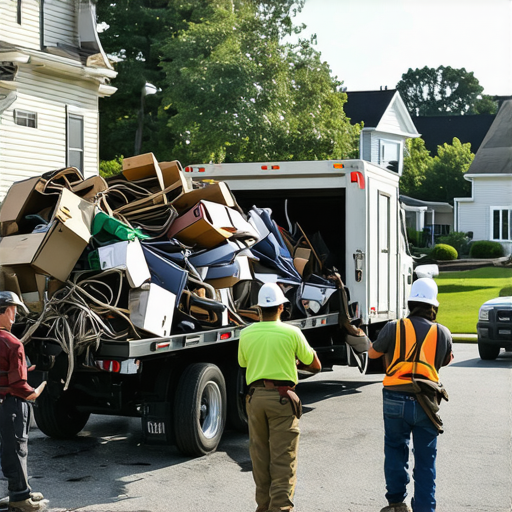
I smell like diesel and hydraulic fluid at the end of every shift. My boots are stained with the grey slurry of crushed drywall and the oily residue of neglected engine blocks. To you, a pile of old furniture and rusted appliances in an Aurora garage is an eyesore. To me, it is a volumetric equation that needs a solution. I have spent twenty-five years staring at the back of roll-off trucks, calculating exactly how many cubic yards of air are being wasted because a customer didn’t know how to stack their debris. This industry is built on density. If you are not thinking about density, you are losing money. Most people in the Fox Valley area look at a 30-yard dumpster and see a massive metal box. I see a specific logistical tool that, if used incorrectly, becomes a legal and financial anchor. Your junk is your liability until it hits the scale at the transfer station and the weight ticket is printed. Anything that happens before that moment is on you.
“Waste is merely a resource in the wrong place; professional removal is the science of putting it back where it belongs.” – Disposal Industry Maxim
The illegal dumping trap and the cost of cheap labor
A business owner in Aurora tried to save 500 dollars by hiring a guy with a pickup truck from a social media ad for a quick office cleanout. Two weeks later, the Aurora Police Department called him because his company’s confidential files and several old computer monitors were found in a ditch near the Fox River. This is the reality of the curbside cowboy. When you hire a professional for Junk Removal Aurora, you are paying for the peace of mind that your waste enters a regulated stream. I watched a rookie almost lose his eyebrows because a customer hid a half-full propane tank inside a pile of yard waste. We do not just lift, we inspect. Every. Single. Item. Your liability does not end when the truck pulls out of your driveway. It ends when the waste is processed according to the Resource Conservation and Recovery Act. Professionalism in this industry is measured by the manifest, not just the muscle. If a hauler cannot tell you exactly which transfer station they use in Kane County, walk away. They are likely dumping your old sofa in a forest preserve to avoid the tipping fees that keep legitimate businesses running. These fees are not just suggestions. They are the cost of maintaining a civil society and protecting the local water table from the heavy metals found in every discarded television and refrigerator.
The physics of the thirty yard roll-off beast
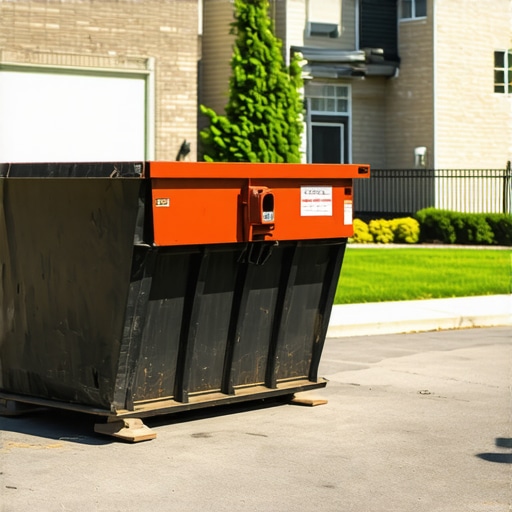
A 30-yard dumpster rental in Aurora is a specific logistical commitment that requires twenty-two feet of linear space and a clear overhead path for the cable hoist. Most homeowners underestimate the footprint of a container this size. It is roughly twenty-two feet long, eight feet wide, and six feet high. In the narrow residential streets of older Aurora neighborhoods, placing one of these requires the precision of a surgeon. You are dealing with a steel box that weighs nearly four thousand pounds before a single piece of junk is tossed inside. If you are clearing out a basement or tackling a Hoarder Clean Out Aurora, the 30-yard is often the only logical choice to avoid multiple trip charges. However, you must respect the weight limit. I have seen customers fill these with concrete or dirt, thinking they are being efficient. The truck hydraulics will moan and fail. The floor of the container will bow. You will be hit with an overweight fee that makes the initial rental cost look like pocket change. We talk about cubing out a load. This means filling the container so there is no wasted air. If you toss four chairs in haphazardly, you are paying to transport Illinois air. If you break them down and nest them, you are maximizing your investment.
| Container Size | Cubic Yard Capacity | Equivalent Pickup Loads | Best Use Case |
|---|---|---|---|
| 10-Yard | 10 | 3 to 4 | Small bathroom remodel or heavy debris like dirt/concrete |
| 20-Yard | 20 | 6 to 7 | Garage clean outs and medium deck removals |
| 30-Yard | 30 | 9 to 10 | Hoarder clean outs, whole-house decluttering, large furniture removal |
| 40-Yard | 40 | 12 to 14 | Commercial construction and major roofing projects |
The structural load limits of residential furniture removal
Furniture removal in Aurora involves more than just lifting heavy objects; it requires an understanding of the structural integrity of your home and the physics of the items. A 1970s solid oak wall unit does not just weigh three hundred pounds, it represents a concentrated load that can damage floor joists if dragged. Most modern furniture is what I call disposable sawdust. It is held together by staples and prayers. When you try to move it, it disintegrates. This creates a secondary mess of splinters and dust that requires industrial vacuums. For older, heavy pieces, we look at the egress. Can the piece be dismantled? If not, we have to calculate the pivot point on every staircase. This is where the amateurs fail. They gouge the drywall or snap the bannister because they do not understand the center of gravity. In a professional Junk Removal Aurora operation, we treat every piece of furniture like a puzzle. We remove the drawers to reduce weight. We wrap the legs to prevent floor damage. We use the 30-yard dumpster as the final destination where the Tetris begins. We place the heavy, flat items on the bottom to create a stable base. Then we layer the lighter items on top. This is how you avoid a shifting load during transport, which is a major safety hazard on I-88.
The ghost in the garage and the appliance removal reality
Appliance removal is a high-stakes game of hazardous material management masked as a simple hauling task. Your old refrigerator contains refrigerants like Freon or R-134a that must be reclaimed by a certified technician. You cannot just toss these into a landfill. It is a violation of federal law. When we perform an appliance removal in Aurora, we are looking for the recycling potential. The steel is valuable, but the insulating foam and the capacitors in older units are environmental landmines. Washing machines are another logistical nightmare. They are bottom-heavy and often contain a concrete counterbalance. If you try to tip one into a dumpster without a ramp, you risk damaging the container or injuring yourself. This is why a 30-yard dumpster for a garage clean out is often paired with a crew of professional haulers. We know how to handle the deadweight. We also deal with the chemical reality of old garages. Lead-acid batteries from lawnmowers, half-empty cans of oil-based paint, and bags of pesticide. These are the items your hauler cannot legally touch in a standard roll-off. You need a specialized manifest for hazardous waste. Mixing these into a general junk pile is how fires start at the transfer station. I have seen a load of cardboard ignite because someone hid a lithium-ion battery from a power tool inside an old boot.
- Lead-acid batteries (Car and lawnmower batteries)
- Propane tanks and pressurized cylinders
- Paints, stains, and industrial solvents
- Asbestos-containing materials
- Fluorescent light ballasts containing PCBs
- Tires (due to methane trap risks in landfills)
- Medical waste or biohazards
Why your cheap hauler is a legal time bomb
The true cost of waste management is found in the tipping fees at regional facilities like the Orchard Hills Landfill. In the Aurora area, these fees are calculated by the ton. If someone offers you a flat rate that seems too good to be true, it is because they are not planning on paying the gate fee. They are planning on dumping your life’s clutter in a field. When the authorities trace those items back to you, the fines are astronomical. I have seen homeowners pay three times the original removal cost in legal fees and cleanup orders. This is why the 30-yard dumpster is worth the investment. It provides a documented, legal paper trail. You get a receipt. You get a weight ticket. You get the assurance that your old mattresses and broken electronics are being handled by professionals who understand the diversion rates required by the state of Illinois. We aim for high diversion, meaning we pull out the metal, the cardboard, and the clean wood before the rest goes to the working face of the landfill. The carbon footprint of hauling low-grade plastics five hundred miles often exceeds the impact of local, high-efficiency waste-to-energy incineration, but in Aurora, we focus on local material recovery facilities to keep the logistics tight and the costs manageable.
“The goal of modern waste management is not to hide the trash, but to dismantle the waste stream until nothing is left to bury.” – Solid Waste Association of North America (SWANA)
The heavy cost of keeping everything in Aurora
Hoarder clean out Aurora projects are the ultimate test of a logistics manager’s resolve and a 30-yard dumpster’s capacity. These are not simple junk removals. They are excavations. Over forty years, a basement can become a pressurized environment of compressed paper and textiles. These materials absorb moisture from the air, increasing their weight by up to thirty percent. What looks like a light pile of newspapers is actually a two-ton structural load. When we clear these homes, we have to monitor the air quality for mold spores and the floor for structural failure. The 30-yard dumpster is the only tool for this job because it allows us to stay on-site for several days while the sorting happens. We don’t just throw everything away. We look for the heirlooms buried under the debris. But once the decision is made to discard, the speed of the 30-yard container is unmatched. We can clear a thousand square feet of heavy clutter in a single day if the logistics are planned correctly. The floor snapped. I remember a job in a bungalow near downtown Aurora where the floor joists had bowed two inches under the weight of old magazines. The moment we cleared that room, the house literally groaned as the tension was released. That is the physical reality of junk. It is a force that acts upon your home and your life. Removing it is an act of structural and psychological restoration.
The logistical zoom on e-waste and local regulations
Aurora residents must navigate specific municipal rules regarding electronics that make a standard junk haul more complex than it appears. You cannot legally put a computer, a television, or a printer in a landfill in Illinois. This is the Electronic Products Recycling and Reuse Act. If I find a CRT monitor at the bottom of a 30-yard dumpster, the whole load can be rejected at the transfer station. This results in a reload fee and a hazardous waste fine. We have to separate these items. We look for the gold in the circuit boards and the lead in the glass. This is the microscopic reality of my job. I am looking for the chemical components that make your junk a liability. A 30-yard dumpster is worth it when you have a massive volume of inert debris like wood, drywall, and general household goods. But for the technical stuff, you need a hauler who knows the local Aurora drop-off points for electronics. The logistics of a garage clean out often involve two streams of waste: the big metal box for the bulk and the specialized van for the hazardous and electronic components. This is how a professional prevents your junk from becoming a permanent scar on the Illinois environment. The Tetris of the truck is only the first step. The true work happens at the scale, where the weight of your past is finally measured and managed.