The liability of the curb
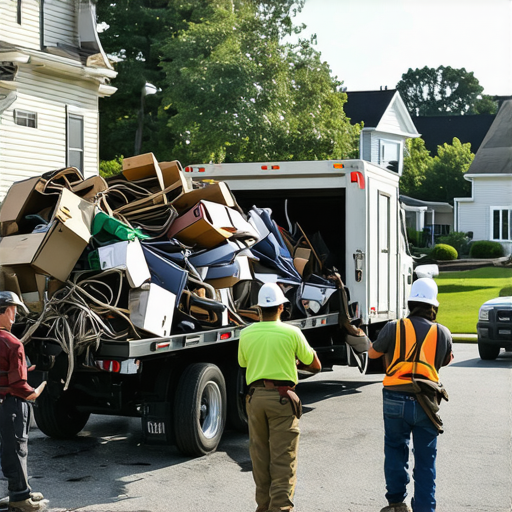
Illegal furniture disposal on the curb creates significant legal and environmental liabilities for property owners in Aurora and surrounding municipalities. A business owner tried to save €500 by hiring a guy with a pickup truck from a social media ad. Two weeks later, the police called him because his company’s confidential files and broken office furniture were found in a ditch. Your junk is your liability until it hits the scale at the transfer station. When you leave a broken dresser on a public sidewalk without a scheduled pickup, you are not just getting rid of trash. You are creating a pedestrian hazard and inviting fines from the City of Aurora. The physics of an unstable dresser are treacherous. If the drawer slides are stripped, those heavy wooden boxes can slide out during transport, shifting the weight of a truck and causing a rollover. I have seen it happen. A 15-yard dump truck depends on a balanced load. When you toss a dresser that has not been properly broken down, you create air pockets. Those pockets are wasted money. You are paying to haul Aurora air instead of waste.
Why modern particle board is a logistical nightmare
Modern furniture constructed from Medium Density Fiberboard or MDF presents unique disposal challenges due to its high weight and chemical binders. Unlike solid oak furniture that can be reclaimed or burned for BTU value, MDF is essentially sawdust held together by urea-formaldehyde resins. This stuff is heavy. A standard six-drawer dresser made of MDF can weigh over 150 pounds while offering zero structural integrity once the cam-lock fasteners fail. In the humid basements of Aurora, these pieces absorb moisture like a sponge. I once entered a Hoarder Clean Out Aurora project where the dressers had absorbed so much ground moisture they had doubled in weight. The floor joists were bowing under the pressure. When you try to move a water-logged particle board dresser, it disintegrates. You are left with a pile of toxic, heavy sludge that landfills hate. The dust from breaking these items down is a respiratory irritant. You must use a N95 mask. This is not just about moving a box. This is about managing a chemical compound that was never meant to last more than five years.
“Waste is merely a resource in the wrong place; professional removal is the science of putting it back where it belongs.” – Disposal Industry Maxim
Aurora regional disposal protocols and the transfer station reality
Navigating the waste stream in Aurora requires a technical understanding of the Kane County and DuPage County landfill regulations. Most residents assume every piece of furniture can go to the same pile. This is false. The Orchard Hills Landfill and various local transfer stations have specific rules regarding bulky items. If your dresser has a mirror, that glass must be removed and taped to prevent shattering. Glass is a major contaminant in the wood recycling stream. If the dresser is painted with old, lead-based pigments, it requires handled disposal. In Aurora, the municipal waste contract often requires a specific sticker for bulky items. If you miss the sticker, the truck passes you by. Then the rain hits the MDF. Now you have a 300-pound pile of toxic mush on your parkway. Professional Junk Removal Aurora services avoid this by utilizing roll-off containers or box trucks that keep the material dry and contained until it reaches the tipping floor. We calculate the tipping fee based on the weight of the load, and wet wood is the fastest way to blow a budget.
Safe dismantling techniques for the solo homeowner
Dismantling a dresser safely requires a systematic reversal of its assembly to prevent structural collapse or injury. Start by removing all drawers. This reduces the primary weight by forty percent. Do not just yank them. Many modern dressers use plastic retention clips that will snap and send shards into your eyes. Use a flathead screwdriver to depress the tab. Once the drawers are out, check the back panel. It is usually thin plywood or cardboard held by staples. Prying this off often causes the entire carcass to rack and lean. If the dresser is tall, it is a tipping hazard. The center of gravity is high and narrow. For Furniture Removal in tight spaces, you must lay the unit on its back before unscrewing the base. This prevents the unit from folding over on your legs. I have seen rookies get pinned against a wall because they took the bottom supports off a standing dresser. It is a simple physics problem that ends in a trip to the emergency room.
| Material | Weight per Cubic Foot | Decomposition Time | Recyclability | | :— | :— | :— | :— | | Solid Oak | 45 lbs | 15-20 years | High | | MDF / Particle Board | 50 lbs | 50+ years | Low (Resins) | | Glass Inserts | 160 lbs | 1,000,000 years | High | | Steel Hardware | 490 lbs | 50-100 years | 100% |
The math of the cubic yard
Professional hauling pricing is built on the volumetric measurement of 27 cubic feet which constitutes one cubic yard. A standard dresser takes up approximately 1.5 to 2 cubic yards of space if left intact. This is an inefficient use of a truck bed. By breaking the dresser down into flat panels, you can reduce that footprint to 0.5 cubic yards. This is the difference between needing one truck or two for a Garage Clean outs project. We call this cubing out the load. Every inch of air in that truck costs the operator fuel, time, and money. While most people think recycling is always better, the carbon footprint of hauling low-grade plastics 500 miles often exceeds the impact of local, high-efficiency waste-to-energy incineration. This is a contrarian reality that many eco-warriors ignore. Sometimes the most sustainable thing you can do with a broken, resin-soaked dresser is to send it to a local waste-to-energy plant where its BTUs can at least contribute to the local power grid instead of rotting in a hole for a century.
Items that the haulers will never touch
Federal and state regulations under the Resource Conservation and Recovery Act prohibit standard junk removers from hauling certain hazardous materials. We don’t just lift. We inspect. Every. Single. Item. If you have tucked a car battery or a half-full gallon of paint inside a dresser drawer, you are putting the crew and the facility at risk. A single leaking container of pool chemicals can react with the wood dust in a junk truck and cause a spontaneous combustion event. I watched a rookie almost lose his eyebrows because a customer hid a half-full propane tank inside a pile of harmless yard waste. We are trained to spot the signs of hazardous waste. If we see staining on the wood or smell chemical off-gassing, the item stays on the curb. You need a specialized hazmat team for that. Safety is not a suggestion. It is a logistical requirement for remaining in business.
- Wet Paint Cans and Stains
- Loose Lithium-Ion Batteries
- Pressurized Propane Tanks
- Biohazardous Medical Waste
- Unlabeled Industrial Chemicals
- Asbestos-Contaminated Insulation
“Furniture represents one of the fastest-growing categories of municipal solid waste, often containing hazardous finishes that complicate landfill safety.” – SWANA Technical Report
The heavy cost of keeping everything
Hoarding furniture leads to structural compromise of the home due to the static load limits of residential flooring. A typical residential floor is designed to hold 40 pounds per square foot of live load. When you stack broken dressers, old appliances, and boxes in a Garage Clean outs scenario, you quickly exceed this limit. The wood in the dressers themselves begins to fail. The fasteners pull through the soft fiberboard. The unit becomes a dead weight that cannot be safely lifted. It must be chopped in place. This adds labor hours and increases the risk of property damage. Professional Junk Removal Aurora teams use specialized saws to segment these loads. We focus on the load path. We ensure that as we remove the weight, we do not trigger a secondary collapse of the surrounding clutter. It is a delicate dance of weight distribution and mechanical advantage. Getting rid of that dresser today is cheaper than repairing a collapsed floor tomorrow. The math is simple. The execution is the hard part.