Junk Removal Aurora: Clearing Residential Construction Scraps
A business owner tried to save 500 dollars by hiring a guy with a pickup truck from a social media ad. Two weeks later, the police called him because his company’s confidential files were found in a ditch. Your junk is your liability until it hits the scale at the transfer station. This is the cold reality of waste management in Aurora. I have seen the fallout of cutting corners for twenty five years. It ends in fines, environmental damage, or structural failure. When we talk about junk removal in Aurora, we are not just talking about tossing old boxes. We are talking about the physics of weight distribution, the chemistry of gypsum, and the legal framework of the Resource Conservation and Recovery Act. I smell diesel and hydraulic fluid every morning. I see a 15 yard bin not as a container, but as a three dimensional puzzle where every cubic inch of air space is a financial leak. If you do not load it right, you are burning money. If you do not dump it right, you are breaking the law.
The liability of the curb
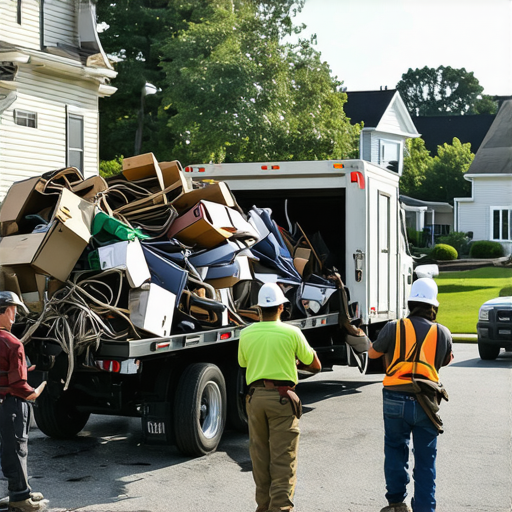
Professional junk removal in Aurora involves the systematic extraction and transport of residential construction debris, including drywall, wood, and masonry. Homeowners must navigate local disposal regulations to avoid fines. Certified haulers manage the chain of custody, ensuring that hazardous materials are separated from general landfill waste to mitigate long term environmental risks.
When you place construction debris on the curb, you are initiating a logistics chain. In Aurora, municipal services often refuse to touch heavy construction materials like broken concrete or bundles of asphalt shingles. This leaves the homeowner responsible for the material. If a curbside cowboy picks it up and dumps it in a local creek near Cherry Creek State Park, the paper trail leads back to your address. I have watched inspectors trace a single discarded invoice in a pile of illegal debris back to a renovation site. The cost of a professional 15 yard dumpster or a dedicated hauling team is a fraction of the legal fees associated with environmental violations. We track every load by weight and volume. We know the exact density of the debris. Wet drywall weighs significantly more than dry sheets. If you do not account for moisture absorption, you exceed the gross vehicle weight rating of your vehicle. This is where the physics of hauling becomes a safety issue. A truck with failed brakes on an Aurora grade is a nightmare born from poor volume estimation. Professional teams understand the tare weight of their equipment. They know the payload capacity. They do not guess. They calculate. Every cubic yard of waste has a specific gravity. Concrete is roughly 2,000 pounds per cubic yard. Drywall is closer to 500. If you mix them, you create a logistical challenge that requires specialized sorting at the transfer station. This is the difference between a laborer and a waste strategist.
“Waste is merely a resource in the wrong place; professional removal is the science of putting it back where it belongs.” – Disposal Industry Maxim
The hidden physics of debris weight
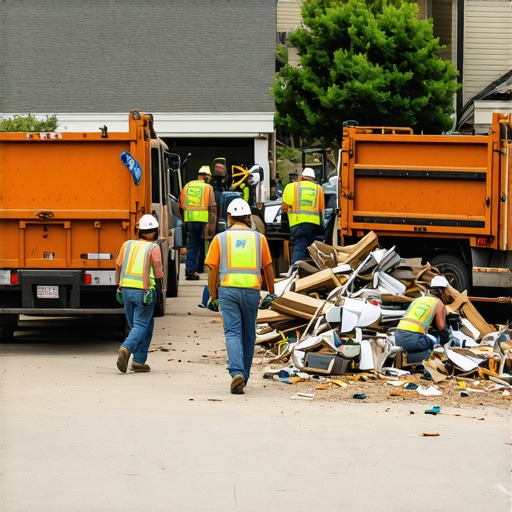
Calculating the weight of residential construction scraps is necessary to ensure safe transport and accurate tipping fees. Construction materials such as tile, mortar, and pressure treated lumber possess high density, often exceeding the weight limits of standard residential vehicles. Professional junk removal services utilize heavy duty roll off dumpsters to manage these high mass loads effectively.
Construction scrap is deceptive. A pile of old kitchen cabinets looks bulky but weighs relatively little. Conversely, a small stack of ceramic floor tiles can exceed 1,000 pounds. When we perform appliance removal in Aurora, we are dealing with the weight of compressors and thermal insulation. A refrigerator is not just metal. It is a complex assembly of Freon loops, foam, and high density plastic. We have to strip these down to the base components to meet environmental standards. The same applies to furniture removal. That old sleeper sofa in your basement? It weighs 250 pounds and has a steel frame that can damage the hydraulic lift of a light duty truck. We look at the structural load limits of your stairs before we even start the lift. We have seen floor joists bow under the weight of accumulated construction waste in a garage. It is a structural hazard. During a hoarder clean out in Aurora, the density of the material increases toward the bottom of the pile. Papers absorb basement humidity. They become a heavy, moldy mass that requires respirators and heavy lifting gear. We do not just throw things in a truck. We cube it out. This means we fill the truck from the front to the back, bottom to top, eliminating void space. Air is expensive to haul. If my truck is half full of air, my profit margin is gone and your price goes up. We pack the load with the precision of a tetris grandmaster. The heavy flat items like plywood and drywall go on the bottom. The lighter, irregular scraps fill the gaps. This lowers the center of gravity and makes the vehicle stable on the road.
Navigating the Aurora transfer station maze
Local waste disposal in Aurora is governed by specific tipping fees and material restrictions at facilities like the Denver Regional Landfill. Homeowners must distinguish between general municipal waste and restricted construction debris to avoid rejection at the gate. Professional haulers maintain accounts at these facilities, allowing for streamlined disposal and documented waste diversion.
The transfer station is a high stakes environment. If you show up with a load of residential construction scraps and you have a hidden propane tank, you are getting kicked out. Worse, you could cause a fire in the pit. I once saw a rookie almost lose his eyebrows because a customer hid a half full propane tank inside a pile of yard waste. We inspect every single item. We look for the red flags. Lithium batteries in a pile of drywall? That is a fire waiting to happen. In Aurora, the disposal of electronics and appliances is strictly regulated. You cannot just toss a microwave into a dumpster. It contains high voltage capacitors and magnetrons that require specialized recycling. We manage the logistics of taking your appliance removal items to the right facility while the construction debris goes to the landfill or a recycling center. Concrete recycling is another localized reality. While many think recycling is always better, the carbon footprint of hauling low grade concrete 40 miles to a specialized crusher often exceeds the impact of local, high efficiency disposal. We evaluate the math. We look at the fuel burn versus the material recovery. It is a cold, hard calculation. We use the E-470 corridor to move loads efficiently, but we always watch the clock. Time is fuel. Fuel is money. The narrow residential streets near the Aurora Reservoir require smaller trucks or precise dumpster placement. You cannot just drop a 30 yard bin on a weak driveway. It will crack the concrete. We use boards to distribute the weight. We protect the property while we remove the waste.
Logistics of Waste Material Densities
| Material | Density (lbs/cu yd) | Disposal Difficulty |
|---|---|---|
| Poured Concrete | 3,000 | High (Requires Heavy Equipment) |
| Drywall (Gypsum) | 500 – 700 | Moderate (Dust and Breakage) |
| Dimensional Lumber | 300 – 450 | Low (Easy to Stack) |
| Asphalt Shingles | 2,400 | High (Heat and Weight) |
| Mixed Household Junk | 250 | Variable (Sort-heavy) |
The geometry of a 15 yard bin
A 15 yard dumpster is the standard unit for residential construction scrap removal due to its balance of volume and weight capacity. Efficient loading requires placing high density materials at the base to maintain a low center of gravity. Mismanaging the volume of a dumpster leads to overage charges and safety risks during transport on Aurora highways.
If you see a dumpster with material piled high above the rim, you are looking at a liability. That is a road hazard. Wind caught under a sheet of plywood can turn it into a projectile on I-225. We load to the fill line. No higher. We also avoid the hump. That is when the middle of the load is higher than the sides. It is unstable. We want a flat, compacted surface. During garage clean outs, we often find hazardous chemicals. These are the items your hauler cannot legally touch without specific permits. We have to be honest with the customers. We are specialists, not magic workers. We follow the law because the law protects the aquifer. If we dump paint or oil, it ends up in the groundwater. Aurora residents depend on that water. We are part of the community, even if we smell like diesel. We take pride in a clean site. When the truck pulls away, the ground should be clear. No nails. No glass. No splinters. We use magnetic sweeps to find the hidden metal scraps. A single roofing nail can ruin a homeowners tire. That is a failure of service. We finish the job properly.
Items Your Hauler Cannot Legally Touch
- Lead-acid batteries and automotive fluids
- Unsealed paint cans and chemical solvents
- Propane tanks and pressurized cylinders
- Asbestos-containing materials (insulation, floor tiles)
- Biohazardous waste or medical needles
“The Resource Conservation and Recovery Act mandates the proper management of solid waste to protect human health and the environment.” – EPA Regulatory Framework
The heavy cost of keeping everything
Hoarder clean out services in Aurora address the accumulation of materials that create fire hazards and structural strain. These projects require a logistical approach that prioritizes safety and material categorization. Removing years of debris restores the integrity of the residential environment and eliminates the risks associated with high volume indoor storage.
Hoarding is not just a clutter problem. It is a mass problem. When you have thousands of pounds of old newspapers and furniture, you are testing the engineering limits of the house. I have seen floors sag two inches under the weight of a hoard. We have to brace the structure sometimes before we even start the removal. This is not just junk removal Aurora; it is a structural intervention. We categorize the materials. We look for the value, but we are realistic. Most of it is waste. The furniture removal in these cases is often difficult because the items have integrated with the hoard. We find pests. We find rot. We find the evidence of years of neglect. We move fast but carefully. Every load we take out is a weight lifted from the building and the owner. We track the cubic yardage carefully. We need to know how many trips to the transfer station are required. We do not want the truck sitting idle. We want a continuous flow of material from the house to the bin to the landfill. This is the efficiency of a veteran team. We do not get emotional. We get logistical. We see the path through the house. We see the backdoor exit. We see the finish line where the space is empty and the air is clean again.
Construction scraps are the fossils of progress. They represent the old being replaced by the new. Whether it is a kitchen remodel or a full house flip, the debris must go somewhere. We ensure it goes to the right place. We handle the furniture removal, the appliance removal, and the dumpster rentals in Aurora with a focus on precision. We are the heavy lifters. We are the waste strategists. We are the ones who keep the city clean by doing the work that nobody else wants to do. We understand the tipping fees. We understand the DOT regulations. We understand that at the end of the day, our job is to make your problem disappear legally, safely, and efficiently. No shortcuts. No illegal dumping. Just pure logistical execution. This is the standard we set for junk removal in Aurora. It is the only way to operate in this industry for twenty five years without losing your shirt or your license.