The physics of a residential purge
Residential junk removal in Aurora requires a calculated understanding of cubic yard density and regional tipping fees to avoid logistical failures. Effective waste management involves sorting materials by their recovery potential and legal disposal requirements rather than simply tossing everything into a single pile.
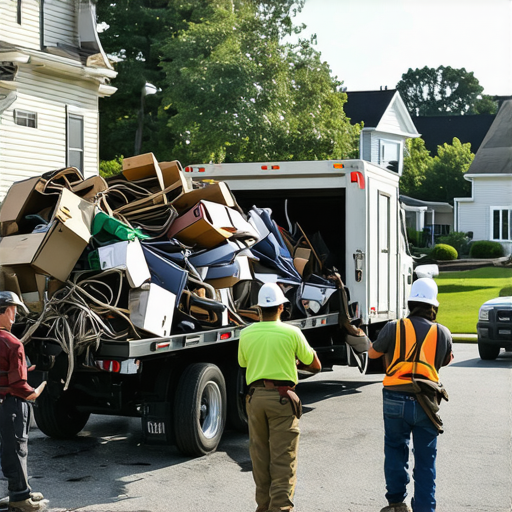
The diesel engine idles outside. It has a specific rhythm. I can tell by the sound if the hydraulic pump is struggling against a heavy load or if we are hauling air. As a logistics manager, air is the enemy. Every cubic inch of a fifteen yard truck costs money in fuel, time, and overhead. Most homeowners see a pile of old boxes and broken chairs. I see a volumetric puzzle that needs to be solved before the first item touches the truck bed. In the waste industry, we live and die by the scale. If you do not plan your load, you leave money on the table or, worse, you blow out a tire on the way to the transfer station because you put all the concrete in the tail end.
The hazardous surprise in the backyard
Professional junk removal technicians must identify hidden hazardous materials like propane tanks or lithium batteries before they enter the waste stream to prevent fires. Hazardous waste identification is a mandatory safety protocol that separates professional haulers from illegal curbside operators who ignore environmental safety standards.
I watched a rookie almost lose his eyebrows because a customer hid a half-full propane tank inside a pile of harmless yard waste. We do not just lift. We inspect. Every. Single. Item. It was a Tuesday morning in Aurora. The sun was barely up. The crew was clearing a massive pile of brush and old fencing. One of the guys grabbed a bundle of dry branches. Underneath sat an old, rusted twenty pound propane cylinder. If that had gone into the compactor, the friction alone could have sparked a catastrophic failure. This is why the Resource Conservation and Recovery Act exists. We are not just movers. We are the last line of defense between your basement and a landfill fire. People think they are being clever by hiding chemicals in the trash. They are actually creating a liability that can trace back to their front door. Your junk is your liability until it hits the scale and the manifest is signed.
“Waste is merely a resource in the wrong place; professional removal is the science of putting it back where it belongs.” – Disposal Industry Maxim
The brutal math of disposal fees
Disposal costs in Aurora are dictated by the weight and type of material being hauled to regional transfer stations or landfills. Understanding the difference between volume based pricing and weight based surcharges helps homeowners estimate the true cost of large scale residential cleanouts.
The scale does not lie. When we roll onto the plates at the Aurora regional landfill, the weight is recorded down to the pound. We pay by the ton. If you fill a dumpster with shingles, it weighs three times more than if you fill it with old sofas. This is why flat rate pricing is often a trap. The logistics of a hoarder clean out Aurora project are vastly different from a simple furniture removal task. You have to account for the compaction ratio. Paper and clothing compress. Old tires do not. In fact, most landfills in the region will charge a specific per tire fee because they cannot be buried with general waste. They float to the top of the landfill cell over time. It is called tire surfacing. It is a nightmare for site managers.
| Material Type | Decomposition Time | Disposal Difficulty |
|---|---|---|
| Organic Yard Waste | 6 to 12 Months | Low |
| Untreated Wood | 10 to 15 Years | Medium |
| Plastic Furniture | 450+ Years | High |
| Glass Bottles | 1 Million Years | Extreme |
Appliance removal and the Freon factor
Safe appliance removal requires specialized handling of refrigerants and heavy metals to comply with Environmental Protection Agency regulations regarding ozone depleting substances. Professional haulers ensure that refrigerators and air conditioners are drained of harmful gases before the scrap metal is processed for recycling.
You cannot just throw a fridge in a hole. Section 608 of the Clean Air Act is very clear about this. If you release R22 or R134a into the atmosphere, the fines are high. We have to track the recovery of these gases. When we handle appliance removal in Aurora, we are looking at the compressor. We are looking at the coils. Old chest freezers are the worst. They are heavy. They are awkward. The insulation is often made of materials that are now regulated. We use specialized dollies. We use ramps. We use physics to move a three hundred pound machine without scratching your hardwood floors. It is about leverage. It is about the center of gravity. If you tilt a fridge too far, the oil from the compressor gets into the lines. Then the unit is junk even if it was working before.
Hoarder clean out Aurora and the density of grief
A hoarder clean out requires a strategic approach to debris management that prioritizes structural integrity and biohazard identification while managing extreme volumes of accumulated material. These projects often involve high density loads that require multiple truck rotations and specialized sorting to maximize diversion rates.
The floor snapped. We were in a house near the city center. The owner had collected newspapers since the late seventies. Paper is heavy. When it absorbs humidity, it becomes a solid block of cellulose. The floor joists were bowing. This is the reality of extreme hoarding. It is not just about the mess. It is about the structural load limits of the building. We had to shore up the basement before we could even start the removal. We call it an autopsy of a house. You find things. You find old bills. You find lost jewelry. You also find rodent droppings and mold. This is why we wear P100 respirators. This is why we use Tyvek suits. The air in these environments is thick with particulate matter. We manage the flow of materials from the back of the house to the front. We create a staging area. We sort. We bag. We haul. It is a military operation in a suburban setting.
“Landfill capacity is a finite resource that requires rigorous management through diversion and recycling protocols.” – Solid Waste Association of North America
Dumpster rentals Aurora and the permit trap
Choosing between dumpster rentals in Aurora and full service junk removal depends on the available space for a container and the local municipal parking regulations. Many residential streets require specific permits for dumpsters placed in the public right of way to ensure emergency vehicle access.
A twenty yard dumpster is a massive steel box. If you drop it on a driveway without protection, it will crack the concrete. If you put it on the street in some Aurora neighborhoods, you better have a permit. The city does not play around with blocked fire hydrants or obstructed sightlines. I always tell people to think about the load height. People fill dumpsters like they are making a mountain. If the debris is over the top rail, the driver cannot tarp it. If he cannot tarp it, he cannot haul it. That is a dry run fee. That is money wasted. Full service junk removal is often cheaper when you factor in the labor and the avoided permit costs. We show up. We load. We leave. No steel box sitting in your driveway for a week attracting the neighbors trash.
The heavy cost of keeping everything
Long term storage of unwanted items leads to property devaluation and increased fire risks due to the accumulation of combustible materials. Clearing out garages and basements improves air quality and reduces the habitat for pests like spiders and mice.
The garage clean outs are usually the most satisfying. You see the concrete again. Most people keep things because they think they will fix them. They won’t. That lawnmower with the seized engine has been sitting there for five years. The gas in the tank has turned to varnish. The rubber belts have rotted. It is no longer a tool. It is a monument to a project that never happened. When we clear a garage, we are looking for the hazardous stuff first. Paint cans. Used motor oil. Antifreeze. These cannot go in the general trash. Aurora has specific drop off days for these. We segregate them. We handle the logistics so you don’t have to spend your Saturday in a line at the hazardous waste facility.
Items your hauler cannot legally touch
- Lead acid batteries from vehicles or backup power systems
- Asbestos containing materials from old pipe insulation or floor tiles
- Liquid paints and solvents that have not been solidified
- Biohazardous waste or medical sharps without proper containment
- Radioactive materials like certain vintage smoke detectors
- Pressurized cylinders that are not empty or valves removed
Furniture removal without the structural damage
Removing oversized furniture requires dismantling techniques and strategic padding to protect interior walls and door frames from impact damage. Professional crews use specialized straps and team lifting protocols to manage the weight distribution of solid wood or metal framed pieces.
Modern furniture is a lie. It is particle board and cam locks. It breaks the moment you apply lateral pressure. But the old stuff, the solid oak wardrobes from your grandmother, those are the real challenges. They weigh four hundred pounds. They do not come apart. You have to know the turn radius of the staircase. You have to know which way the door swings. We use floor runners. We use moving blankets. We use shoulder dollies. The physics of furniture removal is about reducing the friction and controlling the momentum. You never let the piece get away from you on a ramp. That is how trucks get dented and people get hurt. We treat your home like a clean room. The goal is to leave nothing behind but the empty space you requested.
The carbon footprint of hauling low-grade plastics five hundred miles often exceeds the impact of local, high-efficiency waste-to-energy incineration. This is a hard truth. People want everything to be recycled, but the logistics do not always support it. Sometimes the best environmental choice is the local transfer station that uses waste to generate power for the grid. We look at the diversion rates. We look at where the metal goes. We look at where the wood goes. We are the stewards of your discarded life. We take that responsibility seriously. The truck is loaded. The tailgate is locked. The manifest is clear. We roll out to the next stop. The cycle of disposal continues.