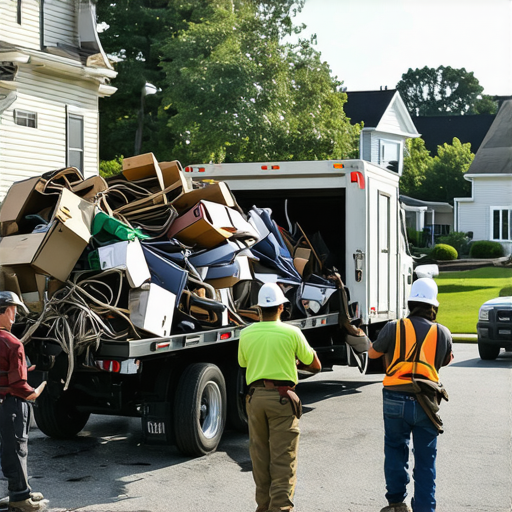

The structural anatomy of an Aurora hoarding site
I once cleared a house where the junk wasn’t just stuff. It was a structural hazard. We found the floor joists were bowing under the weight of 40 years of newspapers that had absorbed ten years of basement humidity. The ink had leached. The paper had become a solid, five-ton block of cellulose. We had to use chainsaws and hydraulic jacks to stabilize the floor before we could even begin the removal process. This is the reality of Junk Removal Aurora services. It is not about tidying up. It is about managing high-density mass and biohazardous decay. The logistics of a hoarder clean out aurora project involve calculating load-bearing limits and the exact physics of cubing out a 15-yard truck without snapping the lift cables. Every cubic yard of compressed debris represents a different set of risks, ranging from chemical leaching to structural collapse. We do not just lift. We inspect. Every. Single. Item.
Atmospheric filtration and the P100 respiratory standard
Respiratory protection in a hoarder clean out aurora requires a minimum of a P100 rated respirator to filter out 99.97% of airborne particles including mold spores, dried rodent droppings, and fine particulate matter. Standard dust masks are insufficient because they do not provide an airtight seal against microscopic bio-aerosols. The air inside a closed hoarding environment in Aurora is often a stagnant soup of allergens and pathogens. When you disturb a pile of clothing or paper that has sat for twenty years, you create a dust cloud of dead skin cells, insect frass, and fungal colonies. The P100 filter is necessary because it is oil-proof and handles the greasy particulates found in kitchen hoarding situations. Air quality degrades the moment the first layer is moved. I have seen rookies try to work with simple surgical masks only to end up with respiratory infections two days later. The biological load is too high. You need a silicone facepiece that conforms to your facial structure. If the seal fails, the gear is useless. We monitor the air for ammonia levels too. Old pet waste releases gas that can burn the lining of your lungs. Logistics managers must prioritize ventilation before any heavy lifting begins. Opening windows is a start, but industrial air scrubbers are often the only way to maintain a safe working environment. The physics of air exchange dictates that you need to move thousands of cubic feet per minute to keep the PPM count low.
“Waste is merely a resource in the wrong place; professional removal is the science of putting it back where it belongs.” – Disposal Industry Maxim
Hand protection and the ANSI puncture resistance scale
Puncture-resistant gloves rated at ANSI Level 4 or higher are mandatory for garage clean outs and furniture removal where jagged metal, broken glass, or hidden needles may be present. These gloves utilize specialized synthetic fibers or stainless steel mesh to prevent sharp objects from penetrating the skin barrier. During a typical garage clean out aurora project, the floor is rarely visible. You are reaching into blind spots. A pile of old tools might hide a rusted saw blade. A box of kitchenware might contain shattered ceramic. The mechanical risk is constant. We look for gloves that offer high tactile sensitivity but maintain a reinforced palm. Leather is fine for abrasion, but it fails against a vertical needle or a shard of glass. We focus on the thumb crotch and the fingertips, the areas most likely to be compromised during heavy appliance removal. If you are moving a refrigerator, the bottom edges are often razor-sharp stamped steel. Without the right gear, you are looking at stitches and a tetanus shot. We also consider the chemical resistance of the glove. If we encounter old cleaners or leaked battery acid, the material must not melt. It is about layers of protection. In our industry, a hand injury is a logistical failure that shuts down the job site. We keep a kit of different gloves for different zones. The heavy hitters for the bulk debris and the sensitive nitriles for the sorting phase. Safety is a mathematical certainty when the right equipment is used.
Full body barriers and the containment of cross-contamination
Disposable Tyvek suits act as a primary barrier against bed bugs, fleas, and bio-fluids that are frequently encountered during intensive hoarder clean out aurora operations. These suits prevent the transfer of pests from the job site to the technician’s vehicle or home, ensuring the infestation remains localized. You cannot see a flea until it is on you. In high-density hoarding, the carpet is often a breeding ground for parasites. A suit provides a slick surface that insects cannot easily grip. It also protects your skin from the caustic dust of decaying building materials. When we handle appliance removal aurora tasks, old grease and stagnant water often spill. The suit keeps that off your clothes. We tape the wrists and ankles. This creates a closed loop system. The logistics of disposal extend to the clothes we wear. We do not want to bring the mess back to the shop. After a shift, the suits are removed using a specific peel-down method to ensure the exterior never touches the interior. It is a sterile technique adapted for the waste management world. We have seen what happens when people ignore this. A simple clean out turns into a home infestation for the crew. We prevent that. The suit also serves as a psychological barrier. It signals to the team that we are entering a hazardous zone. It keeps the focus on the protocol. Safety is not a suggestion. It is a requirement for every hour on the clock.
“Proper management of hazardous household waste protects Aurora’s groundwater and prevents catastrophic fires in collection vehicles.” – Regional Safety Guidelines
The logistics of dumpster rentals aurora and site management
Effective waste management in Aurora hinges on selecting the correct dumpster size and understanding local weight limits to avoid overweight fees and hydraulic failures. A 20-yard dumpster is the industry standard for hoarding, but high-density materials like paper or wet wood require careful weight distribution. When you order dumpster rentals aurora, you are renting volume, but you are billed on weight. The Orchard Hills Landfill and local transfer stations on Route 25 have strict scales. If you fill a dumpster with soaked drywall and old books, you might exceed the 10-ton limit of the roll-off truck. This is where the Tetris of the load becomes vital. We place heavy items at the bottom and the front to keep the weight over the truck axles. Air space is the enemy. Every pocket of empty air is money wasted. We break down furniture removal aurora items into their base components. A sofa is a collection of wood, metal springs, and foam. By flattening the frames, we increase the density of the load. This reduces the number of trips needed. Fewer trips mean a lower carbon footprint and lower costs for the client. We also have to watch for prohibited items. Local ordinances are clear about what can hit the landfill. If you hide a lead-acid battery in the middle of a junk pile, you are creating a fire risk for the transfer station. The compaction process can rupture the casing. That leads to an acid fire that is nearly impossible to extinguish in a trash pit. We screen every load. Professionalism is found in the details of the manifest. We know every local ordinance in Aurora. We follow them to the letter.
Aurora Waste Density Analysis
| Debris Type | Weight per Cubic Yard (Lbs) | Disposal Difficulty | Aurora Regulation |
|---|---|---|---|
| General Junk | 250 – 300 | Low | Standard Landfill |
| Hoarded Paper (Compressed) | 800 – 1000 | High | Recycling Preferred |
| Appliance (Average) | 150 – 250 | Medium | EPA-608 Required |
| Construction Debris | 400 – 600 | Medium | C&D Recycling |
| Yard Waste | 300 – 500 | Low | Compost Only |
Items Your Hauler Cannot Legally Touch
- Lithium-ion batteries and large lead-acid units
- Propane tanks and pressurized cylinders
- Liquid paint and chemical solvents
- Asbestos-containing materials (pipe insulation)
- Medical waste and uncapped sharps
- Fluorescent light ballasts containing PCBs
- Tires (unless specifically permitted by the yard)
Technical hurdles in appliance and furniture removal
The physics of moving a refrigerator down a narrow Aurora basement staircase is a study in mechanical advantage and structural load. You are dealing with a center of gravity that shifts as you tilt the unit. If the stairs are made of old pine, they might have a high deflection rate. We calculate the load. We use shoulder dollies to distribute the weight across the large muscle groups of the legs. This prevents spinal compression. For appliance removal aurora, we also have to consider the refrigerant. If a unit was made before a certain date, it likely contains CFCs or HCFCs. Under the Clean Air Act, it is illegal to vent these gases. We ensure the compressors are intact before transport. If they are leaked, they must be handled as hazardous waste. Furniture removal is different. Modern furniture is often made of particle board. It has no structural integrity when it gets damp. It can crumble in your hands. We use wrap to keep pieces together during the haul. This prevents the debris trail that plagues amateur haulers. Your junk is your liability until it hits the scale. We take that liability seriously. The goal is a clean site and a safe transport. We do not take shortcuts. The floor snapped once in my career. It will not happen again because we know the math of the haul. Aurora homes deserve a methodical approach to clean outs. We provide the gear, the grit, and the logistics to get the job done right. The heavy cost of keeping everything is eventually paid in the effort of the removal. We are the ones who collect. We are the ones who clear the path forward.