![Best Appliance Recycling Centers Near Aurora IL [2026]](https://aurorailjunkremoval.com/wp-content/uploads/2026/03/Best-Appliance-Recycling-Centers-Near-Aurora-IL-2026.jpeg)
The hazardous surprise in the Fox Valley
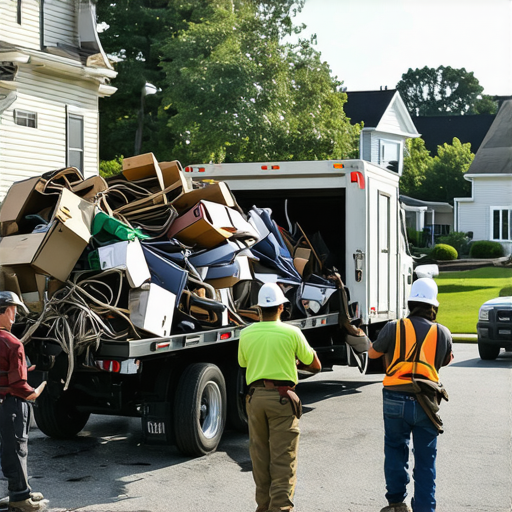
I watched a rookie almost lose his eyebrows because a customer hid a half-full propane tank inside a pile of ‘harmless’ yard waste. We don’t just lift. We inspect. Every. Single. Item. That moment in Aurora taught the crew that waste management is never about simple movement. It is about the chemistry of disposal. This industry is built on the physics of weight and the strict laws of the Resource Conservation and Recovery Act. When you call for Junk Removal Aurora, you are not just hiring a truck. You are hiring a logistics shield. The rookie survived. The truck did not. The tank vented when a heavy sofa landed on it. The resulting fireball scorched the tailgate. It was a failure of inspection and a failure of honesty. In the Fox River Valley, we treat every load like a puzzle. We look for the traps. We look for the toxins. We look for the weight that breaks axles. Modern waste is complex. It contains lithium, mercury, and pressurized gases. Your garage is a chemical warehouse. Treat it that way.
The graveyard for Aurora appliances
Appliance removal in Aurora, IL requires specialized handling at the Kane County Recycling Center or Groot Industries to prevent refrigerant leaks and heavy metal contamination. These white goods contain chlorofluorocarbons and polychlorinated biphenyls that demand EPA certified extraction before the steel frame reaches the scrap yard for material recovery. Most homeowners view a refrigerator as a box of metal. I see a pressurized system of R-134a or R-600a. If you vent that into the atmosphere, you are committing a federal offense. The 1990 Clean Air Act was not a suggestion. It was a mandate. Professional haulers in the 60505 zip code must manifest these units. We check the compressors. We verify the capacitors. If the unit dates back to the early 1970s, it likely contains PCB-laden oils. This is not casual labor. This is environmental science. The local transfer stations on Route 31 have strict gates. They will turn you away if they see a unit that has not been tagged as decommissioned. We manage the tags. We manage the risk.
“Waste is merely a resource in the wrong place; professional removal is the science of putting it back where it belongs.” – Disposal Industry Maxim
The physics of the fifteen yard dumpster
Dumpster Rentals Aurora hinges on volumetric density and tonnage limits set by waste hauling regulations in DuPage County and Kane County. A fifteen-yard container is not an infinite void but a logistical tool designed for heavy debris like concrete, roofing shingles, or garage clean outs where weight distribution determines the safety of the haul. The truck groans. The hydraulics scream. If you load a dumpster with wet drywall, you will exceed the six-ton limit of a standard roll-off truck. The tires will flatten. The street will crack. We calculate the displacement of every item. A sofa occupies three cubic yards but weighs 150 pounds. A pile of dirt occupies one cubic yard but weighs two thousand pounds. This is the math of the haul. People try to save money by overfilling. They build high walls of plywood to extend the capacity. This is a highway hazard. When that truck hits sixty miles per hour on I-88, wind resistance turns loose debris into projectiles. We pull the tarp tight. We respect the weight.
| Cost Basis | Per Item | Tonnage and Rental | Cubic Yardage |
| Labor | DIY Curbside | DIY Load | Professional Crew |
| Speed | Weekly | 7 to 14 Days | Immediate |
| Compliance | Limited | High | Certified |
The heavy metal rejection at the gate
Junk Removal professionals must identify non-conforming waste such as lead-acid batteries, mercury switches, and fluorescent tubes before they reach Aurora transfer stations. These items are categorically excluded from municipal solid waste streams because they pose a leachate risk to the local water table and can ignite landfill fires that burn for months. The gate guard is your judge. He has a radiation detector and a keen eye. If he sees a car battery under a pile of old carpet, your whole load is rejected. You pay the dry run fee. You pay the fines. We avoid this through rigorous staging. We sort at the curb. We separate the ferrous metals from the non-ferrous. We isolate the e-waste. This is how we maintain a diversion rate above sixty percent. Landfills are filling up. The tipping fees in the Midwest are rising. If we do not sort, we do not survive. Every pound of aluminum diverted is money saved for the client. Every gallon of used oil intercepted is a lawsuit avoided.
The structural load of an Aurora hoarder house
A Hoarder Clean Out aurora involves more than debris removal because it addresses structural integrity and biohazard mitigation within residential properties. These sites often suffer from floor joist compression due to the compaction of saturated organic matter and paper waste that has absorbed atmospheric moisture over several decades. The floor snapped. That was the sound of a house dying under its own weight. We see this in the older neighborhoods of West Aurora. People keep newspapers from the 1980s. Paper is a sponge. In a basement with a leaky pipe, that paper becomes a solid block of cellulose that weighs tons. We have to shore up the beams before we can even begin the extraction. We wear respirators. We wear Tyvek suits. It is not just junk. It is a biological soup of mold spores and rodent droppings. We follow the guidelines of the Solid Waste Association of North America. We don’t just clear the room. We sanitize the footprint.
“The management of solid waste is a fundamental public health service that requires technical precision and environmental stewardship.” – EPA Waste Management Guidelines
The toxic truth about refrigerator components
Appliance removal services must focus on the compressor oil and polyurethane foam insulation which are often impregnated with blowing agents that contribute to global warming. Modern recycling centers near Aurora utilize sealed shredding environments to capture these fugitive emissions while recovering high-purity plastics and copper windings for the circular economy. The air smells like ozone. The machines roar. When we drop a fridge at the processor, it enters a giant machine that grinds it into dust in seconds. Magnets pull the steel. Eddy currents push the aluminum. Vacuum systems suck up the gases. This is high-tech salvage. If you leave a fridge on the curb, the scavengers will cut the lines to get the copper. They vent the gas. They leave the oil to soak into the soil. This is environmental vandalism. We provide the paper trail. We provide the peace of mind. Your old fridge becomes a new car part within ninety days. That is the efficiency of a closed-loop system.
The rapid decay of modern furniture
Furniture Removal in the current era focuses on the low-grade particle board and synthetic fabrics that dominate the disposable furniture market and offer zero BTU value for waste-to-energy plants. Unlike solid oak pieces from the 1950s, modern MDF furniture is held together by formaldehyde resins that off-gas and crumble when exposed to the humidity of an Aurora garage clean out. It falls apart in your hands. You try to lift a dresser and the bottom drops out. It is sawdust and glue. We can’t even donate most of it because the structural integrity is gone the moment it is moved. We look for the real wood. We look for the metal frames. Everything else is volume. It takes up space in the truck but provides no recovery value. This is the hidden cost of cheap goods. You pay for it twice. Once at the store and once at the dump. We try to maximize the load. We stack. We strap. We ensure that every cubic inch of the truck is utilized to lower the carbon footprint of the trip.
The forbidden items on the manifests
Junk Removal Aurora crews are legally prohibited from transporting hazardous materials including ammunition, medical waste, and volatile fuels. These items require a Hazmat manifest and specialized containment vessels that go beyond the capabilities of a standard dumpster rental or junk truck. We are not a mobile bomb squad. If we find a bucket of old gasoline, we stop. If we find a box of needles, we stop. These are life-safety issues. The laws are clear. Federal DOT regulations govern what can move on public roads. We guide you to the right disposal sites. We don’t just say no. We provide the contact for the Kane County Household Hazardous Waste facility. We help you stay legal.
- Liquid paint and solvent based thinners
- Automotive fluids including anti-freeze and oil
- Pressurized cylinders such as propane or oxygen
- Medical sharps and biohazardous materials
- Industrial chemicals and pesticides
- Radioactive materials including old smoke detectors
- Explosives and small arms ammunition
The cold math of regional tipping fees
The cost of junk removal in Aurora is driven by the tipping fee at the transfer station, which is calculated based on tonnage and commodity type. When we quote a garage clean out, we are estimating the labor hours against the projected weight of the debris to ensure the operational margin covers the rising fuel costs and insurance premiums of the hauling industry. The scale does not lie. You drive onto the plate. You dump. You drive onto the plate again. The difference is what you pay. In Aurora, those fees are climbing. The landfills are moving further west. This means more diesel. This means more time. We combat this through extreme packing. We break down the boxes. We nest the chairs. We remove the legs from the tables. We treat the truck like a game of Tetris. Empty air is the enemy. Every gap in the load is money wasted. We fill the gaps with smaller items. We build a solid wall of waste. That is how we keep the prices stable while the world gets more expensive. We are the masters of the load. We are the guardians of the gate. Your junk is our mission.
This post really highlights how complex waste management has become, especially in a region like Aurora where environmental regulations are strict. I appreciate the emphasis on inspecting every item — I’ve seen too many people overlook the dangers lurking in seemingly harmless household items. The bit about refrigerants and PCB oils resonated with me because I didn’t realize so many appliances still contain hazardous materials, even older models from the ’70s. It makes me wonder—what are the best ways for homeowners to safely identify and prepare their appliances for pickup without risking penalties or environmental harm? It seems that proper staging and understanding what can and can’t go to the transfer stations are crucial. Also, I’d love to hear from others: Have you encountered difficulties with disposing of hazardous items, and how did you handle the logistics? This entire process underscores the importance of professional waste removal. It’s not just hauling—it’s science and safety playing together.