The weight of a lifetime
A hoarder clean out in Aurora begins with an assessment of structural integrity and logistical flow. Successful remediation requires identifying the density of the load, the nature of the materials, and the physical safety of the ingress and egress points before a single item is moved to a truck.
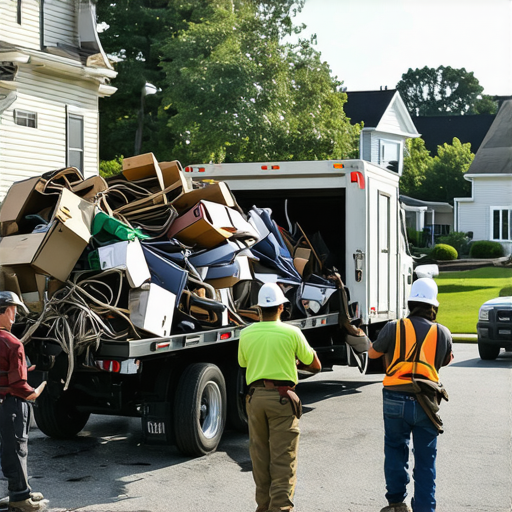
I once cleared a house where the junk wasn’t just stuff. It was a structural hazard. We found the floor joists were bowing under the weight of 40 years of newspapers that had absorbed ten years of basement humidity. The stack of paper had essentially become a solid block of cellulose, exerting thousands of pounds of static pressure on a residential frame never designed for such loads. We had to shore up the basement with jacks before we could even start the removal process. This is the reality of waste management that the average person never sees. It is not just about throwing things away. It is about the physics of weight and the chemistry of decay. When you are standing in a home in Aurora facing a decades-old collection, you are looking at a logistical puzzle that involves tipping fees, cubic-yard density, and potential biohazards. The smell of diesel from our idling 15-yard truck mixes with the scent of damp paper and old floor wax. We do not just see a mess. We see a volume that must be cubed out perfectly to avoid wasted air space. Wasted space is wasted money, and in this industry, efficiency is the only way to survive the high cost of disposal at the local transfer station.
“Waste is merely a resource in the wrong place; professional removal is the science of putting it back where it belongs.” – Disposal Industry Maxim
The high cost of blocked exits
The first step in any respectful clean out involves restoring the primary pathways of the home to ensure the safety of all occupants and workers. This means clearing doors and hallways to a minimum width of 36 inches to allow for emergency egress and the passage of heavy equipment.
You cannot start a clean out in the middle of a room. You must start at the exits. This is a non-negotiable rule dictated by fire safety and logistical common sense. In many hoarding situations in Aurora, the secondary exits are completely blocked. This turns a home into a potential tomb in the event of a fire. We begin by establishing a clear path from the furthest point of the house to the front door. This involves the removal of what we call loose-fill debris. These are the items that have not yet compressed into a solid mass. We calculate the angle of repose for these piles. If a pile of junk is five feet high and has a steep angle, it is unstable. Moving one piece could cause a landslide of debris. We use specialized grabbers and high-visibility gloves to dismantle these piles from the top down. This is where we often find the first surprises, such as hidden lithium-ion batteries or leaking cleaning chemicals. These items are immediately separated into a hazmat bin. The goal here is not just to clear space but to create a safe working environment. A single tripped worker in a cluttered environment can lead to a catastrophic injury. We treat the floor like a high-traffic highway, ensuring it is clear of trip hazards like loose wires or slick magazines.
The math of cubic yard density
Effective junk removal Aurora relies on understanding how much weight you are putting into a dumpster versus how much volume it occupies. Different materials have vastly different densities, and your disposal costs will fluctuate based on whether you are paying for space or for tonnage at the scale.
When we pull up with a dumpster rental in Aurora, we are thinking about the pack. Imagine a standard sofa. It takes up about 1.5 to 2 cubic yards of space but only weighs maybe 150 pounds. That is a low-density item. Now imagine a stack of magazines that takes up the same space. That stack could weigh over 2,000 pounds. Most rental dumpsters have a weight limit. If you exceed that limit, you are hit with heavy overage fees at the landfill. This is why we break down furniture. We remove the cushions, unscrew the legs, and sometimes saw the frame in half to ensure it fits into the gaps left by larger, more rigid items. We call this the Tetris method. We want the truck to be cubed out, meaning every square inch of the 15-yard or 20-yard container is filled with material, not air. Air is the most expensive thing you can haul to a landfill. We also have to consider the hydraulic limits of the truck. A winch can only pull so much weight onto the chassis before the seals blow or the front wheels of the truck lift off the ground. It is a delicate balance of physics and logistics that most people ignore when they just start tossing things into a bin.
| Material Type | Typical Density (lbs/cu yd) | Disposal Priority | Environmental Impact |
|---|---|---|---|
| Loose Paper | 250 – 300 | High (Fire Hazard) | High Recovery |
| Upholstered Furniture | 80 – 100 | Medium (Volume) | Low Recovery |
| Mixed Garage Debris | 400 – 600 | Low (Weight) | Variable |
| Kitchen Appliances | 300 – 500 | High (Metal Value) | 100% Recyclable |
The burden of the unseen hazardous waste
Identifying and isolating hazardous materials is the most critical technical skill during a hoarder clean out to prevent environmental contamination and legal liability. Items like old paint, pesticides, and electronics require specialized handling and cannot be tossed into a standard dumpster rental in Aurora.
A homeowner in Aurora might think they are doing a simple garage clean out, but the moment they toss a half-full can of oil-based paint into a dumpster, they have created a potential environmental disaster. If that paint leaks during transport, it can coat the road or the interior of the truck, leading to thousands of dollars in cleanup costs. We look for the items the haulers cannot legally touch. This includes things like pressurized tanks, which can explode under the pressure of a trash compactor. We also watch for old CRT televisions. These contain pounds of lead and phosphorus. If a rookie throws one of those into a pile, the glass shatters, and suddenly you have a lead-contamination site on your driveway. We educate our clients on the Resource Conservation and Recovery Act standards. Your junk is your liability until it is officially processed at a licensed facility. If an illegal hauler dumps your items in a ditch in rural Illinois, and the authorities find a piece of mail with your name on it, you are the one facing the fine. This is why we insist on using reputable transfer stations and obtaining a manifest for every load. We do not take shortcuts because the legal and environmental costs are too high.
- Wet oil-based paints and thinners
- Propane tanks and pressurized cylinders
- Lead-acid car batteries and lithium cells
- Biohazardous materials or medical waste
- Tires and bulk rubber products
- Industrial chemicals and pesticides
“Environmental stewardship in waste management is not an option; it is a legal and ethical requirement for the safety of our communities.” – Solid Waste Association of North America
The logistics of the Aurora transfer station
Navigating local disposal regulations in Aurora requires knowledge of tipping fees and material bans that vary by county. Understanding where to take specific waste streams, such as e-waste or white goods, ensures that the clean out stays on budget and follows municipal codes.
In the Aurora area, you have to be smart about where you take the load. Some transfer stations charge by the ton with a one-ton minimum. If you go there with a half-full pickup truck, you are paying for weight you didn’t carry. Other sites charge by the cubic yard. We choose our disposal site based on the load composition. If we have a load full of heavy construction debris from a basement clean out, we go to a scale-based site. If we have a load of light, bulky furniture, we go to a volume-based site. This is how we keep costs down for the client. We also have to time our runs. Showing up at a transfer station at 4:30 PM is a recipe for disaster. The lines are long, the operators are tired, and you might get turned away, leaving you with a loaded truck overnight. This adds to the labor cost and the risk of theft or vandalism. We also consider the weather. A rainy day in Aurora adds hundreds of pounds of water weight to a dumpster full of carpets or cardboard. If you are paying by the ton, that rain just cost you an extra hundred dollars. We cover our loads with heavy-duty tarps to keep the weight consistent and the debris contained. It is these small logistical details that separate the professionals from the guys with a trailer and a social media ad.
Why your local hauler fears the sofa
Modern furniture removal is increasingly difficult due to the use of composite materials and chemical fire retardants that make recycling nearly impossible. Understanding the construction of these items helps in deciding whether to donate, dismantle, or discard them based on their material recovery potential.
The grumpy shopkeeper in me hates modern disposable furniture. You look at a bookshelf from a big-box store and realize it is just sawdust and glue held together by a thin veneer. If it gets even slightly damp during a hoarder clean out, it loses all structural integrity. You cannot donate it because it will fall apart the moment it is moved. This stuff is a nightmare for the waste stream. It cannot be easily recycled like real wood, and it is full of formaldehydes. When we handle appliance removal, at least we know the metal has value. A washing machine is a dense block of steel and copper that we can take to a scrap yard to offset the cost of the haul. But a modern sectional sofa? It is a giant block of foam and polyester that takes up massive space in a landfill and stays there for centuries. Here is a contrarian point for you. While most people think recycling is always better, the carbon footprint of hauling low-grade plastics or contaminated textiles 500 miles to a specialized facility often exceeds the impact of local, high-efficiency waste-to-energy incineration. Sometimes, the most responsible thing to do with contaminated hoarding debris is to get it to a modern landfill that captures methane for power. We evaluate every item for its true environmental cost, not just the feel-good factor of a recycling symbol.
The hidden truth about recycling myths
Not all materials found in a garage clean out are recyclable, despite what the labels might suggest. Contamination from oils, mold, or pests can render otherwise valuable materials like cardboard or plastic completely useless for the recovery market.
When we do a garage clean out in Aurora, we often find stacks of cardboard that the homeowner saved for years, thinking they would recycle it one day. But if those boxes have been sitting on a concrete floor, they have wicked up moisture. If there are signs of rodent activity, that cardboard is now a biohazard. No recycling center will take it. It goes straight to the waste pile. This is the hard truth about waste management. It is not about what it could have been. It is about what it is right now. We see the same thing with plastics. If a plastic container held motor oil or pesticides, it is contaminated forever. You cannot put that in your blue bin. We educate our clients on the reality of the market. The price of recycled paper fluctuates. Sometimes it is worth hauling, and sometimes you have to pay someone to take it. We track these market shifts to ensure our disposal strategy is as cost-effective as possible. We are not just movers. We are material auditors. We look at a pile of debris and see a series of financial and environmental decisions that need to be made with precision and speed. The floor snapped under the weight of a heavy desk we were moving, reminding us that in these environments, the structure is always a factor. Every step is calculated. Every load is optimized. This is the science of the clean out.