A local business owner tried to save $500 by hiring a guy with a pickup truck from a social media ad. Two weeks later, the police called him because his company’s confidential files and old desks were found in a ditch near the Cherry Creek spillway. Your junk is your liability until it hits the scale at the transfer station. In the high stakes world of industrial waste, a cheap quote is often a down payment on a legal nightmare. I have spent twenty five years watching trucks pull onto the scales at the Denver Regional Landfill. I know the sound of a hydraulic pump struggling under an honest load versus the airy rattle of a poorly packed 15 yard container. In Aurora, the logistics of waste management are shifting. By 2026, the density of our urban corridors and the tightening of environmental mandates mean you can no longer just throw things away. You have to engineer their exit.
The Aurora logistics engine
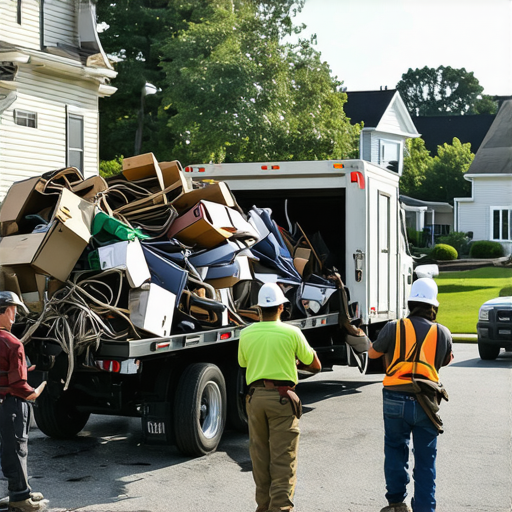
Junk Removal Aurora services require a deep understanding of local tipping fees, municipal diversion mandates, and the geographical spread between residential zones and the Dad Clark Transfer Station. Effective disposal relies on volumetric efficiency and the ability to navigate the E 470 corridor without compromising load security or schedule. The physics of a successful haul start with the truck. We operate on a principle of cubic yard density. When a crew arrives for Junk Removal Aurora, they are not just lifting objects. They are solving a three dimensional puzzle. If you leave air gaps in the truck, you are paying to transport Colorado oxygen. That is a waste of fuel and money. A professional team cubes out the box, ensuring every square inch is utilized. This reduces the number of trips to the landfill on Tower Road, which directly lowers the carbon footprint of the project.
The heavy cost of keeping everything
Hoarder Clean Out aurora projects involve more than simple trash removal because they require structural assessment and hazardous material identification. These high volume jobs demand a tactical approach to safety, focusing on load bearing floors and the potential for biological or chemical contaminants trapped under years of accumulation. I once cleared a house where the junk was a structural hazard. We found the floor joists were bowing under the weight of 40 years of newspapers that had absorbed ten years of basement humidity. It was not just a mess. It was a physics problem. The paper had turned into a solid, damp mass with the density of concrete. We had to use chainsaws to section the material. This is why Hoarder Clean Out aurora specialists charge by weight and complexity rather than just a flat fee. You are paying for the risk mitigation.
“Waste is merely a resource in the wrong place; professional removal is the science of putting it back where it belongs.” – Disposal Industry Maxim
Industrial scale appliance removal
Appliance removal in Aurora necessitates strict adherence to refrigerant recovery laws and metal recycling protocols to avoid heavy EPA fines. Professionals must extract Freon and other coolants before the steel chassis is processed for scrap, ensuring that no hazardous chemicals reach the atmosphere or local soil. When we handle a commercial refrigerator or an old HVAC unit, we are looking at a pressurized system. You cannot just toss these into a dumpster. The Clean Air Act is very specific about this. If a technician cuts a line and lets refrigerant vent, they are looking at thousands of dollars in fines. We use specialized recovery vacuums to strip the gas. Then, the heavy steel is sent to a local metal recycler. This is the difference between a professional and a curbside cowboy. One protects the environment and your liability. The other takes shortcuts that could haunt you.
The geometry of furniture disposal
Furniture Removal involves the disassembly of oversized items to maximize truck space and facilitate easier transport through narrow residential doorways. By breaking down particle board and separating metal frames from upholstery, haulers can increase load density and improve the efficiency of the entire disposal process. Most modern furniture is what I call junk in waiting. It is made of low grade MDF and plastic veneers. It does not hold up to moving, and it certainly does not hold up to the elements. When we perform Furniture Removal, we often strip the fabric and break the frames. This is about volume. A sofa takes up six cubic yards of air. A broken down sofa takes up two. We prioritize the density of the load because the landfill charges us by the ton, but our trucks are limited by the yard. It is a constant battle of math.
The brutal math of the tipping fee
Dumpster Rentals Aurora provide a stationary solution for long term projects where the user manages the loading process themselves. This option is ideal for construction debris or slow garage clean outs, but it requires the user to understand weight limits to avoid significant overage charges at the landfill. Selecting between a 10 yard, 20 yard, or 40 yard roll off is about more than just the size of the box. It is about the weight of the material. If you fill a 40 yard dumpster with concrete, the truck will not be able to lift it. The hydraulics will fail. You have to understand the density. | Material Type | Estimated Weight per Cubic Yard | Disposal Priority | | :— | :— | :— | | Household Junk | 250 lbs | Landfill | | Construction Debris | 400 lbs | Sorting Facility | | Concrete / Brick | 2,000 lbs | Aggregate Recycler | | Yard Waste | 150 lbs | Composting |
The ghost in the garage
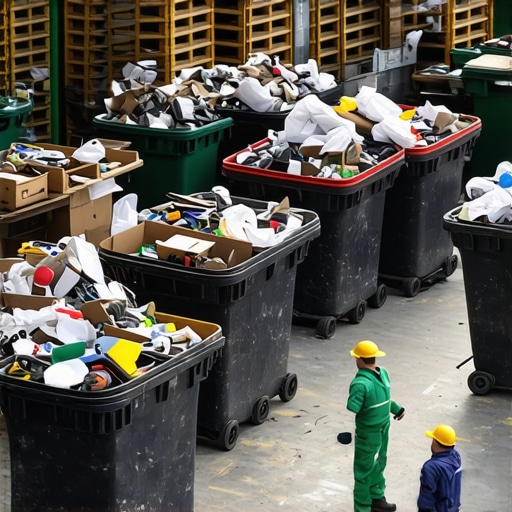
Garage Clean outs are the most common entry point for residential junk removal because they serve as the primary collection point for forgotten items and hazardous household waste. Effective garage clearing requires a systematic sort of materials to separate recyclables, donations, and true waste before the loading begins. People think the garage is just a storage space. In reality, it is a graveyard for things people are too tired to deal with. We find old paint cans, car batteries, and pesticides. These items are the primary reason why we inspect every pile. A single gallon of old oil can contaminate an entire truckload of otherwise recyclable cardboard. We have to be meticulous. [image_placeholder_1]
Why your cheap hauler is a legal time bomb
Junk Removal requires a verified chain of custody to ensure that the client is not held responsible for illegal dumping activities. Professional services provide disposal receipts and weight tickets to prove that the waste was handled according to local and federal environmental regulations. If you hire a guy who does not give you a receipt from the transfer station, you are taking a massive risk. The authorities in Aurora are cracking down on illegal dumping. If your name is found on a piece of mail in a pile of trash in a field, the fine comes to you. Not the guy you paid fifty bucks to take it away.
“Proper waste management is the final step in the lifecycle of any product, and its failure is a failure of the entire supply chain.” – SWANA Technical Manual
Items your hauler cannot legally touch
There are certain things that the Resource Conservation and Recovery Act prevents us from hauling in a standard junk truck. These require specialized hazmat handling.
- Lithium Ion batteries from e bikes or power tools
- Wet oil based paint and solvents
- Pressurized propane or oxygen tanks
- Asbestos containing ceiling tiles or insulation
- Industrial chemicals and pesticides
- Biohazardous waste or medical needles
The high energy cost of recycling
While most people think recycling is always better, the carbon footprint of hauling low grade plastics 500 miles often exceeds the impact of local, high efficiency waste to energy incineration. This is a hard truth many do not want to hear. In Aurora, we try to keep things local. If the material cannot be recycled within a 100 mile radius, sometimes the most environmental choice is a lined, managed landfill where the methane is captured for power. We look at the total life cycle of the waste. We do not just feel good about recycling. We look at the data.
The logistics of the final haul
When the truck is finally packed, we check the straps. We cover the load with a heavy duty mesh tarp to prevent debris from hitting cars on I 225. The drive to the scale is the final stage of a professional operation. We pull onto the scale. The weight is recorded. We dump the load in the designated cell. We pull back onto the scale. The difference is our net weight. That weight ticket is your insurance policy. It proves the job was done right. It proves you are no longer liable for that material. It is the end of the line for your junk and the beginning of a cleaner space.