The shadow of the legal liability
Retail refurbishment junk disposal in Aurora requires strict adherence to commercial waste manifests and volumetric load planning to ensure project timelines are met. Professional disposal involves more than lifting, it requires a logistical strategy that accounts for tipping fees at local transfer stations and the segregation of recyclable materials from general landfill debris.
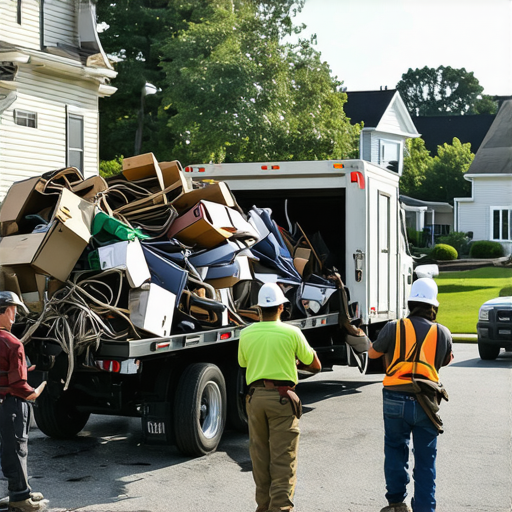
A business owner on the Fox Valley corridor once tried to save 500 dollars by hiring a guy with a pickup truck found on a social media ad. Two weeks later, the police called him because his company confidential files and old store signage were found in a ditch near the Kane County border. Your junk is your legal liability until it hits the scale and is recorded by a licensed facility. In the professional world, we call this the chain of custody. When you are gutting a retail space in Aurora, you are not just throwing away old carpet and display racks. You are managing a stream of regulated materials that require specific disposal routes. If those documents or hazardous ballasts end up in a forest preserve, the fine will cost ten times what you saved on the cheap hauler. We operate on the principle of total accountability. Every cubic yard must be accounted for on a manifest. This is not just about clearing space. It is about protecting the corporate entity from environmental litigation and public relations disasters. The smell of diesel and hydraulic fluid is the scent of a job done with precision. We do not just toss items. We cube out the truck to ensure there is no wasted air. Wasted air is wasted money.
The mathematics of the 15 yard container
Determining the correct dumpster size for an Aurora retail strip clean out depends on the density of the fixtures and the structural integrity of the debris. Most retail refurbishments generate high volume, low density waste such as insulation and drywall, which requires larger 30 yard containers to avoid multiple haul charges.
When we pull up to a site, the first thing I look at is the loading dock clearance. In many older Aurora retail blocks, the alleys are narrow. You cannot just drop a 40 yard roll off and walk away. You have to calculate the swing radius of the truck outriggers. We look at the physics of the load. If you are pulling up old porcelain tile, that is heavy. A 20 yard dumpster filled with tile will exceed the legal weight limit for a tandem axle truck. You will be sitting there at the scale at the Aurora Transfer Station on East New York Street, and they will turn you around. That is a 400 dollar mistake. We calculate the tare weight against the gross vehicle weight rating. It is a game of Tetris played with thousands of pounds of steel and wood. If the load is not balanced, the hydraulic lift will struggle. It puts unnecessary wear on the rails. We avoid wasted air space. If you throw a whole desk in, you are paying to haul the air inside the drawers. We smash. We break down. We flat pack the debris into the belly of the beast. This is the only way to manage the logistics of a major retail overhaul without bleeding money through tipping fees.
“Waste is merely a resource in the wrong place; professional removal is the science of putting it back where it belongs.” – Disposal Industry Maxim
The heavy cost of keeping everything
Commercial junk removal in Aurora involves the systematic extraction of outdated inventory and structural components to prepare for new tenants. Efficient disposal strategies prioritize the removal of high volume items first to create staging areas for specialized recycling of electronics and metal fixtures.
Old retail spaces are magnets for abandoned equipment. I have seen basement storage in downtown Aurora that has not been touched since the 1970s. The floor joists bow under the weight of old catalogs and discarded mannequins. There is a specific physics to a hoarder clean out aurora. You have to start at the egress points. If you do not clear the path to the freight elevator first, you create a bottleneck that kills the crew’s momentum. We look at the BTU potential of recovered wood waste. Sometimes, if the wood is clean enough, it goes to a different stream than the general MSW. Municipal Solid Waste is a catch all, but a professional knows better. We segregate the ferrous metals from the non ferrous. Aluminum display frames are worth more than the steel brackets holding them up. If you mix them, you lose the rebate. It is about the economics of the load. My crew knows that if I see a copper pipe in the general debris bin, there will be hell to pay. That is money being thrown into a hole in the ground.
| Container Size | Weight Limit (Tons) | Best Use Case |
|---|---|---|
| 10 Yard | 2-3 Tons | Concrete, Brick, Dirt, Heavy Tile |
| 20 Yard | 3-4 Tons | Basement Clean outs, Roofing Shingles |
| 30 Yard | 4-5 Tons | Retail Refurbishment, Drywall, Siding |
| 40 Yard | 5-6 Tons | Commercial Demolition, Large Scale Junk Removal |
The ghost in the garage
Garage clean outs for Aurora commercial properties often reveal hazardous materials that cannot be disposed of through standard dumpster rentals. Proper identification of chemicals, old paints, and automotive fluids is required to comply with Illinois environmental protection standards and avoid significant landfill penalties.
You never know what is behind the roll up door of an old retail warehouse. We often find the ghosts of previous tenants. Half empty cans of solvent. Lead acid batteries leaking onto the concrete. This is where the Resource Conservation and Recovery Act comes into play. You cannot just throw a battery into a 20 yard bin. If that battery gets crushed by the compactor at the transfer station, it starts a fire. I have seen a whole truck go up in flames because a customer hid a propane tank inside a pile of cardboard. We inspect every layer. Our eyes are trained to spot the orange of a rust ring from a chemical drum. We do not just lift. We categorize. If it is hazardous, it needs a separate manifest. We coordinate with specialized facilities in the Fox Valley area to ensure these items are neutralized. The cost of a specialized hazardous waste haul is high, but the cost of a fire or a groundwater contamination suit is terminal for a business. We handle the heavy lifting and the heavy legalities.
“The management of solid waste is a fundamental requirement for the protection of public health and the environment in the United States.” – Environmental Protection Agency (EPA)
- Wet Paint and Solvents
- Lithium and Lead Acid Batteries
- Pressurized Gas Cylinders
- Asbestos Containing Materials
- Biohazardous Waste
- Industrial Chemicals and Degreasers
The thermal reality of waste to energy
While traditional recycling is a common goal, the carbon footprint of transporting low grade plastics often makes local waste to energy incineration a more environmentally sound choice for Aurora retail junk. High efficiency incineration converts the caloric value of debris into electricity, reducing the need for landfill space.
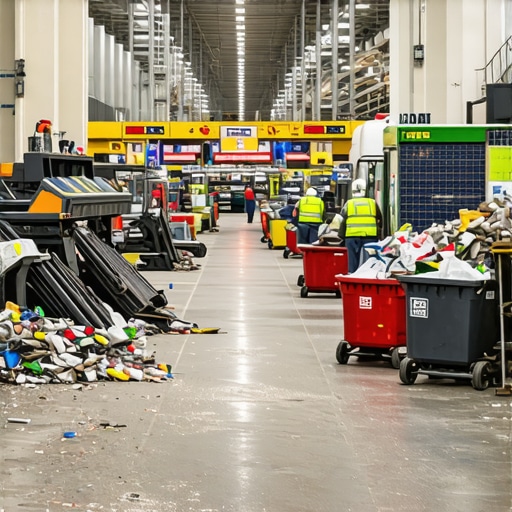
There is a common misconception that every piece of plastic needs to go into a blue bin. The reality is that the market for low grade plastics is often non existent. If you haul a load of mixed grade plastic 500 miles to a processing center, the diesel exhaust from the truck outweighs the benefit of the recycled material. In the Aurora region, we look at the proximity to high efficiency waste to energy plants. If we can turn your old retail shelving and packaging into BTU energy that lights up a neighborhood, that is a win. We calculate the diversion rate. A high diversion rate means we kept most of your junk out of the Orchard Hills Landfill. This is done through meticulous sorting. We pull the cardboard. We pull the metal. What is left is the residual. If that residual has a high caloric value, it goes to the incinerator. This is the logistical truth that the curbside cowboys do not understand. They just want to dump and run. We want to optimize the life cycle of every pound of material we touch. The floor snapped under the weight of an old safe last week. That safe was 100 percent steel. It did not go to the landfill. It went to the scrap yard. That is how we keep costs down for the client. We know the value of the debris.
The structural limits of piano removal
Appliance removal and heavy item extraction in commercial settings require specialized equipment to prevent damage to the building’s structural integrity. Pianos and heavy safes exert concentrated point loads that can exceed the shear strength of older retail flooring systems.
Taking a piano out of a second story retail space in a historic Aurora building is a lesson in physics. You are dealing with a 900 pound object that wants to go down. The stairs in those old buildings were not built for that kind of point load. We use heavy duty skids and sometimes we have to crane them out of a window. It is the same with appliance removal. An old commercial freezer is a beast. It is full of refrigerant that must be recovered by a licensed technician. If you just cut the lines, you are venting CFCs into the atmosphere. That is a federal violation. We bring in the recovery tanks. We suck the system dry. Then we dismantle the unit. The insulation in those old coolers is often treated with chemicals that make it non recyclable. We separate the shell from the guts. It is a surgical operation. People think junk removal is just about brawn. It is about brains. It is about knowing that a 1950s walk in cooler weighs 3000 pounds and will crush a standard lift gate. We bring the right gear. We bring the knowledge. We leave the site clean and the liability closed. Every job is a puzzle of weight, volume, and regulation. We solve it one cubic yard at a time. The sound of a 30 yard bin hitting the pavement is the sound of progress. We are the ones who clear the way for the new Aurora. We take the past and put it where it belongs so the future has room to breathe.
This article really highlights the importance of meticulous planning and adherence to regulations when disposing of retail junk in Aurora. I especially appreciated the details about handling hazardous materials and the emphasis on legal liabilities. It’s easy to underestimate the complexity of debris removal, particularly with the need for specialized equipment and documentation, like manifests for hazardous waste. I’ve been involved in a couple of renovations where improper disposal led to significant fines because of overlooked materials like old batteries or chemicals. The bit about waste-to-energy conversion was interesting too; it’s encouraging to see how sorting debris properly can contribute positively to sustainability efforts and reduce costs. I wonder, from your experience, what are the biggest challenges businesses face when trying to comply with these disposal standards and how do you recommend they prepare for smooth operations? It’s clear that a thorough understanding of both the physical and legal aspects makes all the difference in a successful project.