
The physics of the Aurora basement cleanout
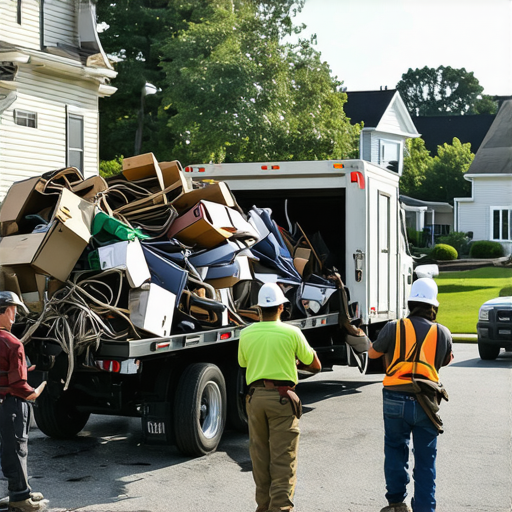
Junk Removal Aurora services in 2026 prioritize high-density loading and material diversion to minimize tipping fees at regional transfer stations. Professional crews utilize fifteen-yard dump trucks equipped with hydraulic lifts to manage heavy furniture, appliances, and structural debris while ensuring compliance with updated municipal waste ordinances and environmental safety protocols. I once cleared a house where the junk was not just stuff. It was a structural hazard. We found the floor joists were bowing under the weight of 40 years of newspapers that had absorbed ten years of basement humidity. The paper had turned into a singular, petrified mass. It weighed approximately 800 pounds per cubic yard, which is nearly triple the weight of standard mixed household debris. My crew had to use reciprocating saws just to segment the paper blocks so we could carry them out without snapping our spines. This is the reality of waste management. It is not about throwing things away. It is about the kinetic energy of the load and the logistical reality of the dump site. Every time a truck leaves a driveway in Aurora, I am calculating the fuel burn against the volume of the box. If there is air in that truck, we are losing money. I hate air. Air is the enemy of a profitable haul. We pack every corner. We break down the cheap particle board furniture that everyone buys now. That stuff is a plague. It is mostly glue and sawdust. It has zero structural integrity but takes up massive volume until you hit it with a sledgehammer. Professional Furniture Removal requires understanding the difference between a solid oak dresser and a flat-pack impostor. One is a legacy item, the other is just future landfill fodder that we have to densify to save the customer on volume-based pricing.
“Waste is merely a resource in the wrong place; professional removal is the science of putting it back where it belongs.” – Disposal Industry Maxim
The hidden gravity of household accumulation
Hoarder Clean Out aurora operations require a sophisticated understanding of load-bearing limits and the chemical decomposition of common household materials. In the high-altitude environment of Aurora, humidity fluctuations can cause organic materials in basements to undergo rapid anaerobic breakdown, leading to methane pockets and structural instability in the waste pile itself. When we enter a site, we are looking for the center of gravity. A basement is a trap. You are fighting gravity on every single trip up those stairs. If a Appliance removal job involves a 1970s chest freezer, you are looking at 300 pounds of dead weight. If that freezer is full of spoiled meat from a power outage, it becomes a biohazard. We do not just lift. We seal the unit with heavy-duty ratchet straps and plastic wrap to prevent leakage of fluids that can permanently stain a customer’s flooring. The haul is a series of calculated risks. We manage those risks by understanding the equipment. Our trucks use 12-volt hydraulic pumps to lift the bed to a 45-degree angle. If the load is not balanced, the truck can tip. It is pure physics. Every cubic yard counts toward the gross vehicle weight rating. We stay under the 26,000-pound limit to avoid needing a commercial driver’s license for every team member, but we push that limit to ensure efficiency.
| Waste Stream | Average Density (Lbs/CY) | 2026 Aurora Tipping Fee (Est) | Recovery Rate |
|---|---|---|---|
| Mixed Household Junk | 250 – 300 | $65.00 | 15% |
| Construction Debris | 800 – 1,200 | $85.00 | 45% |
| E-Waste (Hazardous) | 400 | $120.00 | 98% |
| Yard Waste | 150 – 200 | $40.00 | 90% |
The legal reality of hazardous waste in Colorado
Dumpster Rentals Aurora customers often fail to realize that the person who signs the rental agreement is legally responsible for every gram of material that enters that container. Under the Resource Conservation and Recovery Act, the generator of the waste remains liable for its ultimate disposal, meaning a cheap hauler who dumps in a creek can lead the police right back to your front door. This is why we inspect every load. I have seen rookies find lithium-ion batteries buried in a pile of old clothes. That is a fire waiting to happen in the back of my truck. In 2026, the regulations in Aurora have tightened. We are now required to track the diversion of all ferrous metals and certain plastics. If we bring a load to the Denver Arapahoe Disposal Site and they find prohibited items, the fines are astronomical. We do not take those risks. We educate the client. Most people are not trying to be criminals, they are just tired of the clutter. But my job is to protect the company and the environment from the ignorance of the consumer. We use specialized sensors to detect high levels of mercury or lead in older electronics. If it pings, it goes into a separate hazmat manifest. No exceptions.
- Gasoline and Kerosene
- Lead-Acid Batteries
- Pressurized Propane Tanks
- Wet Paint (Latex or Oil-Based)
- Medical Waste (Biohazards)
- Unidentified Chemicals
- Industrial Grade Solvents
“Proper characterization of waste is the fundamental requirement for protecting groundwater from the leaching of toxic heavy metals.” – EPA Technical Bulletin 402
Strategic density in garage clean outs
Garage Clean outs represent the ultimate challenge in volumetric efficiency because they contain the widest variety of material densities. From lightweight aluminum siding to heavy concrete blocks, the loader must build a base of heavy items and ‘top off’ with lighter materials to prevent the truck from becoming top-heavy during transit. When we approach a garage in Aurora, we look for the ‘dead space’. Bicycles, lawn chairs, and garden tools are notorious for creating air pockets. We use heavy-duty shears to cut down plastic items. We stack tires in a ‘weaving’ pattern to maximize the count per load. Tires are a nightmare. In Colorado, you cannot just dump tires. They have to go to a specific processing plant where they are shredded for tire-derived fuel or rubberized asphalt. If a customer has fifty tires in their garage, that is a separate logistical chain. We coordinate with the regional processing centers to ensure those tires never see a landfill. The carbon footprint of the haul is also a factor. We map our routes to minimize idling time. Every minute that diesel engine sits in Aurora traffic, we are burning money and emitting unnecessary particulates. Efficiency is the only way to survive in this industry. We are not just movers. We are waste flow technicians. We understand the lifecycle of an object from the moment it is declared ‘junk’ to the moment it is incinerated for energy or buried in a lined cell. The basement cleanout is the start of that journey. It requires a hard look at what we consume and what we leave behind. Most of what I haul is the result of a failed shopping habit. People buy things to fill a void, then they pay me to take it away. It is a cycle I have watched for twenty-five years. The smell of the truck, the sound of the hydraulics, and the weight of the load are the only truths in this business. We move the weight that others cannot carry. We manage the mess that the world tries to ignore. That is the mission of a professional waste manager in 2026. No excuses, no air in the truck, and no illegal dumping. We do it right because the law and the land demand it.
Reading this detailed breakdown of Aurora’s waste management strategies really highlights how complex and physically demanding junk removal can be, especially when dealing with older, hazardous, or oversized items. I appreciate the emphasis on high-density loading and route optimization—something I hadn’t considered before but makes a lot of sense given Colorado’s environmental regulations and logistical challenges. The part about the intricacies of handling giant freezer units full of spoiled meat resonated with me; dealing with biohazards always adds an extra layer of risk and responsibility. \n\nIn my experience managing estate cleanouts, I’ve noticed that many clients underestimate the importance of careful sorting, especially for hazardous electronics or chemicals. What are some best practices for educating clients beforehand to prevent dangerous items from ending up in the trash? Also, I wonder how much the new regulations in Aurora have increased the complexity or cost of these services over the past few years. Would love to hear others’ insights or suggestions on streamlining these processes without compromising safety or environmental standards.
The post provides a compelling insight into the intricacies of waste management in Aurora, especially the emphasis on high-density packing and understanding the physical properties of different materials. From my experience in logistics, I’ve seen how critical route optimization and load densification are, not only for cost efficiency but also for environmental impact reduction. The detailed discussion on handling hazardous materials, like old electronics and chemicals, highlights the importance of strict compliance and client education. It’s interesting to see how tightening regulations are increasing operational complexity and costs but also boosting safety standards. One challenge I faced was educating clients about the importance of sorting hazardous waste separately; many are surprised that improper disposal could lead to hefty fines or environmental harm, even when seeking a quick cleanup. Have you found that visual aids or pre-service checklists effectively improve compliance and understanding? Also, with high moisture levels in Aurora, do you implement specific measures to address rapid decomposition of household items during removal? I’d be curious to hear how others balance thorough municipal compliance with customer convenience.